Sons of Wind and Stone: Who Were the Morlachs?
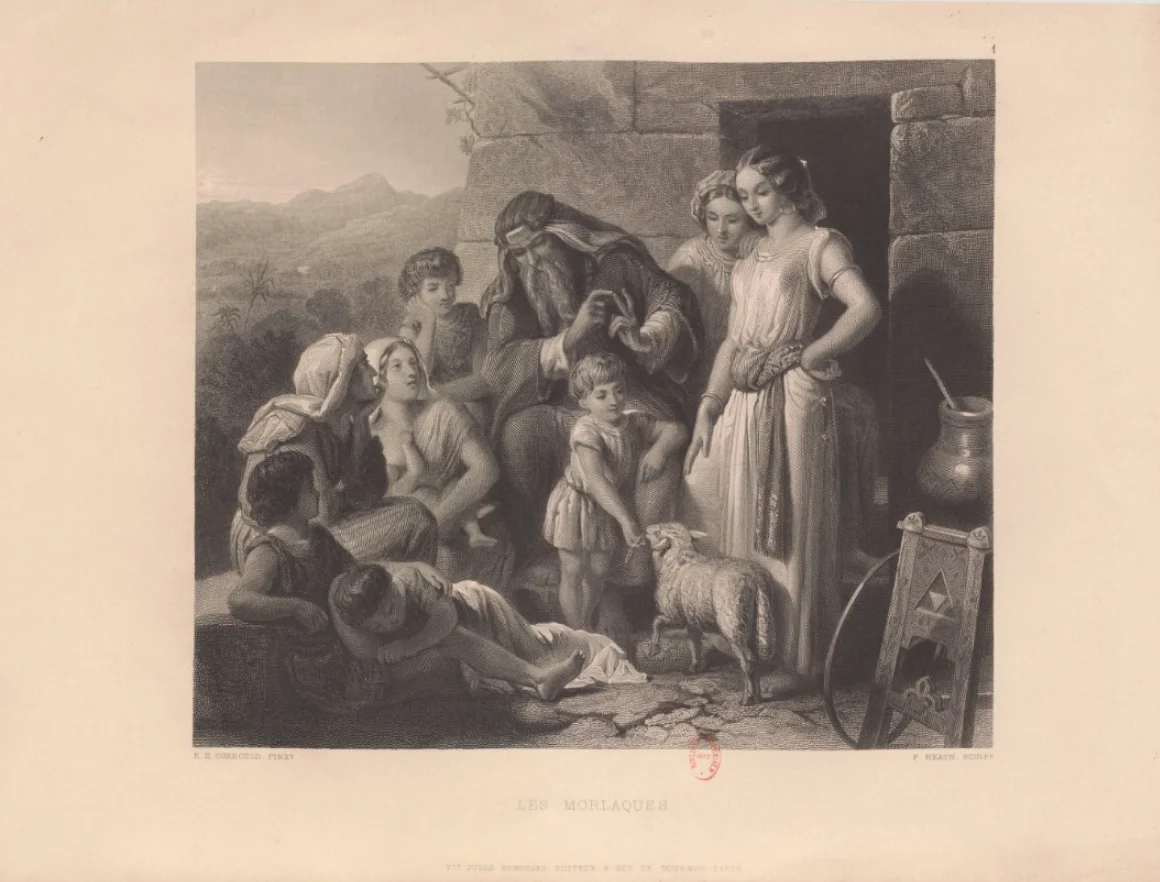
Emerging from the harsh embrace of the Velebit mountain and the Dalmatian hinterland, the Morlachs were a people of the frontier – nomadic shepherds whose home was the karst and the open sky. To the enlightened Europe of the 18th century, they were "noble savages": people of iron strength, primal honesty, and unwavering pride. While their Venetian masters viewed them with suspicion, history remembers them as mythical guardians of freedom who answered only to God and the mountain.
Origin and Arrival
They are considered descendants of Romanized Illyrians (Vlachs) who retreated into the mountains ahead of the Slavic migrations. Over centuries, by blending with the local population, a unique identity was formed – a people who "came from the sea" or from the "black mountains."
Life Beneath Velebit
They inhabited the region of Morlacchia, stretching from Senj and Karlobag all the way to deep Dalmatia. They lived in harmony with the bura wind and the stone, engaging in livestock breeding and trade, while in times of war, they were the Empire's most valued frontiersmen.
Faith and Customs
Their faith was a blend of Christianity and ancient pre-Christian rituals. A particularly prominent tradition was blood brotherhood (bratimljenje) – a sacred act of friendship stronger than blood ties – and epic singing accompanied by the gusle, through which they passed history from generation to generation.
The Morlachs and Karlobag
Karlobag was their key port and point of contact with the outside world. It was here that they traded their mountain products for salt and luxury goods, leaving an indelible mark on the history and culture of our town.
Digital Collection: Archival Records
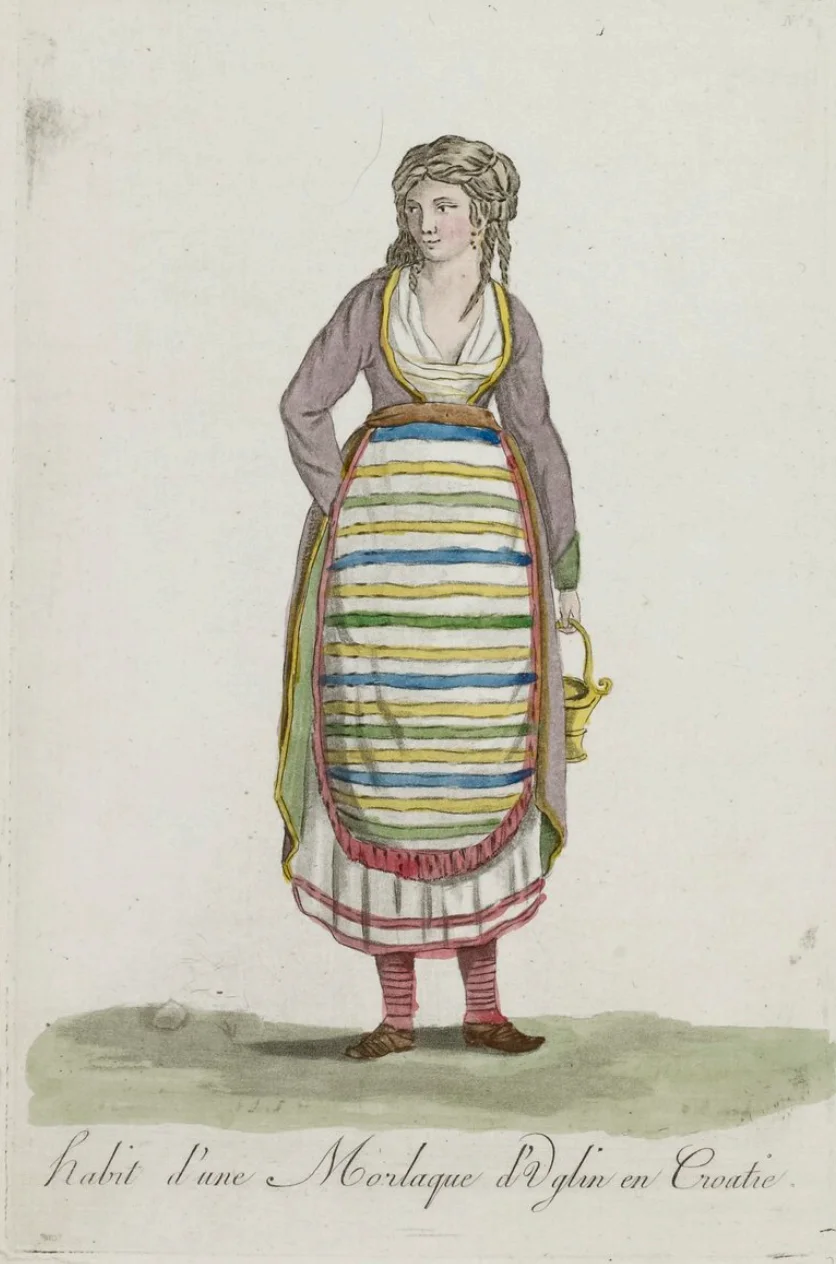
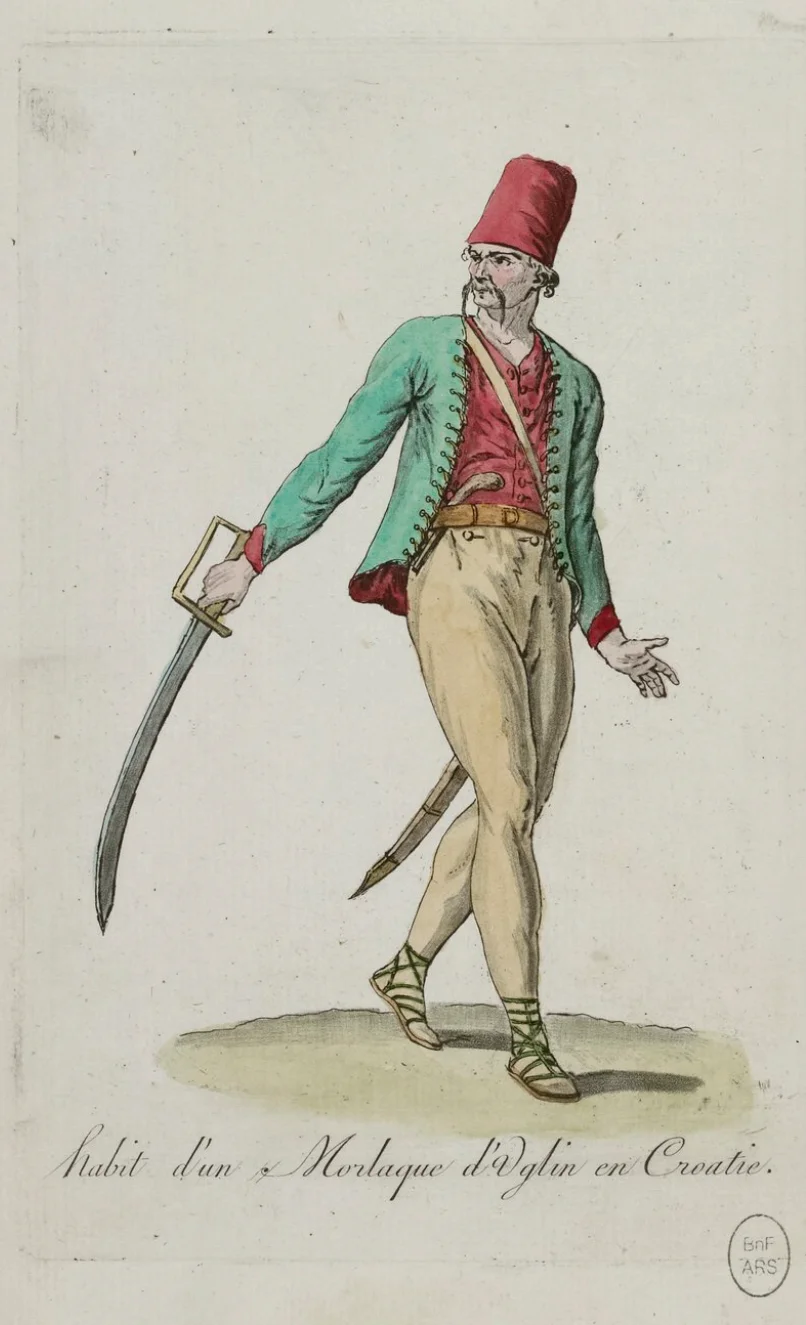
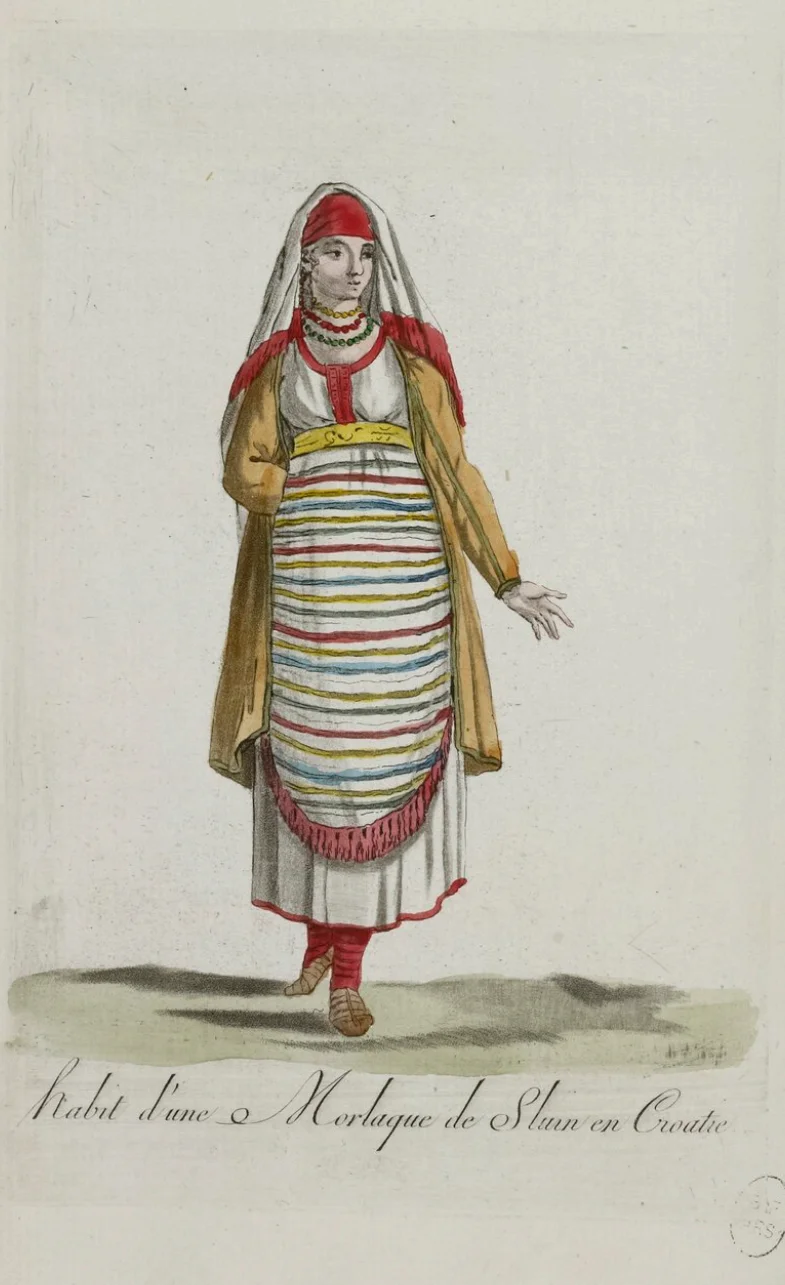
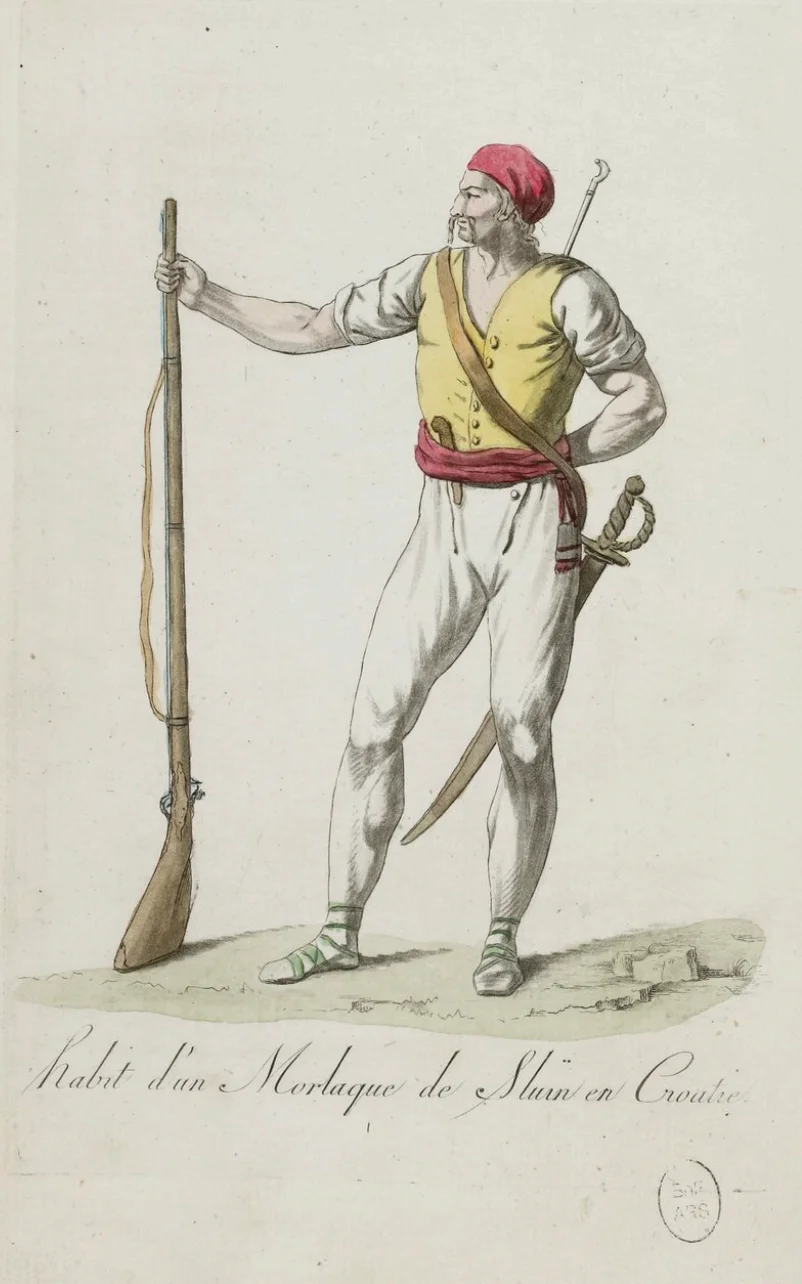
Sylvain Maréchal: Costumes civils actuels de tous les peuples connus (1788–1792)
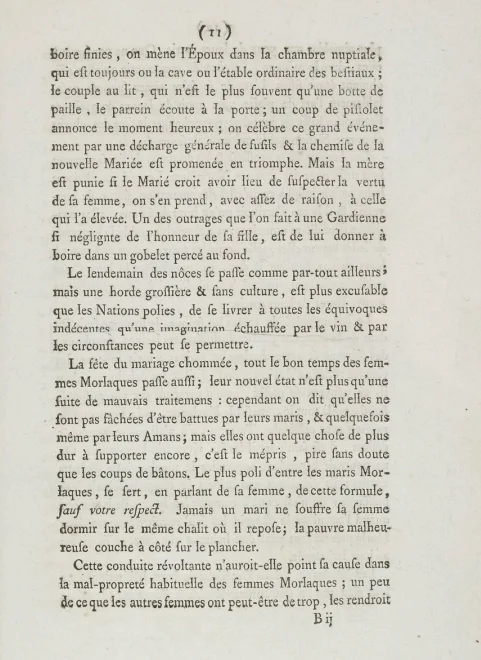
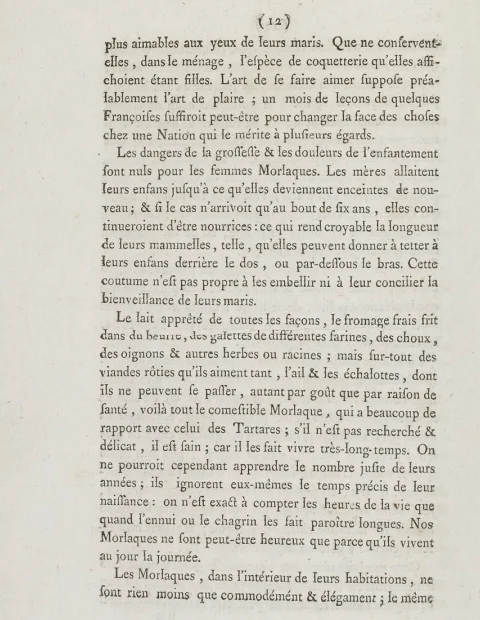
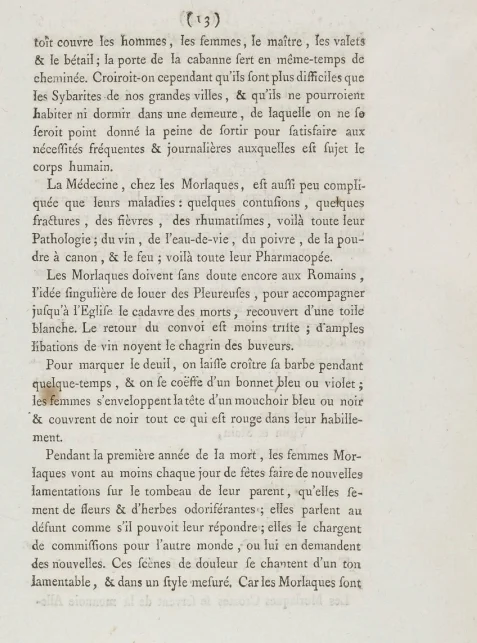
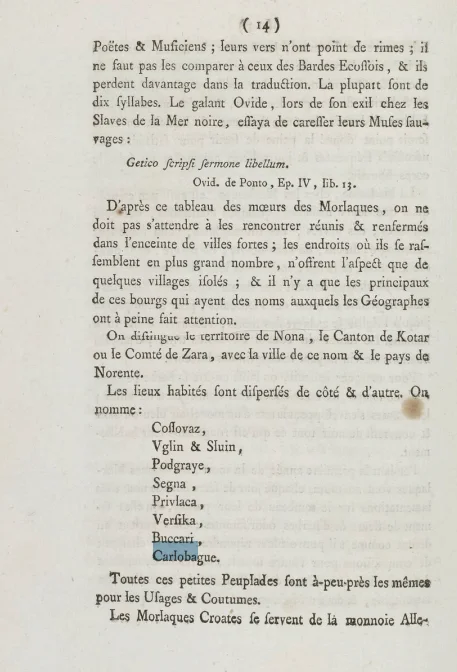
In his renowned four-volume encyclopedic work, published on the eve of the French Revolution, Sylvain Maréchal provides a fascinating insight into the lives and customs of the peoples of the then-known world. Of particular significance to our history is Book II, in which Maréchal details the culture, character, and daily life of the Morlachs.
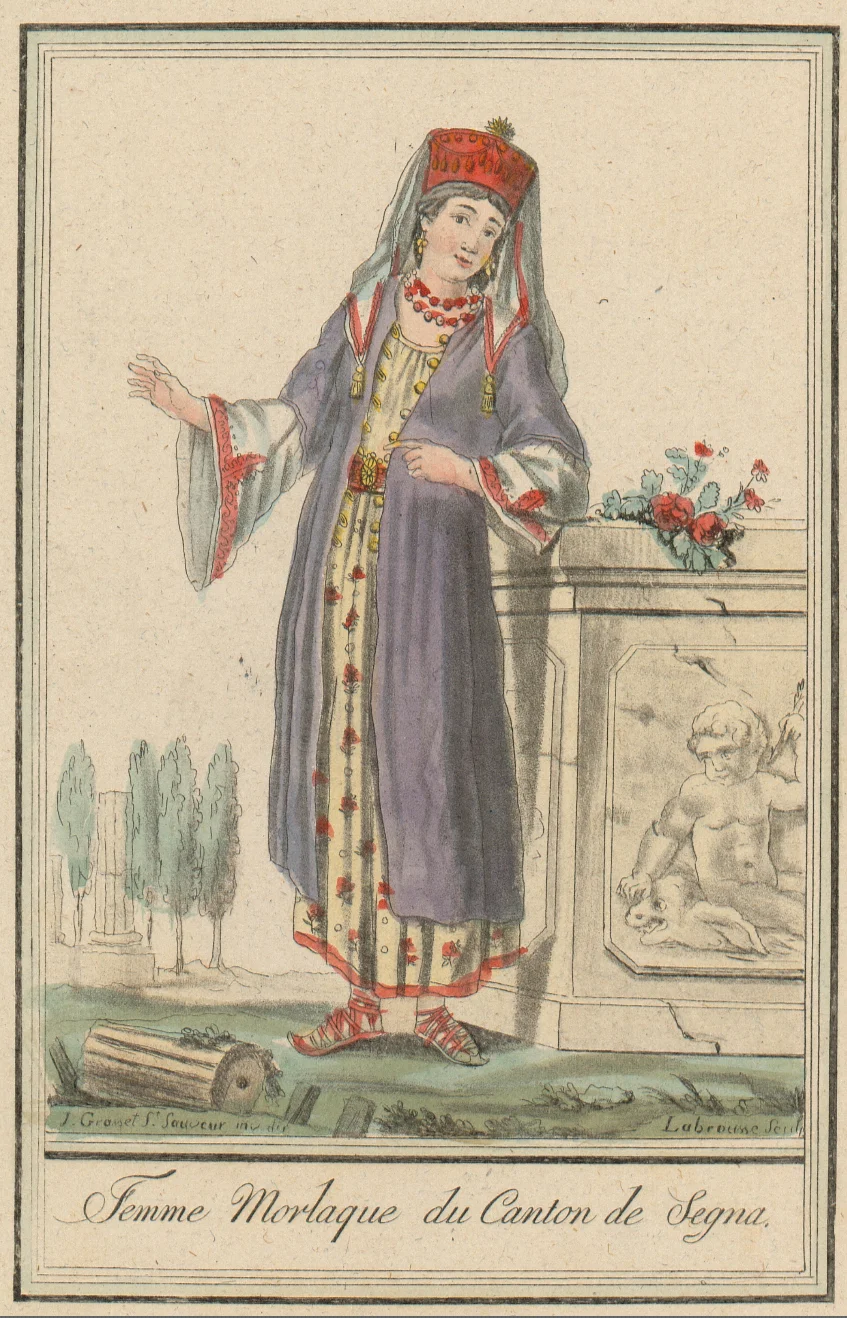
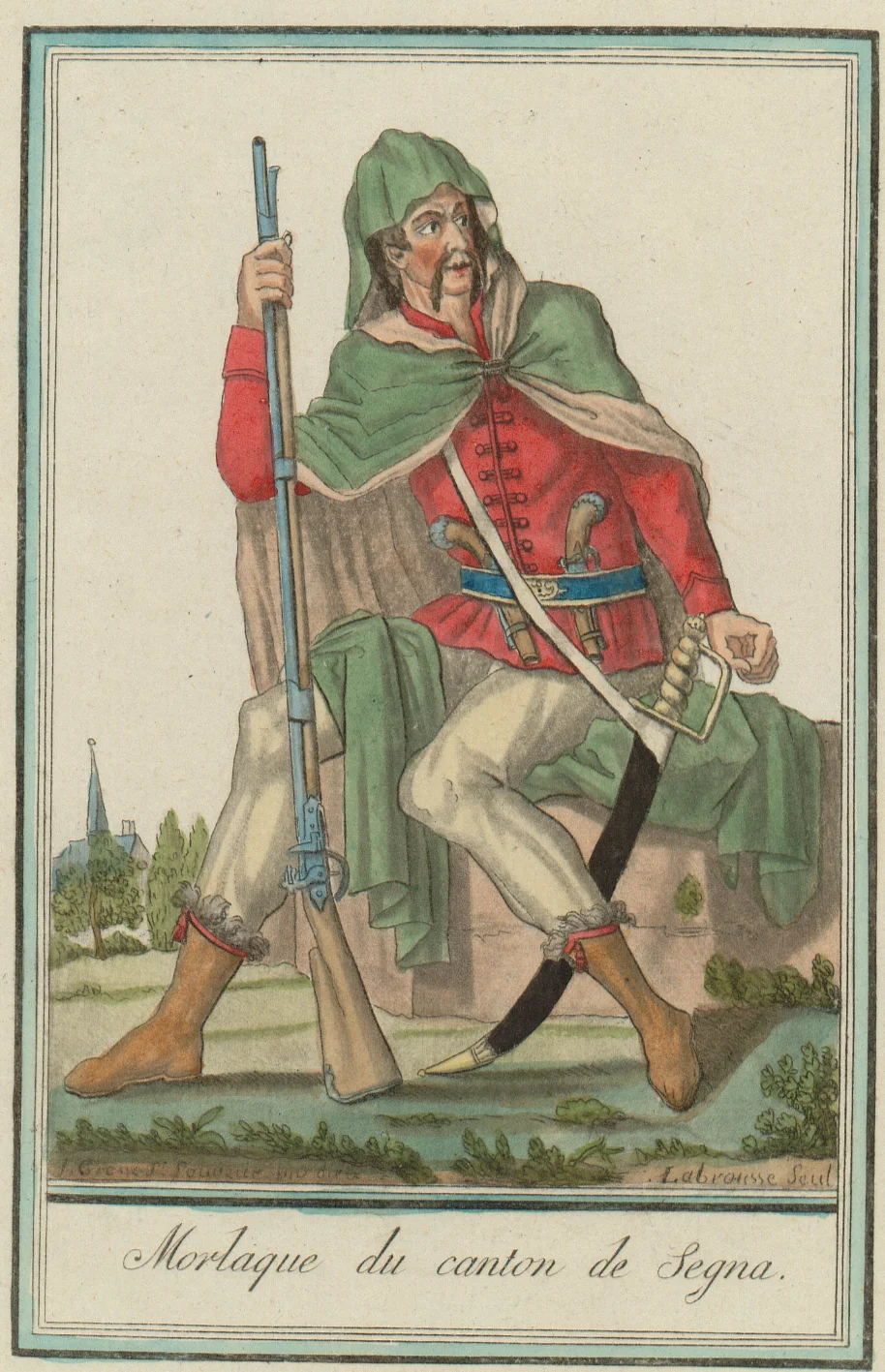
The visual identity of this masterpiece was shaped by Jacques Grasset de Saint-Sauveur, a French diplomat and artist whose illustrations of folk costumes became a key historical source. Below, we present selected translations and original depictions that bear witness to the perception of our regions in the 18th century.
Source: National Library of France (BnF), Paris.
Translation and page display
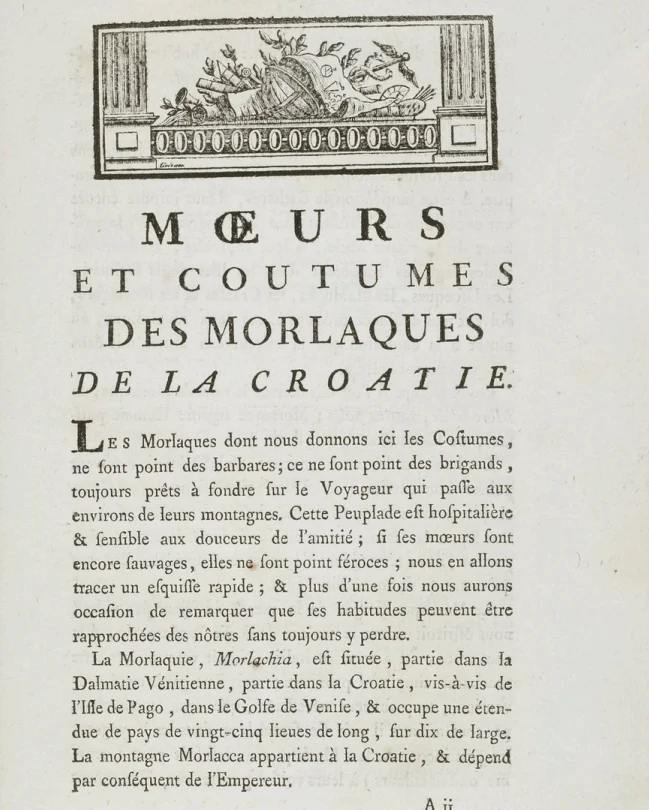
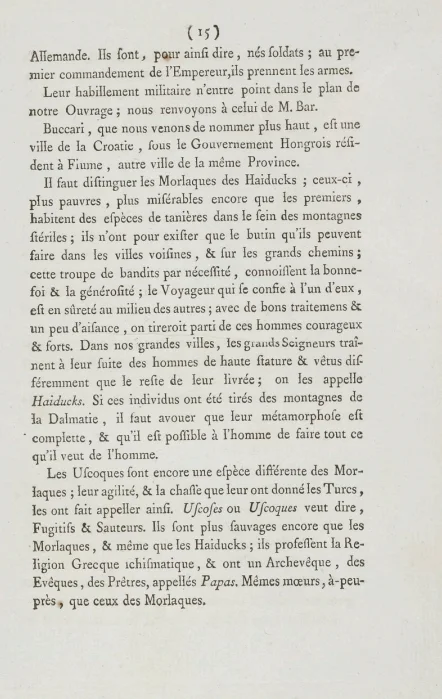
CUSTOMS AND TRADITIONS OF THE MORLACHS FROM CROATIA
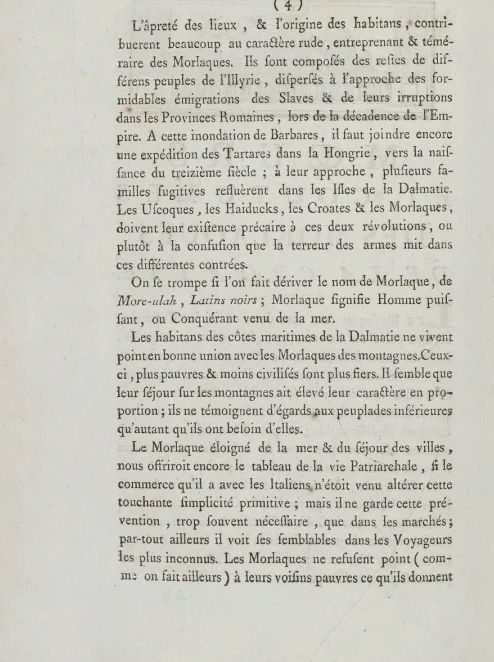
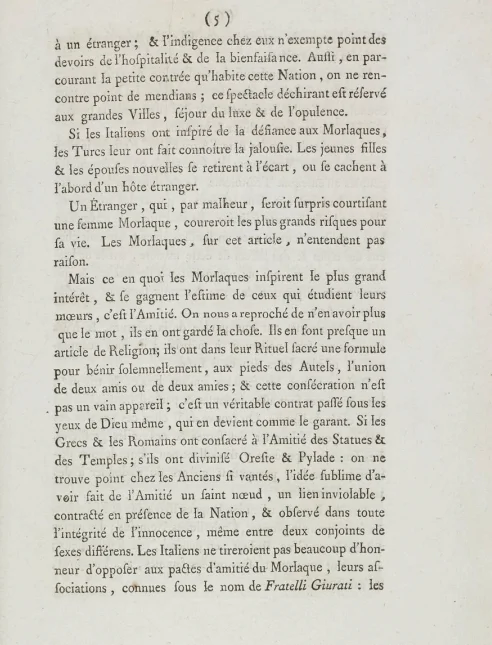
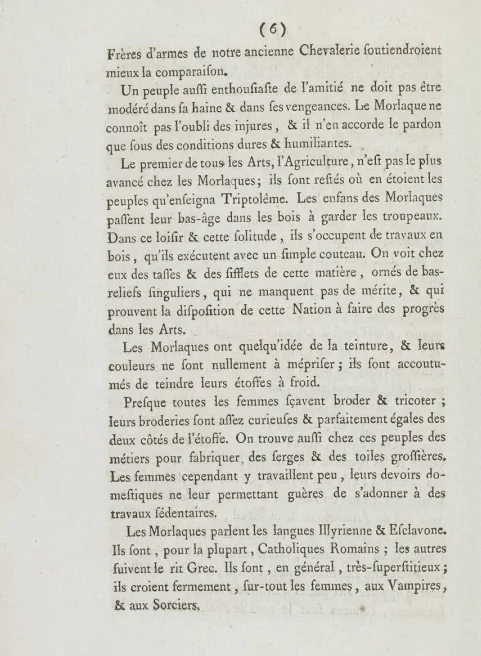
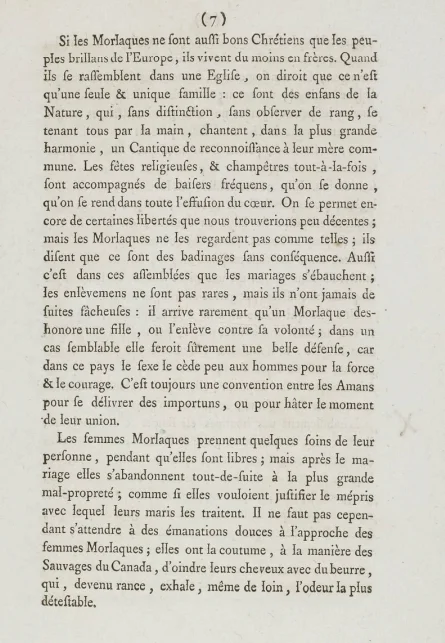
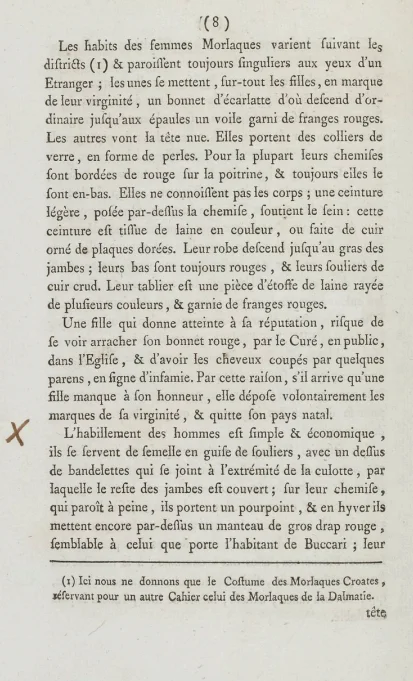
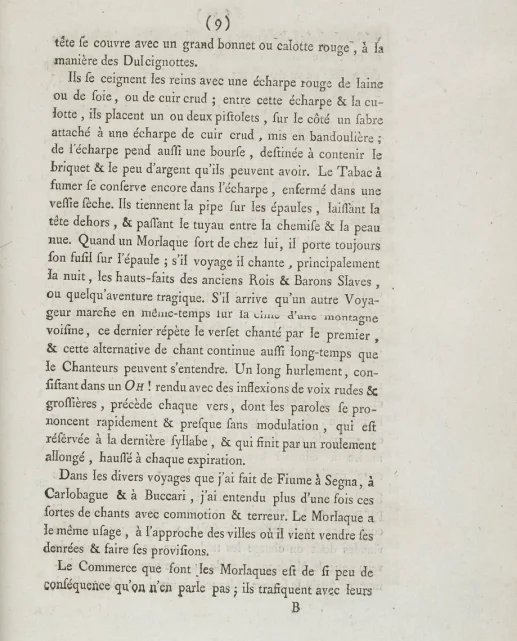
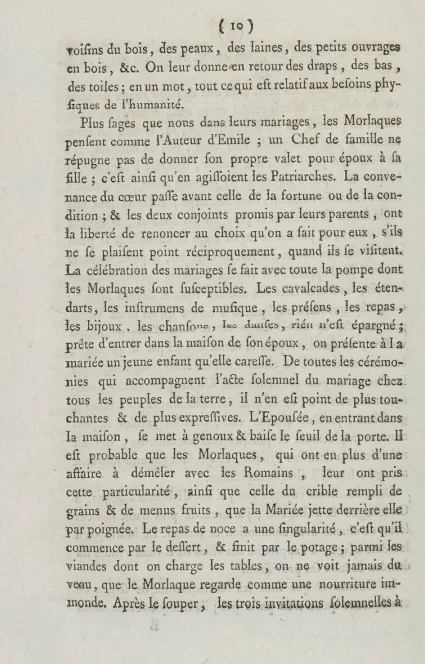
The Morlachs, whose customs we present here, are by no means barbarians; they are not brigands, always ready to fall upon the traveller passing near their mountains. These people are hospitable and sensitive to the benefits of friendship; if their customs are still wild, they are in no way cruel. We shall draw a quick sketch of them, and we will repeatedly have the opportunity to notice that their habits can be compared to ours, without always losing their significance.
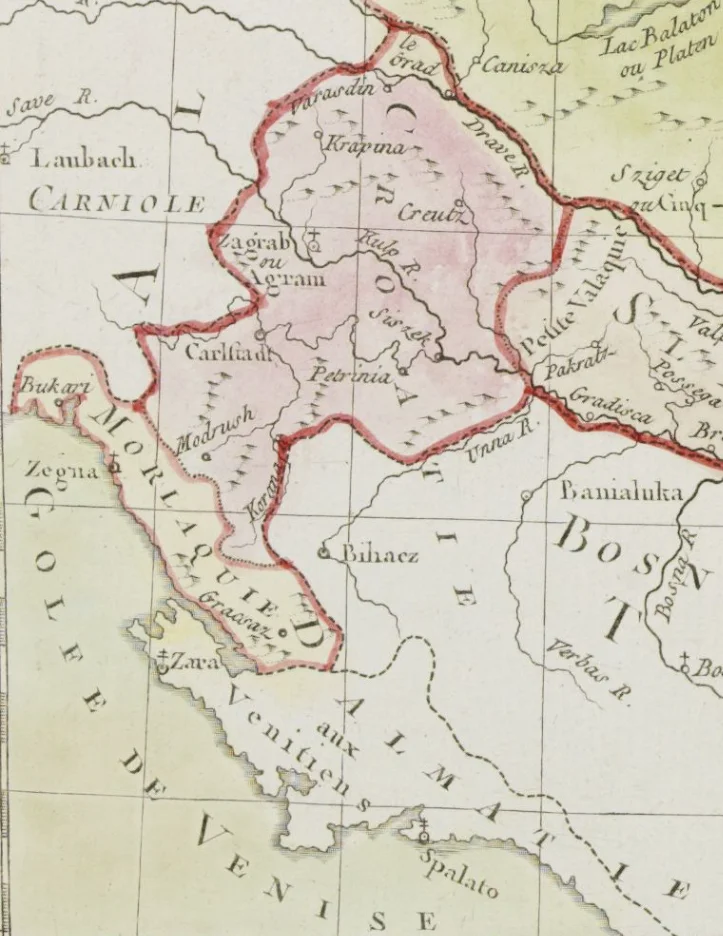
Morlachia is situated partly in Venetian Dalmatia and partly in Croatia, opposite the island of Pag in the Gulf of Venice, occupying a stretch of land twenty-five leagues long and ten wide. Mount Morlacca belongs to Croatia and therefore depends on the Emperor.
New Archival Record
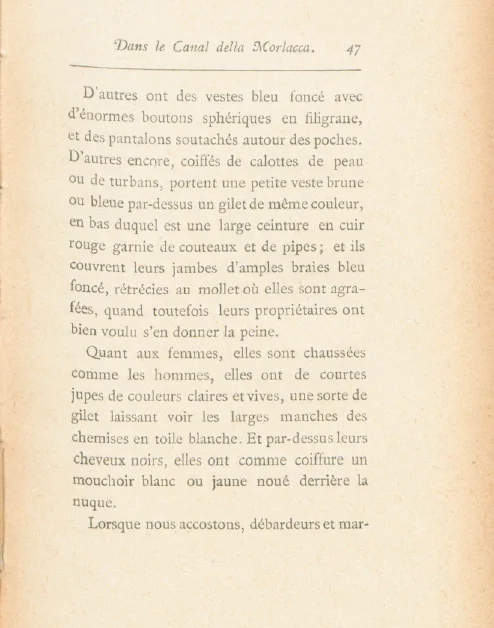
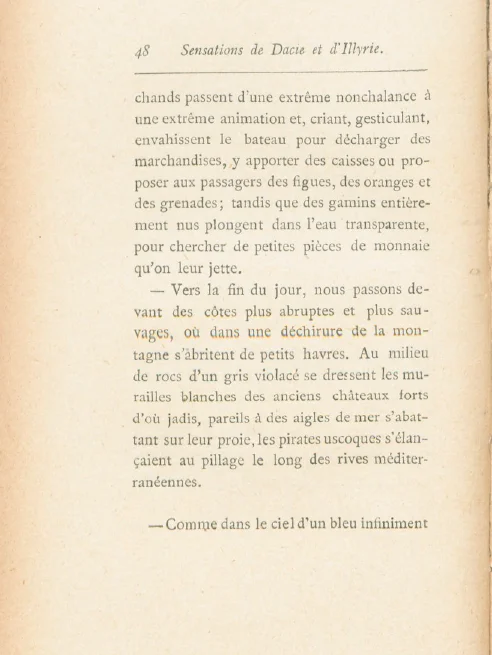
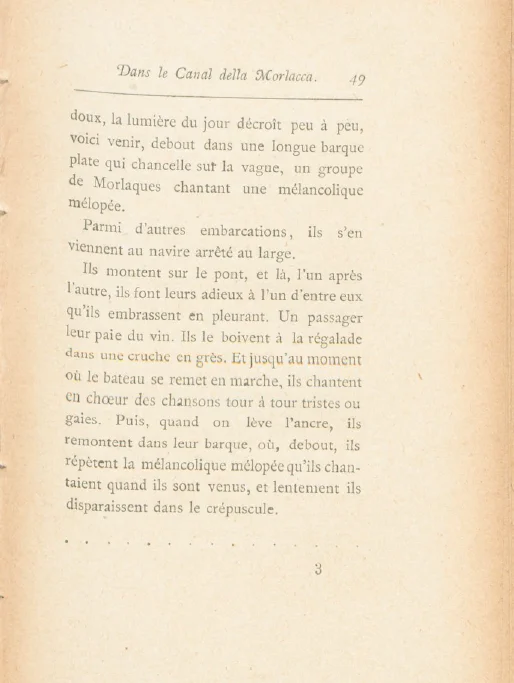
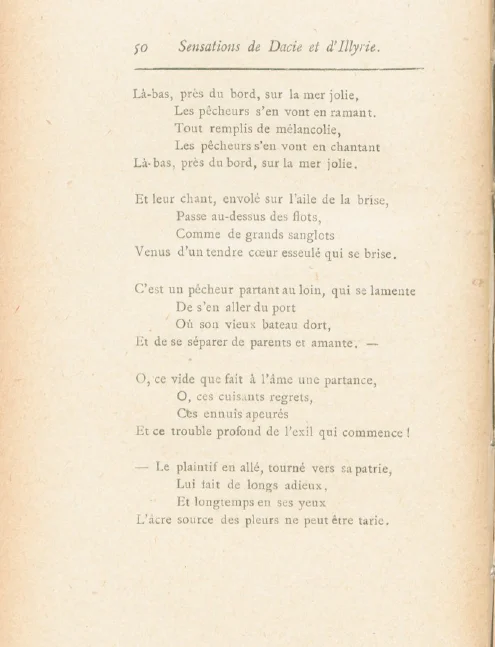
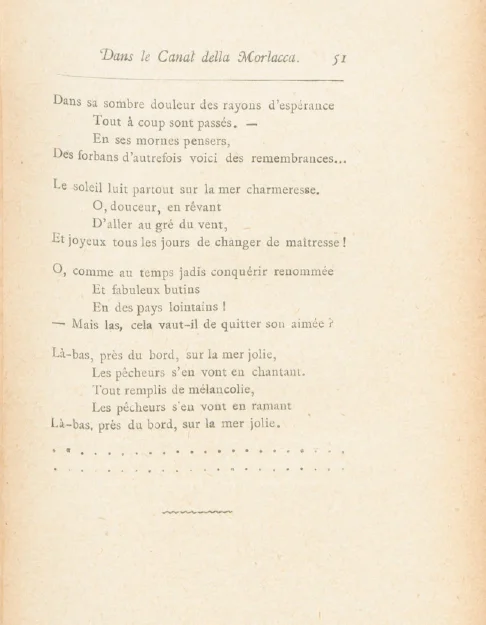
Pierre Chamagne: Sensations de Dacie & d’Illyrie (1896)
The work "Sensations de Dacie & d’Illyrie" was published at the end of the 19th century, at a time when French travel writers were rediscovering the charms of the eastern Adriatic coast. Chamagne's text is a precious example of the late Romantic tradition; here, the Velebit Channel, Karlobag, and its inhabitants are described not just factually, but through a powerful subjective experience imbued with melancholy and vivid visual imagery.
Below, we present an insight into the second book of our digital collection. Chamagne's description of the Morlachs and the harsh beauty of the region beneath Velebit continues the tradition of 18th-century Western European travel writers but breathes into them a new, markedly emotional and poetic expression that faithfully reflects the spirit of the time.
Source: National Library of France (BnF), Paris.
Translation and page display
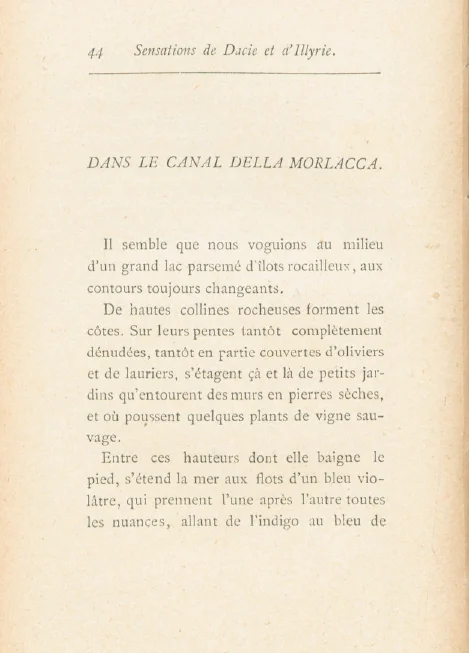
IN THE VELEBIT CHANNEL (Dans le Canal della Morlacca)
It seems as if we are sailing in the middle of a large lake dotted with rocky islets, with ever-changing contours.
High rocky hills form the coast. On their slopes, sometimes completely bare, sometimes partially covered with olive and laurel trees, small gardens enclosed by dry stone walls are tiered here and there, where a few wild vine plants grow.
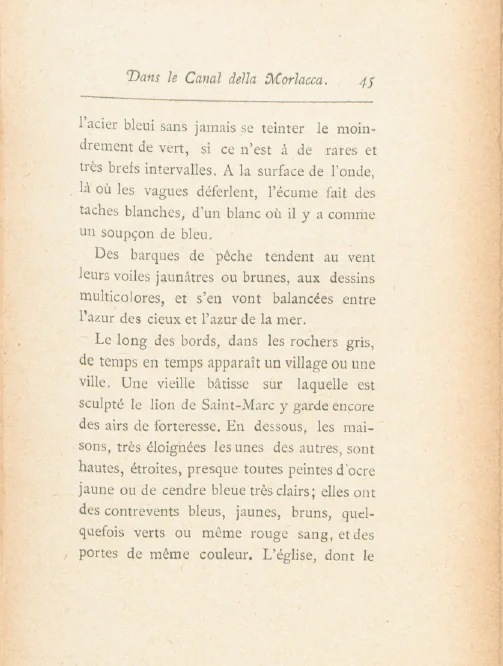
Between these heights, whose feet it bathes, stretches the sea with violet-blue waves, which take on one after another all shades, ranging from indigo to the blue of...