| 1st–5th centuries |
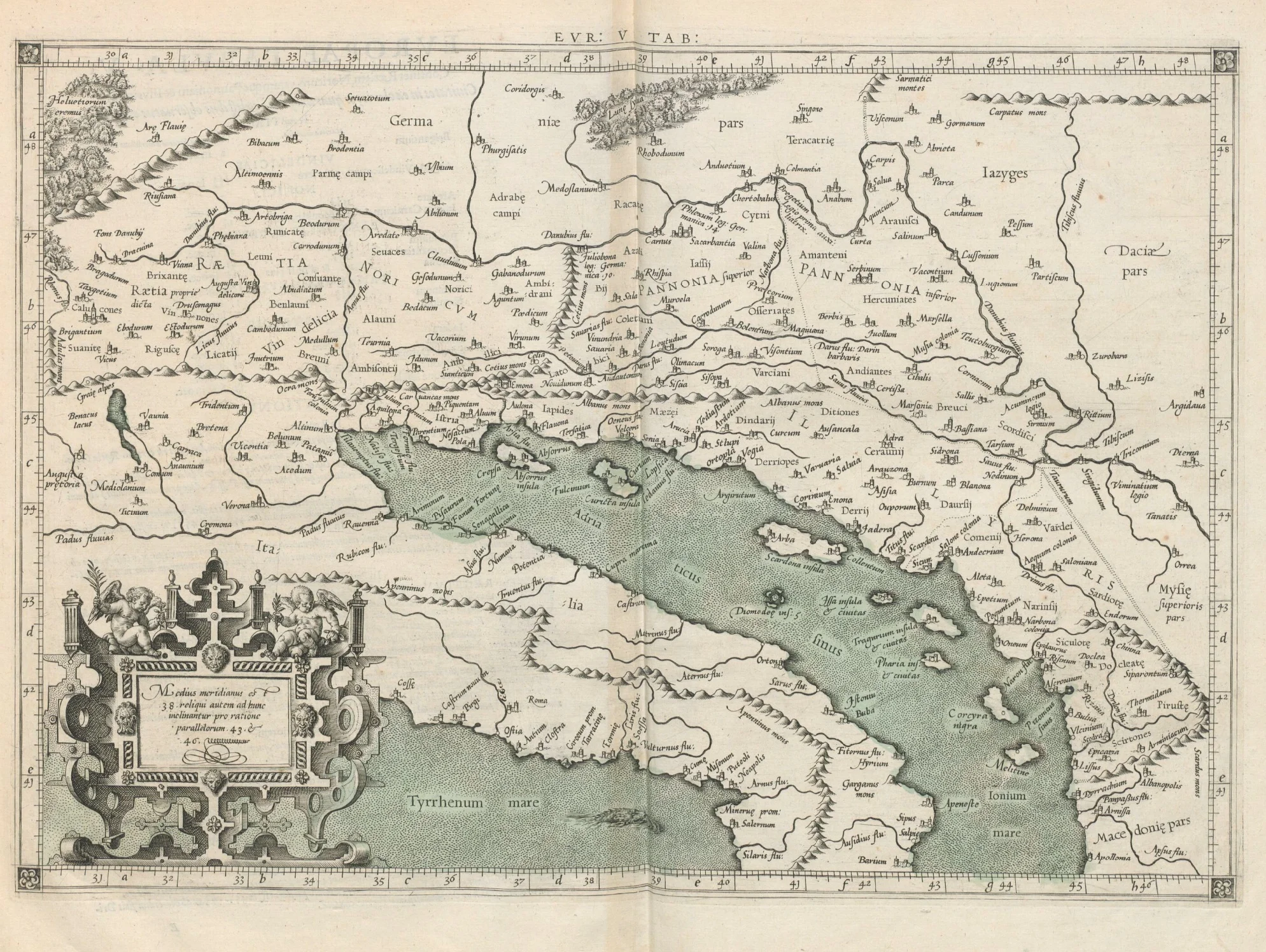
VegiumVegia, Municipium Vegium |
Roman Empire |
denarius, sestertius |
Roman eagle (Aquila) |
An important station on the Roman road (Via Adriatica) connecting Senj and Zadar. |
|
5th–9th centuries — Migration Period (There is insufficient reliable historical evidence; the settlement was probably in ruins)
|
| 9th–13th centuries |
ScrixaScrissa, Scrica, Skriža |
Croatian rulers |
Friesach pfennig, Byzantine coinage |
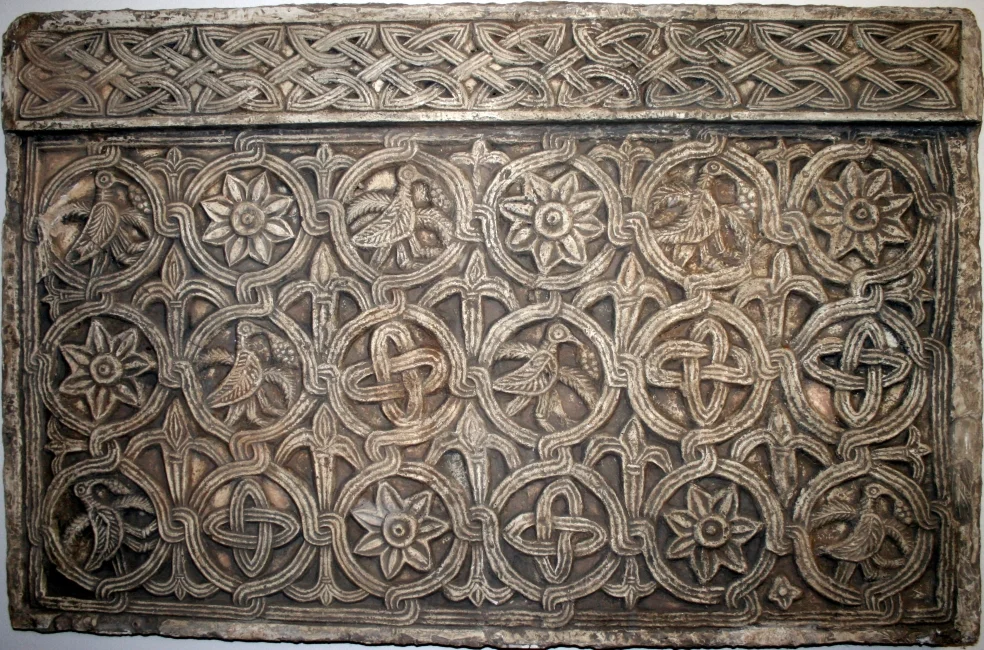
Princely banner / Croatian interlace |
A medieval settlement under the administration of Croatian župans; early references appear in ecclesiastical documents. |
| 1322–1525 |
BagBaggio, Vallis de Bag |
Kurjaković princes |
ducat, groschen, denarius |
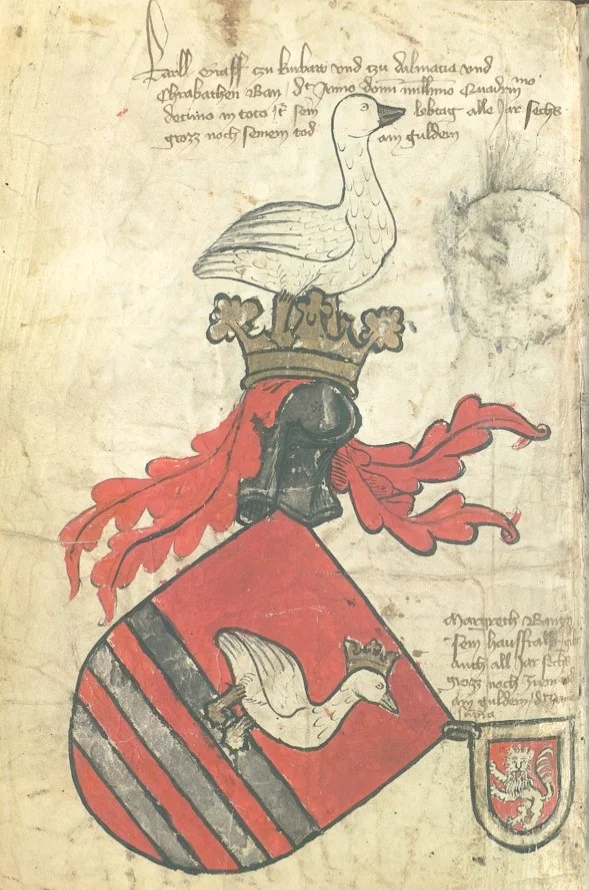
Three silver geese |
Economic growth; the principal port for exporting timber and livestock from the Lika nobility to Italy. |
| 1525–1579 |
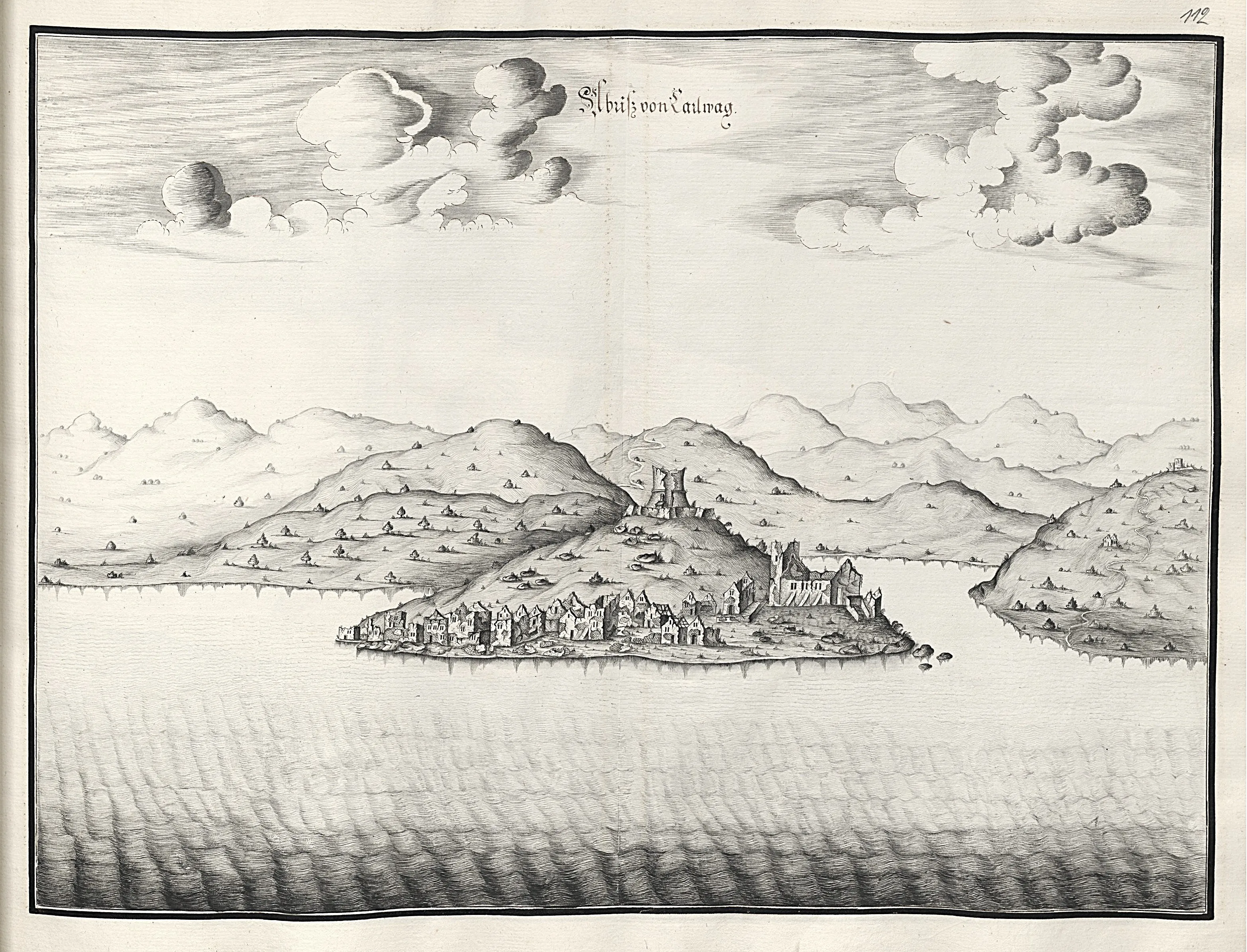
BagRuined Bag |
Military administration / frontier |
Hungarian / Habsburg florin |
Fortica fortress |
After its complete destruction by the Ottomans in 1525, the settlement remained deserted until its reconstruction. |
| 1579–1809 |
CarlopagoKarlo-pago, Karlopag |
Habsburg Monarchy |
thaler, kreuzer |
Black-and-yellow Habsburg banner |
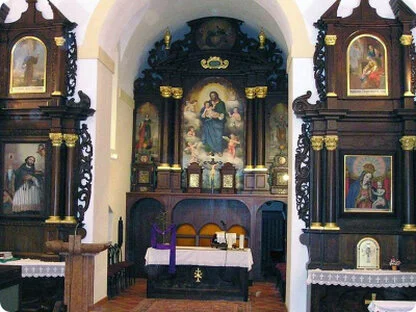
Reconstruction under Archduke Charles II; construction of the Capuchin Monastery (1712) and the Theresiana Road. |
| 1809–1813 |
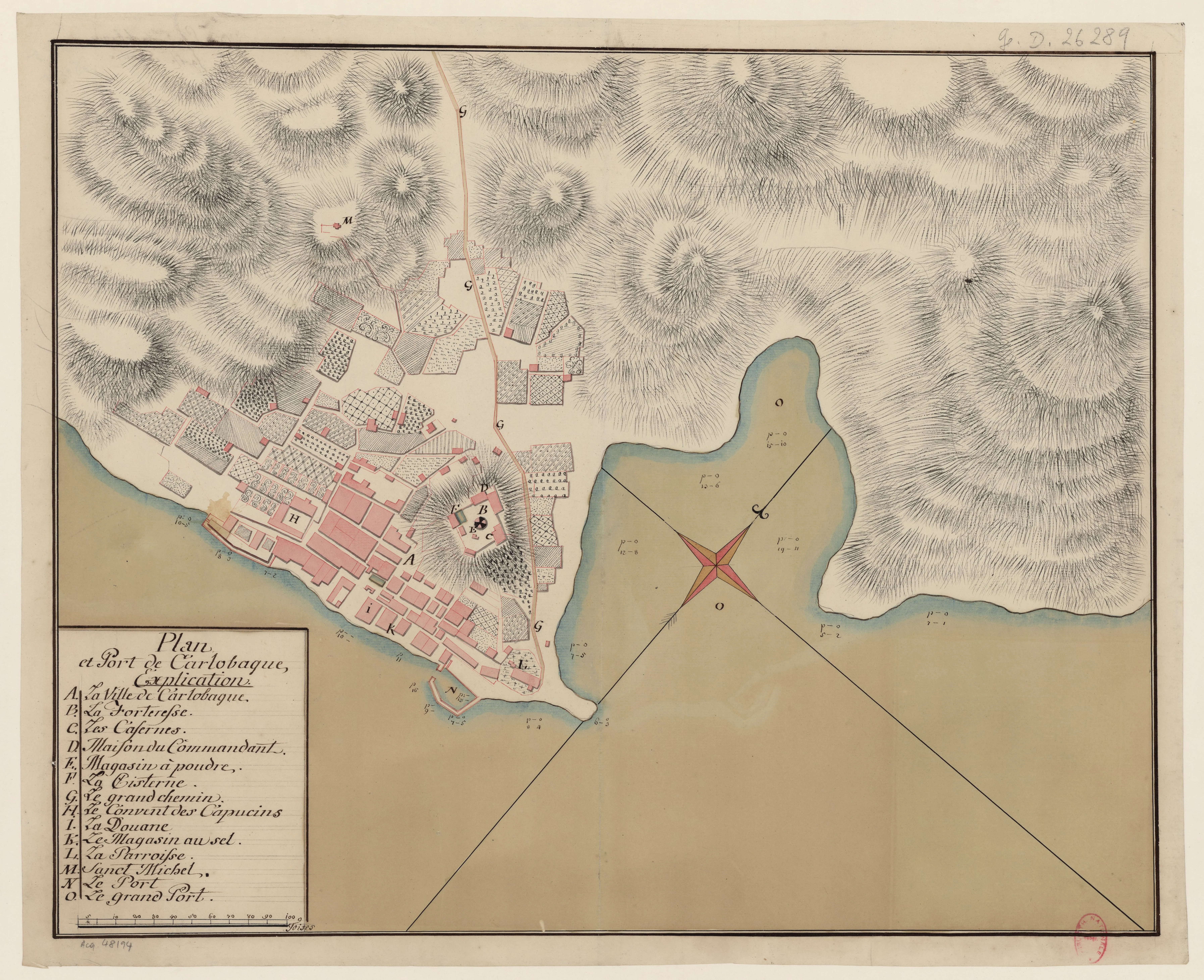
CarlobaqueCarlopago (Illyrian Provinces) |
French Empire |
French franc |
French Tricolour |
Introduction of modern civil administration and the metric system, together with improvements to road infrastructure. |
| 1813–1918 |
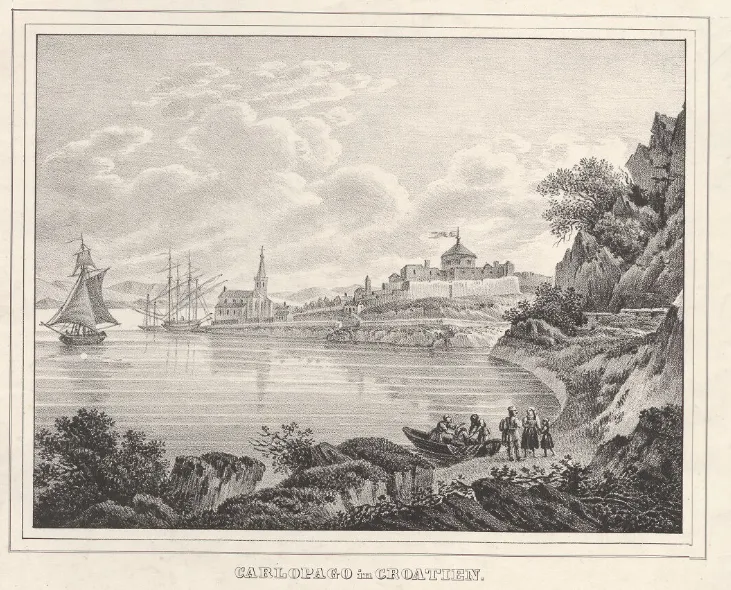
CarlopagoKarlobag, Carlobago |
Austria-Hungary |
forint, krone |
Croatian Tricolour with crown |
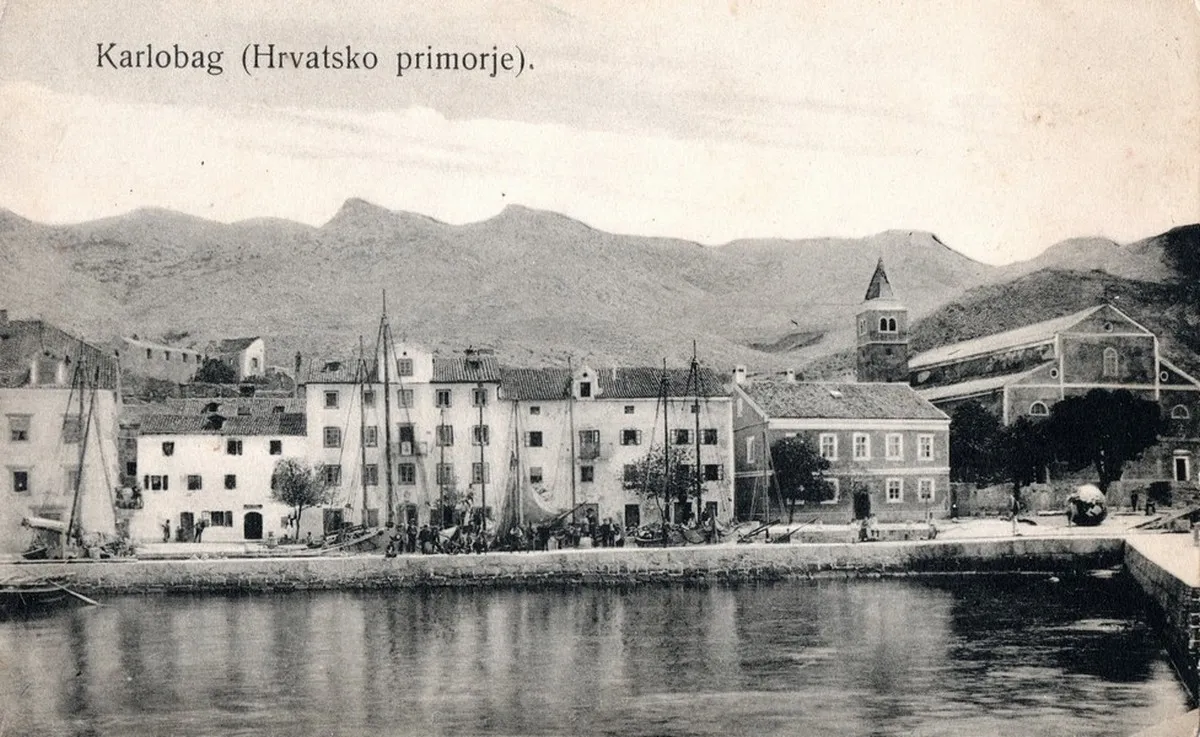
Golden age of the port; Karlobag became the administrative and commercial centre of the Podvelebit region. |
| 1918–1941 |
KarlobagKingdom of Serbs, Croats and Slovenes |
Kingdom of Yugoslavia |
Dinar |
Tricolour of the Kingdom of Serbs, Croats and Slovenes |
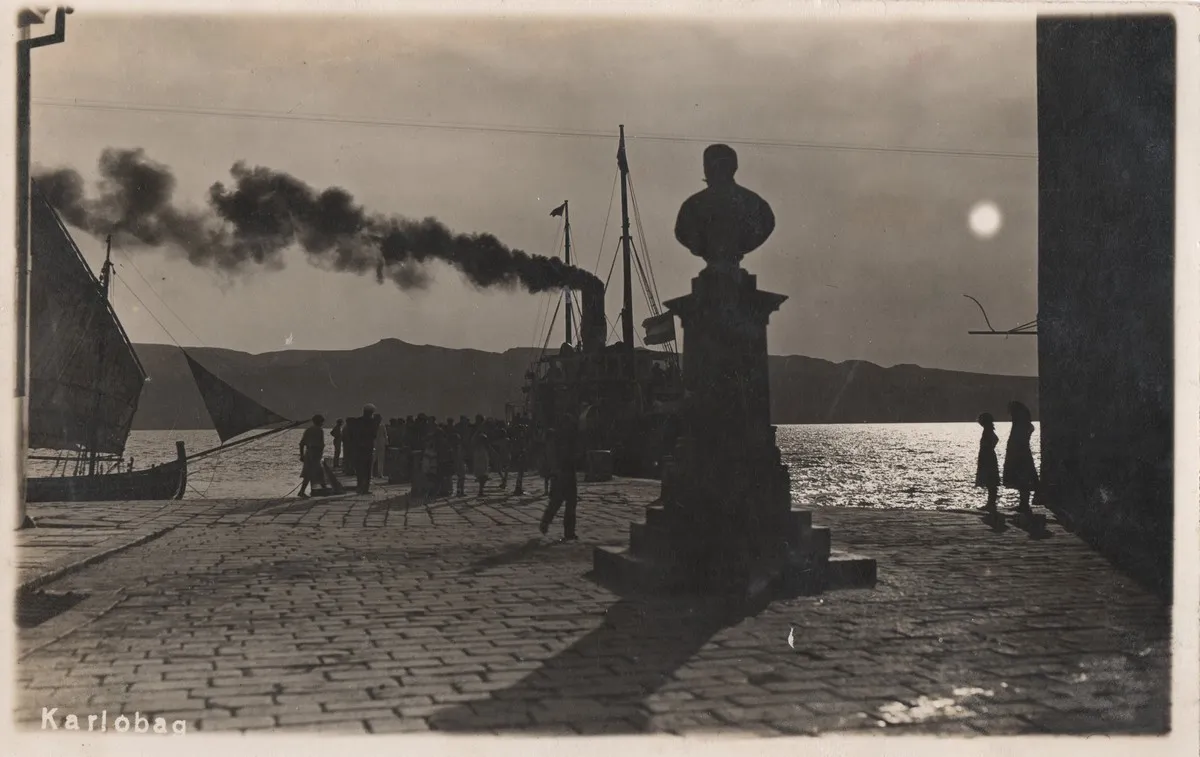
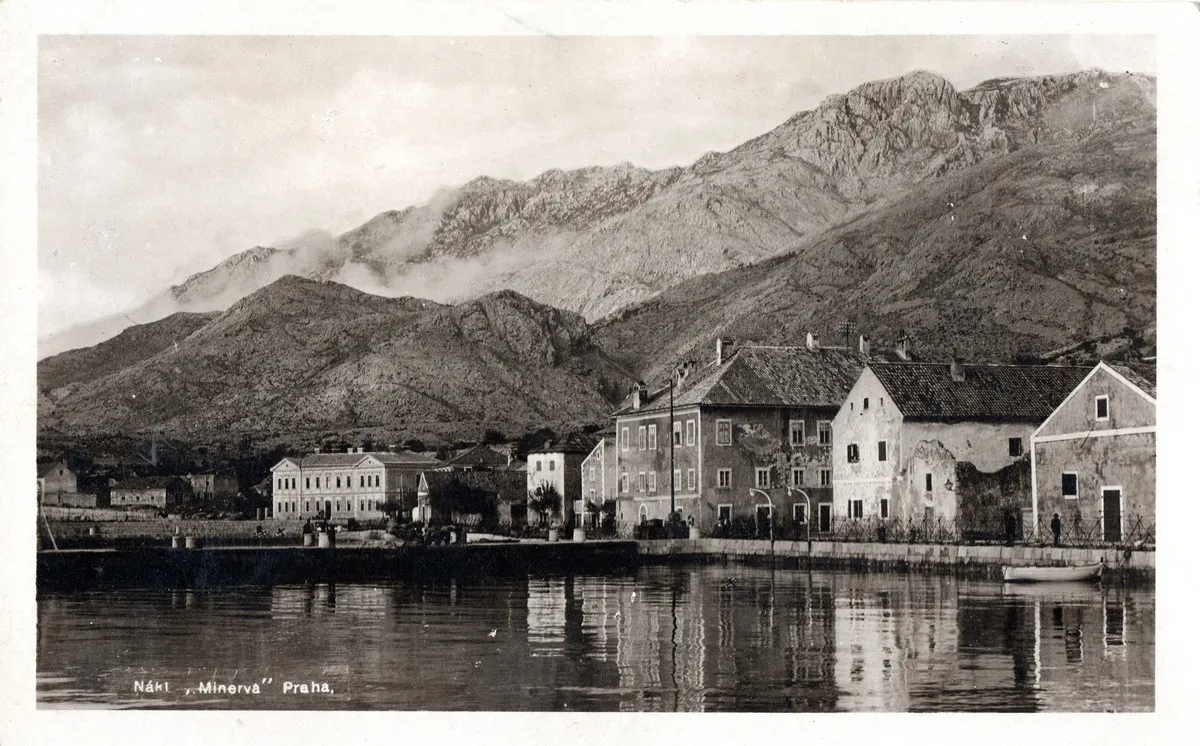
Interwar period; gradual stagnation of port traffic. |
| 1941–1943 |
CarlopagoZona II |
Kingdom of Italy |
Italian lira |
Flag of Italy |
Italian occupation and administration during the Second World War. |
| 1943–1945 |
Karlobag |
Independent State of Croatia |
Kuna |
Flag of the Independent State of Croatia |
Period of German military presence until the end of the war. |
| 1945–1991 |
Karlobag |
Socialist Federal Republic of Yugoslavia |
Yugoslav dinar |
Tricolour with a red star |
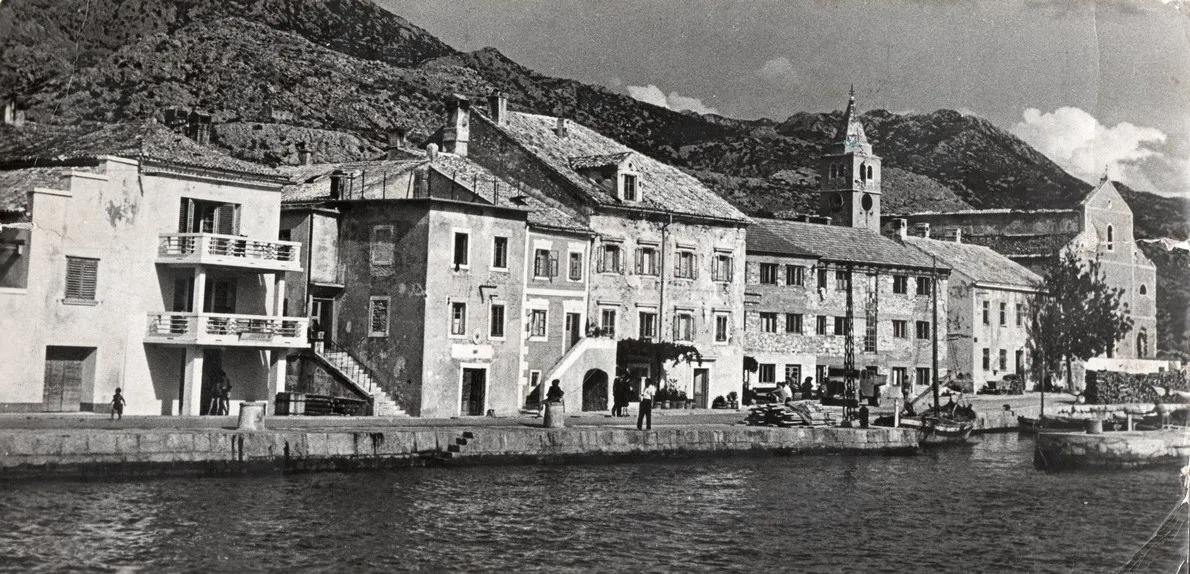
Post-war reconstruction and the gradual development of tourist facilities. |
| 1991–present |
Karlobag |
Republic of Croatia |
Croatian dinar, kuna, euro |
Flag of Croatia |
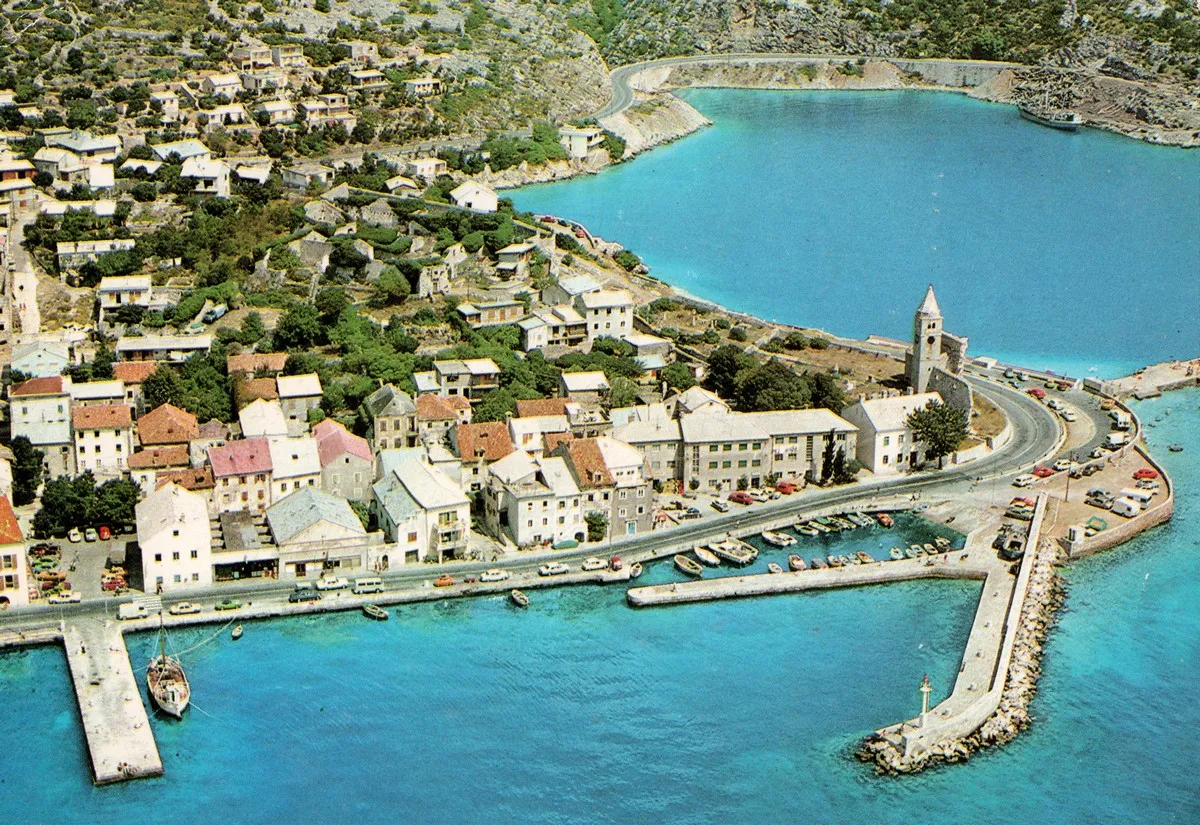
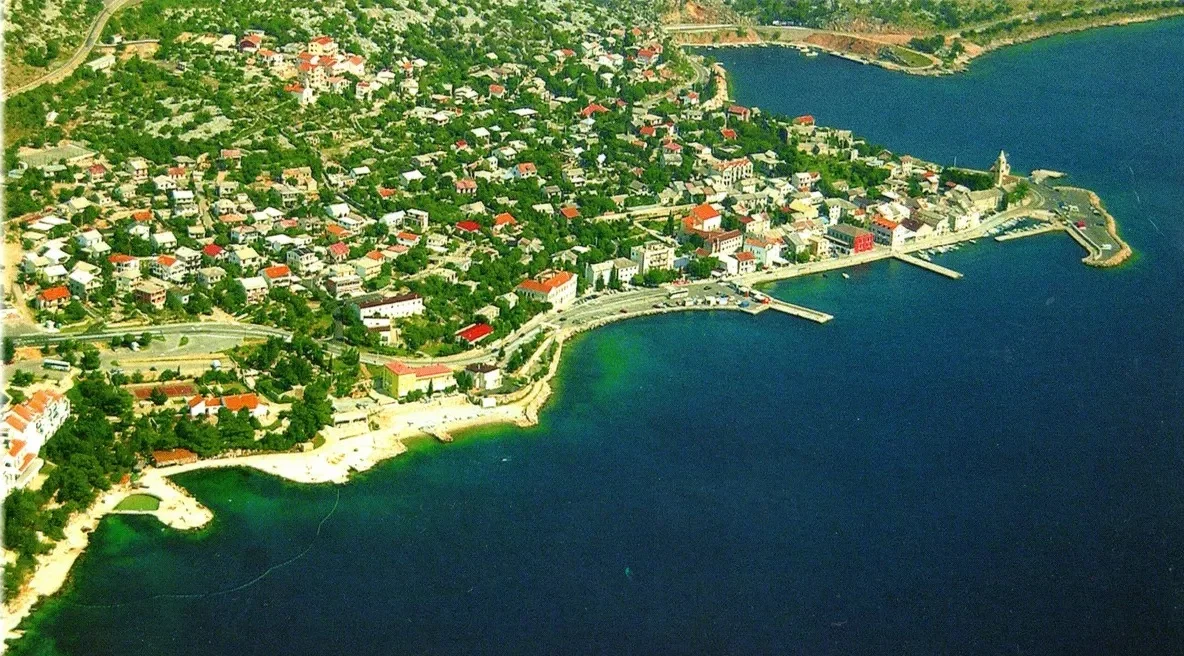
Modern Karlobag; heritage preservation and tourism development beneath Velebit. |