Karlobag in the Habsburg Era
Before the double-headed Habsburg eagle spread its wings over the Velebit foothills, Karlobag and its surroundings passed through one of the most difficult periods in their history. In the late 15th and early 16th centuries, during the rule of the Kurjaković princes, the former medieval commercial prosperity of Bag came to an abrupt end. Repeated Ottoman incursions turned Lika and Krbava into a theatre of almost continuous warfare, while the Podgorje region became an insecure and vulnerable frontier zone. Fleeing the constant danger, the population sought refuge on nearby islands, especially Pag, leaving behind devastated walls and abandoned harbours. It became clear that the local nobility could no longer halt the Ottoman advance from the east on its own.
The accession of the Habsburgs to the Croatian throne was not the result of conquest, but of a decision made by the Croatian nobility at the Parliament of Cetingrad in 1527. Dynastic ties played an important role, but the overriding concern was the need for a common defence against the Ottoman Empire.
Under the double-headed eagle: from frontier stronghold to free port
1. The Accession of the Habsburgs to the Croatian Throne (1527)
At the beginning of the 16th century, Croatia was passing through one of the most difficult periods in its history. After King Louis II Jagiellon was killed at the Battle of Mohács in 1526, the defensive system of the Croatian-Hungarian Kingdom stood on the brink of collapse. The Ottoman Empire continued its powerful advance westward, and the Croatian lands became one of the main theatres of conflict between two great powers.
The Croatian estates therefore faced a decisive question: they needed a ruler with sufficient political, military, and financial strength to organise the country’s defence. Because of dynastic ties, but above all because of the need to protect the realm, the Croatian estates at the elected Ferdinand I of Habsburg as King of Croatia.
The decision was confirmed by a solemn charter bearing the seals of the Croatian estates, with the expectation that the new dynasty would provide military assistance, financial resources, and an organised defensive system against the Ottoman Empire.
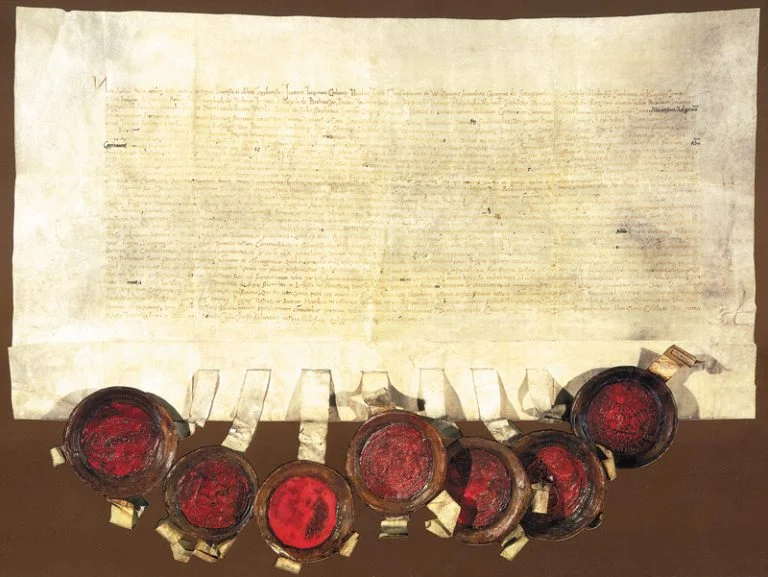
Charter of Cetingrad, 1527
Source: Austrian State Archives, Vienna.
2. The Formation of the Military Frontier and the Long Wars with the Ottomans
The arrival of the Habsburgs marked the beginning of a long process of forming the Military Frontier, a special defensive system that profoundly shaped life across a large part of the Croatian lands for centuries. Its primary purpose was to halt the Ottoman advance and protect the western borders of the Habsburg Monarchy.
Frontier territories were gradually removed from ordinary civil administration and placed under direct military authority. Administration of the frontier was initially linked to military centres in Graz and later to the Court War Council in Vienna.
This system enabled rapid military organisation, but it also subjected the inhabitants of the frontier regions to special regulations and permanent military obligations.
The lives of the frontiersmen were marked by constant readiness. Men capable of bearing arms were required to perform military service and, in return, received certain landholding and legal privileges.
In the Velebit foothills, including Karlobag, everyday life was shaped by insecurity, the rebuilding of destroyed settlements, and the constant need to defend the border. These circumstances determined Karlobag’s future, as the town gradually developed from a frontier military post into an important port and a link between the interior of the Monarchy and the Adriatic Sea.
3. The Reconstruction of Karlobag in 1579 and the Town’s New Role
During decades of Ottoman incursions, medieval Bag suffered heavily and lost its former economic and commercial importance. The area beneath Velebit remained devastated for a long time, while the population withdrew to safer places, especially the nearby islands.
Its strategic position between the sea and the mountainous hinterland nevertheless remained important. The Habsburg authorities recognised the need to rebuild the settlement because control of the Velebit coast was vital for frontier defence, maritime communication, and the supply of Military Frontier territories.
In 1579, Archduke Charles II of Austria ordered the reconstruction of the settlement on the site of old Bag. The rebuilt town was named Karlobag (Carlobago) in honour of its founder and became part of the wider defensive system of the Habsburg Monarchy.
As part of the Littoral Frontier, Karlobag assumed the role of an important military and maritime post. Its harbour connected the sea, the islands, and the interior, while its position beneath Velebit made it possible to control important transport routes.
The town was therefore rebuilt under wartime conditions, yet the foundations were simultaneously laid for its later development as a commercial and maritime centre.
4. Changing Rulers and Gradual Stabilisation in the 17th and 18th Centuries
During the 17th and 18th centuries, Karlobag’s fate was closely tied to major political and military changes within the Habsburg Monarchy. After prolonged wars with the Ottoman Empire, especially during the reigns of Leopold I and Charles VI, the peace treaties of Karlowitz in 1699 and Passarowitz in 1718 gradually created safer conditions for reconstruction and economic development.
Lika, Krbava and Karlobag in the Agreement with Count Adolf von Sinzendorf, 1693
In the final decade of the 17th century, following major wartime changes in Lika and Krbava, the Habsburg authorities were defining the status of the newly acquired territories and the rights attached to them. In this context, Karlobag appears in an imperial document together with Lika and Krbava, reflecting its particular importance within the administrative, military, and economic system of the period.
An especially valuable source is a document of Emperor Leopold I, issued in Vienna on 13 January 1693, connected with an earlier agreement concluded with Count Adolf von Sinzendorf. The heading of the document explicitly names the estates Lica, Corbavia et Carlobago — Lika, Krbava and Karlobag. In the text itself, Karlobag again appears among the newly acquired possessions and is at one point designated as Oppidum Carlobago, that is, the town or market town of Karlobag.
The document regulates rights, benefits, and obligations connected with these estates and refers to their appurtenances, settlements, fortifications, lands, arable fields, meadows, pastures, forests, waters, and other revenues. At the same time, it stresses the preservation of certain rights of the Crown, existing rights and obligations of the inhabitants, and other previously established rights. The document is therefore valuable not only as evidence of the relationship between the imperial court and Sinzendorf, but also as a direct written record of Karlobag’s position within Habsburg administration at the end of the 17th century.
Original document from 1693
The preserved manuscript copy consists of four pages. Click any page to open it at full size.
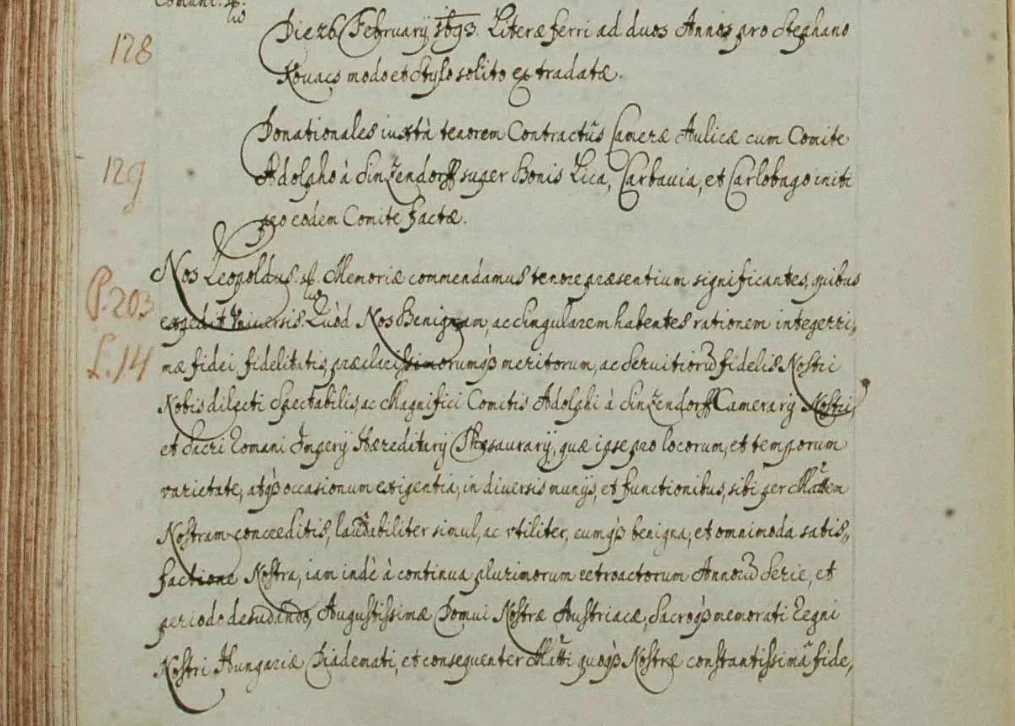
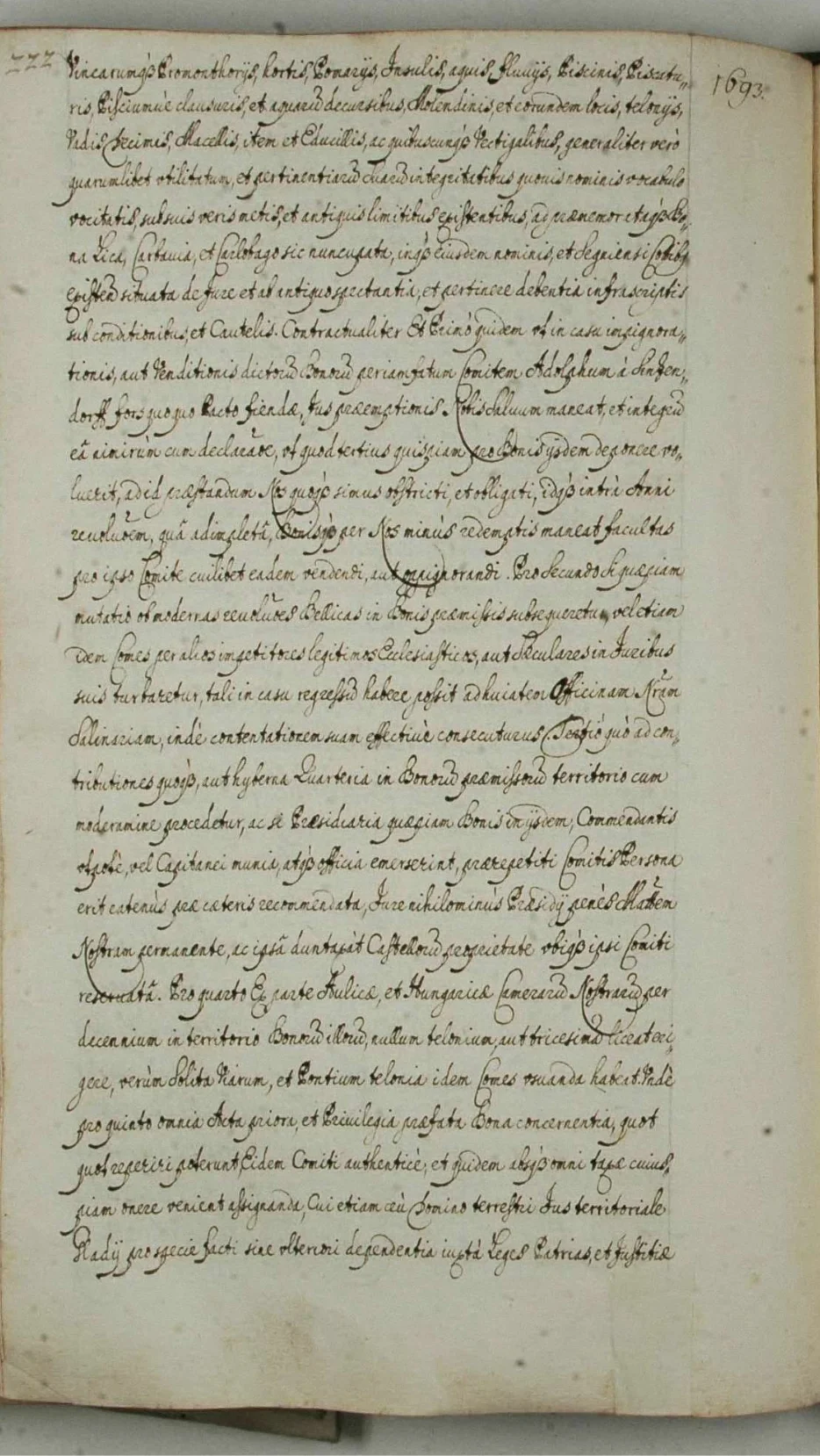
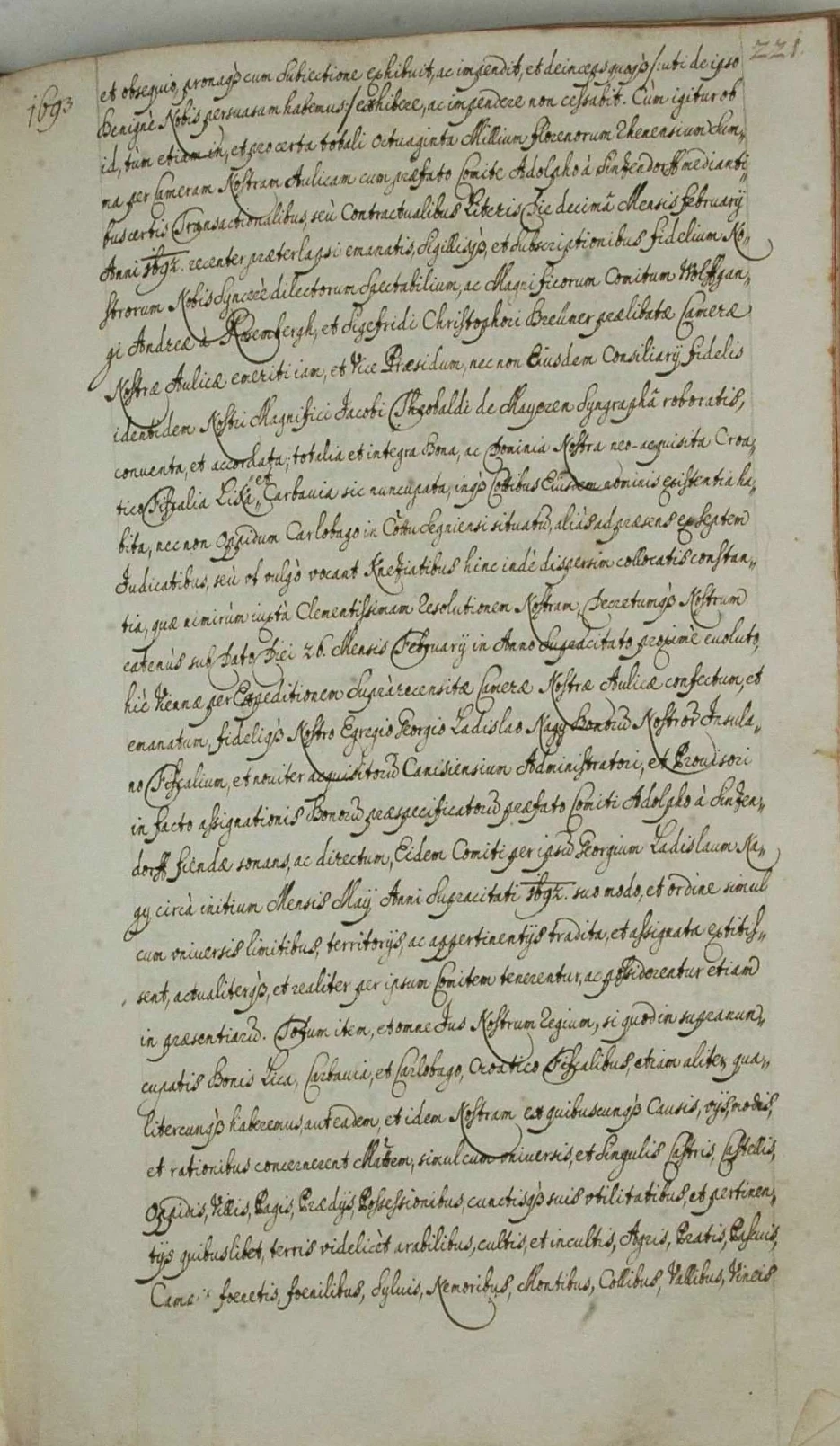
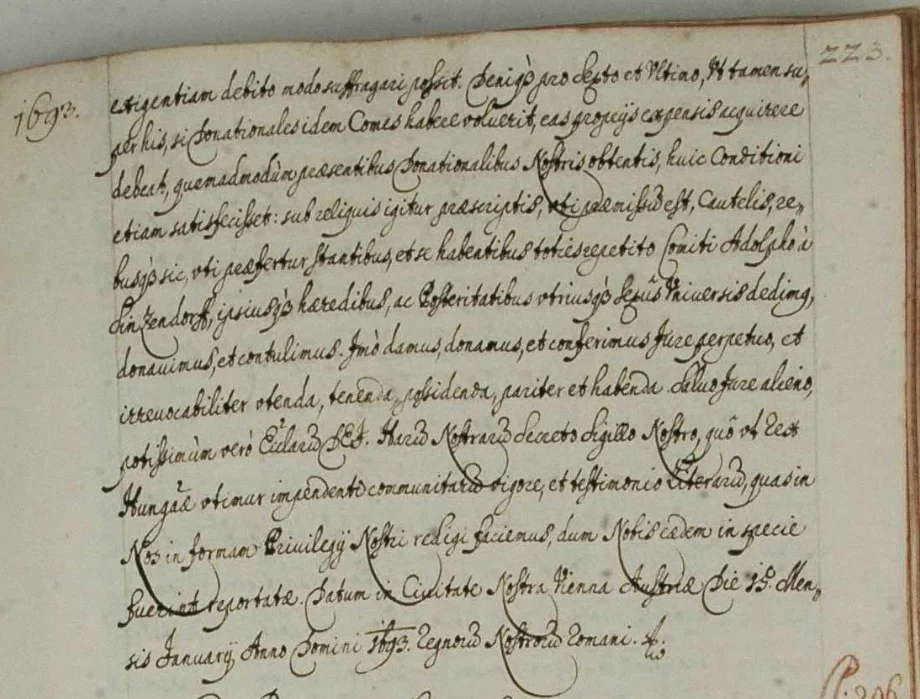
Source: Hungaricana, Libri Regii.
As the Ottoman threat receded, Karlobag increasingly turned towards the sea and trade. Its harbour became an important link between the Croatian interior and the Adriatic maritime world.
The reign of Empress Maria Theresa (1740–1780) was particularly important. Her reforms also affected Karlobag. Recognising the considerable transport and economic potential of the Adriatic, she introduced measures that permanently influenced the town’s appearance and development. In 1757, she issued the well-known Statute of Karlobag , which became an important basis for municipal self-government, urban organisation, and the development of trade.
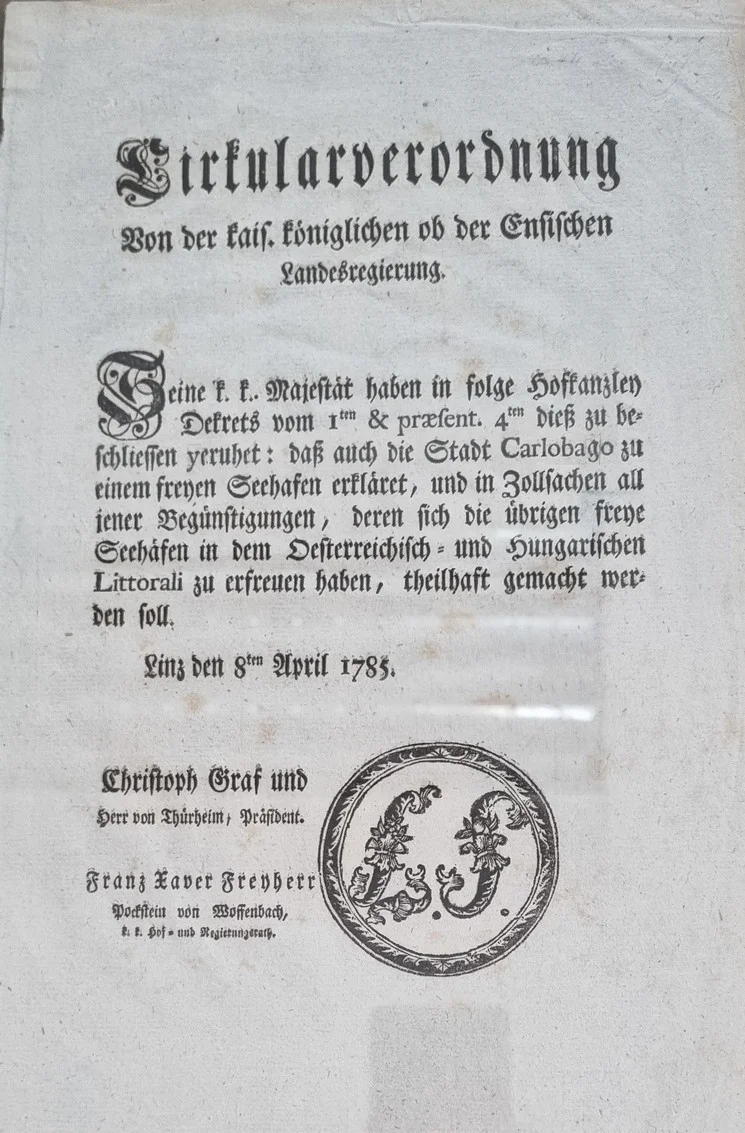
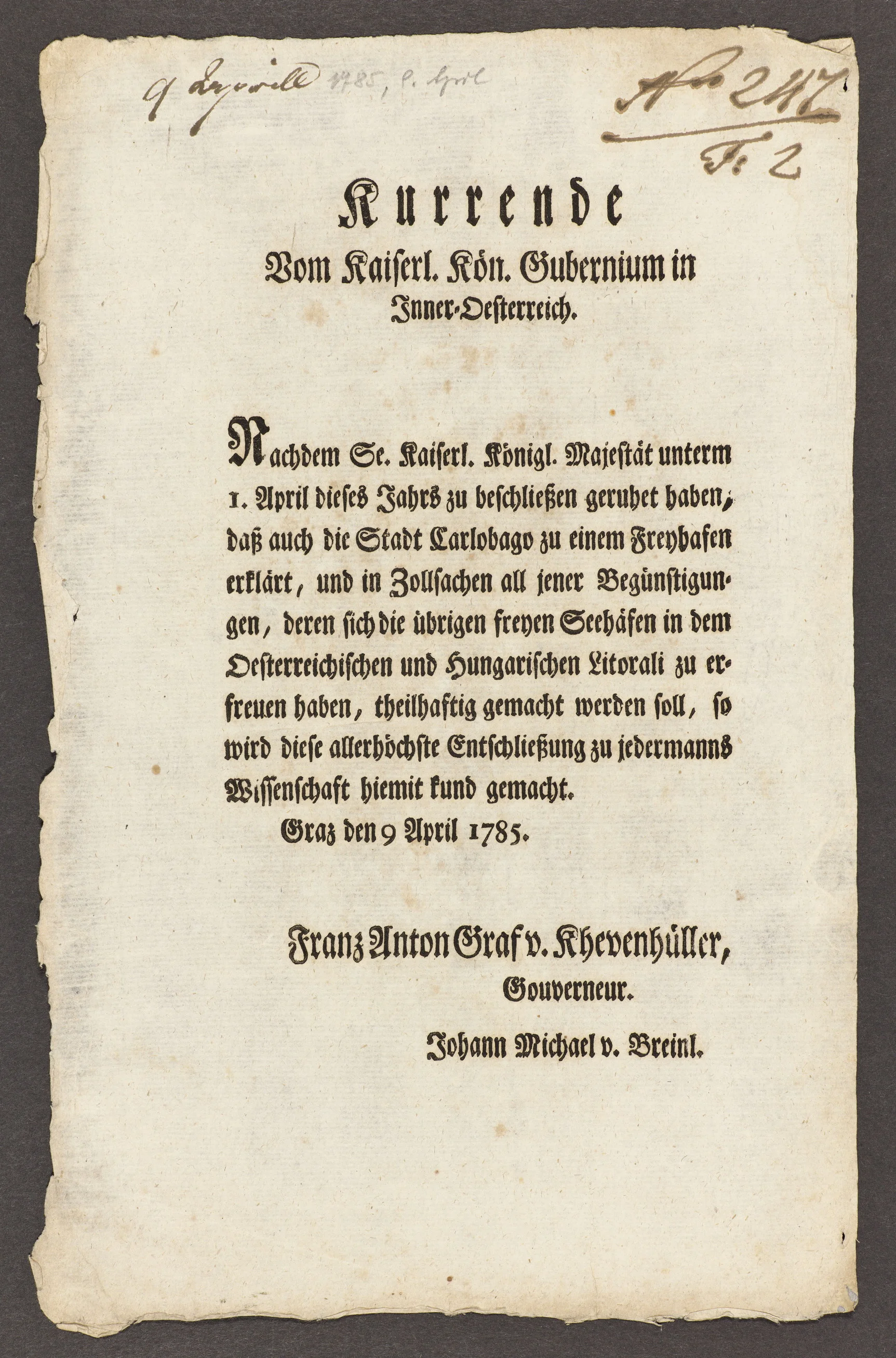
Emperor Joseph II (1780–1790), continuing his mother’s policy of enlightened absolutism, gave strong impetus to the development of the coast. In 1785, Karlobag was granted the status of a . Customs restrictions were thereby eased, new merchants and seafarers were attracted, and local shipping received a significant boost.
A special sanitary station also operated in connection with the free port. It functioned within the Distretto marittimo di Carlobago, or Litorale ungaro-croato. From the late 18th century until the beginning of the 20th century, it issued official health certificates known as Fede di sanità. These documents confirmed that a vessel was departing from a disease-free environment and had free pratique (in libera pratica).
5. Roads, Economic Development, and the End of the Frontier Era
Karlobag’s development as a free port depended on better links with the interior. The greatest natural obstacle was Velebit, which for centuries separated the Adriatic coast from the economic centres of continental Croatia.
A major advance came with the completion of the Carolina Road (Via Carolina) in 1728, linking Karlovac and Karlobag. The road was of great military and economic importance because it enabled a more intensive exchange of goods between the Pannonian Plain and the Adriatic Sea.
Timber, grain, and livestock products were transported through Karlobag from the interior to the coast, while salt, wine, oil, and other goods arrived from the coastal regions and the Mediterranean.
During the 18th century, the transport network expanded further with the construction of new roads. Karlobag consequently developed from a military post into an important commercial and maritime centre.
Despite its economic development, Karlobag remained part of the special military system of the Military Frontier until the second half of the 19th century. For generations, its inhabitants lived under military obligations and strict administration.
Only after the abolition of the Military Frontier in 1881 and its integration into civil Croatia did a new period of development begin under modern civil administration.
Karlobag gradually moved beyond its frontier legacy and increasingly focused on maritime activity, trade, and the development of the local community.
6. Church Life and the Sacred Heritage of Karlobag
Alongside the reconstruction of the settlement, the growth of trade, and the strengthening of its military role, church life formed an important part of Karlobag’s history. After periods of war and insecurity, the Catholic Church played an important role in restoring social life, preserving cultural identity, and connecting the inhabitants of the Velebit foothills.
The Capuchins occupy a special place in the town’s history. They arrived in Karlobag in the 18th century and founded a monastery. Their presence was important not only for religious life but also for education, literacy, and assistance to the local population.
The Capuchin monastery became one of Karlobag’s most important spiritual and cultural centres. The friars cared for the religious life of the population, maintained parish registers, and preserved valuable cultural heritage.
At a time marked by military service, seafaring, and economic hardship, church institutions served as important gathering places and helped preserve the identity of Karlobag’s inhabitants.
The town’s development was accompanied by the growth of sacred architecture. Karlobag’s churches and chapels still bear witness to the historical connection between this Velebit coastal community and the wider Catholic cultural world of the Habsburg Monarchy.
7. Karlobag in the 19th Century: Development of the Harbour, Waterfront, and Maritime Tradition
During the 19th century, Karlobag underwent major political and economic changes. Especially after the abolition of the Military Frontier and the introduction of civil administration, the town gradually moved away from its predominantly military character and turned towards the modernisation of its economy, maritime activity, and municipal infrastructure.
Thanks to its position between Velebit and the Adriatic Sea, Karlobag retained an important role as a maritime link between the islands, the coast, and the interior. Harbour traffic expanded, while piers, the shoreline, and maritime facilities were improved, creating safer conditions for ships and more intensive commercial exchange.
During the 19th and early 20th centuries, a stone waterfront was built and became one of the town’s most recognisable features. It was not only an economic facility but also the centre of everyday life—a meeting place for seafarers, merchants, fishermen, and the inhabitants of Karlobag.
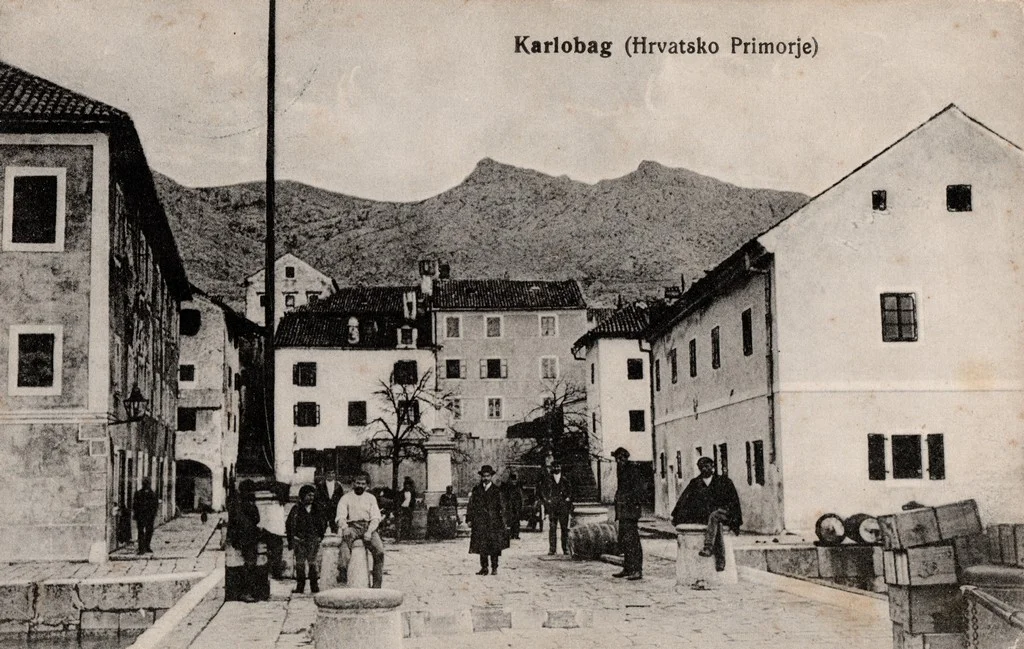
The Karlobag waterfront and everyday life beside the harbour
Source: Tomislav Potočnjak Collection.
Inventory number: ZTP-KB-1013.