The Statute of an Adriatic Fortress and Its Remarkable Odyssey

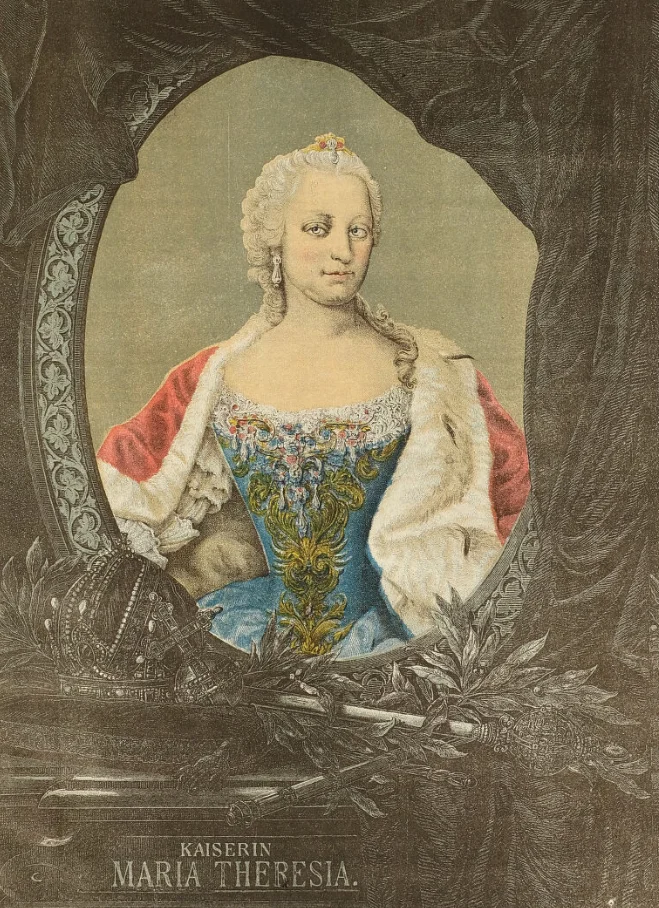
Empress Maria Theresa (1717–1780)
When Empress Maria Theresa embarked on the modernisation of the Habsburg Monarchy in the eighteenth century, her attention also turned to the Adriatic coast. Strategically situated at the meeting point of maritime routes and the trading roads across Velebit, Karlobag was recognised as an important centre for maritime development and for connecting the Military Frontier hinterland with the open sea.
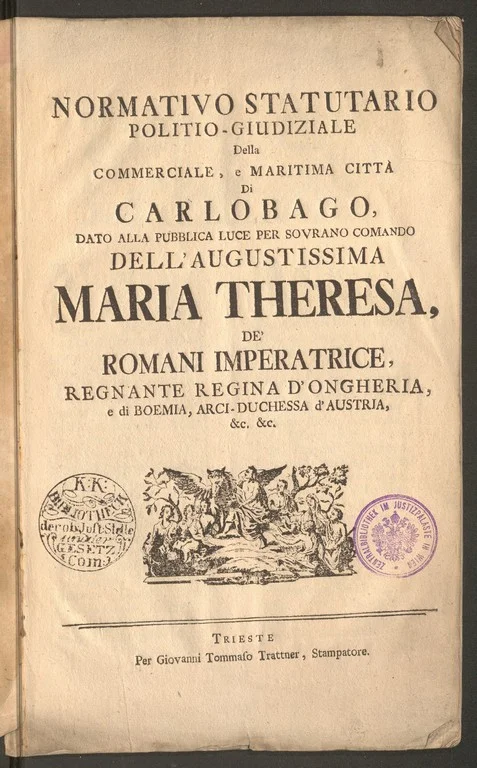
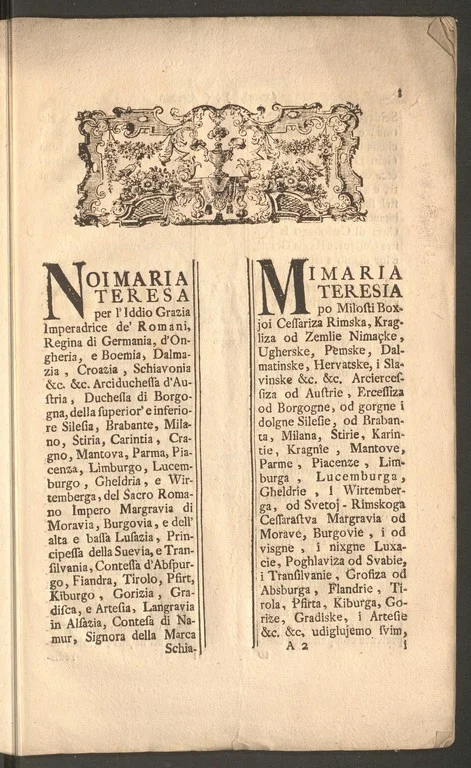
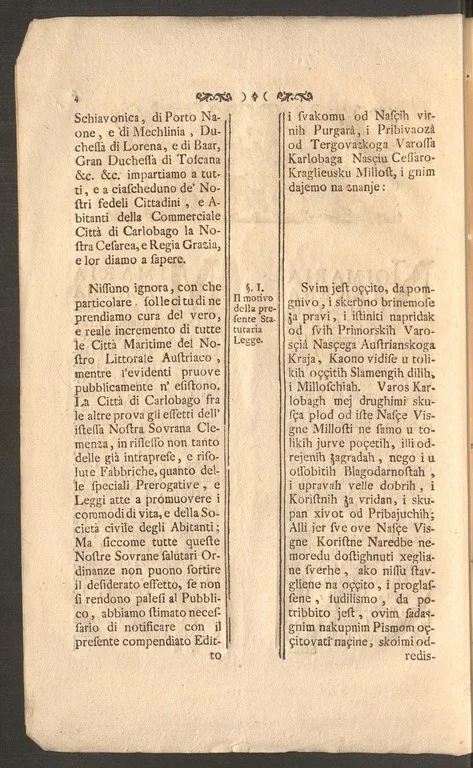
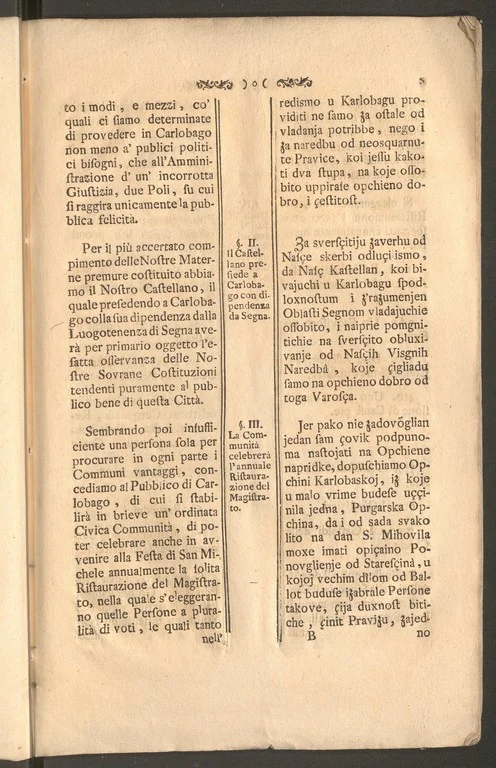
For the town to flourish, however, it needed a firm, modern and clearly defined legal framework. Accordingly, in 1757, the Statute of the Town of Karlobag was created—a historic legal charter printed in Italian and Croatian in Trieste by the renowned press of the imperial printer Giovanni Tommaso Trattner.
Although it comprises only 23 pages, this document, officially entitled “Normativo Statutario Politio-Giudiziale della Commerciale, e Maritima Città di Carlobago”, offers a fascinating window into the past. Far from being a dry catalogue of laws, it offers a vivid glimpse into the demanding yet dynamic life of a town beneath Velebit. The Statute precisely regulated maritime law, trade at Karlobag’s harbour, political and judicial affairs, and the maintenance of everyday order in a town that proudly held the status of a “commercial and maritime centre”.

The original document bears witness to the legal and economic autonomy granted to Karlobag in the mid-eighteenth century. Below are several key symbols of the town’s self-government, from the imperial seal to the text of the Statute itself, now preserved in the Croatian State Archives in Zagreb.

Imperial Seal of Maria Theresa
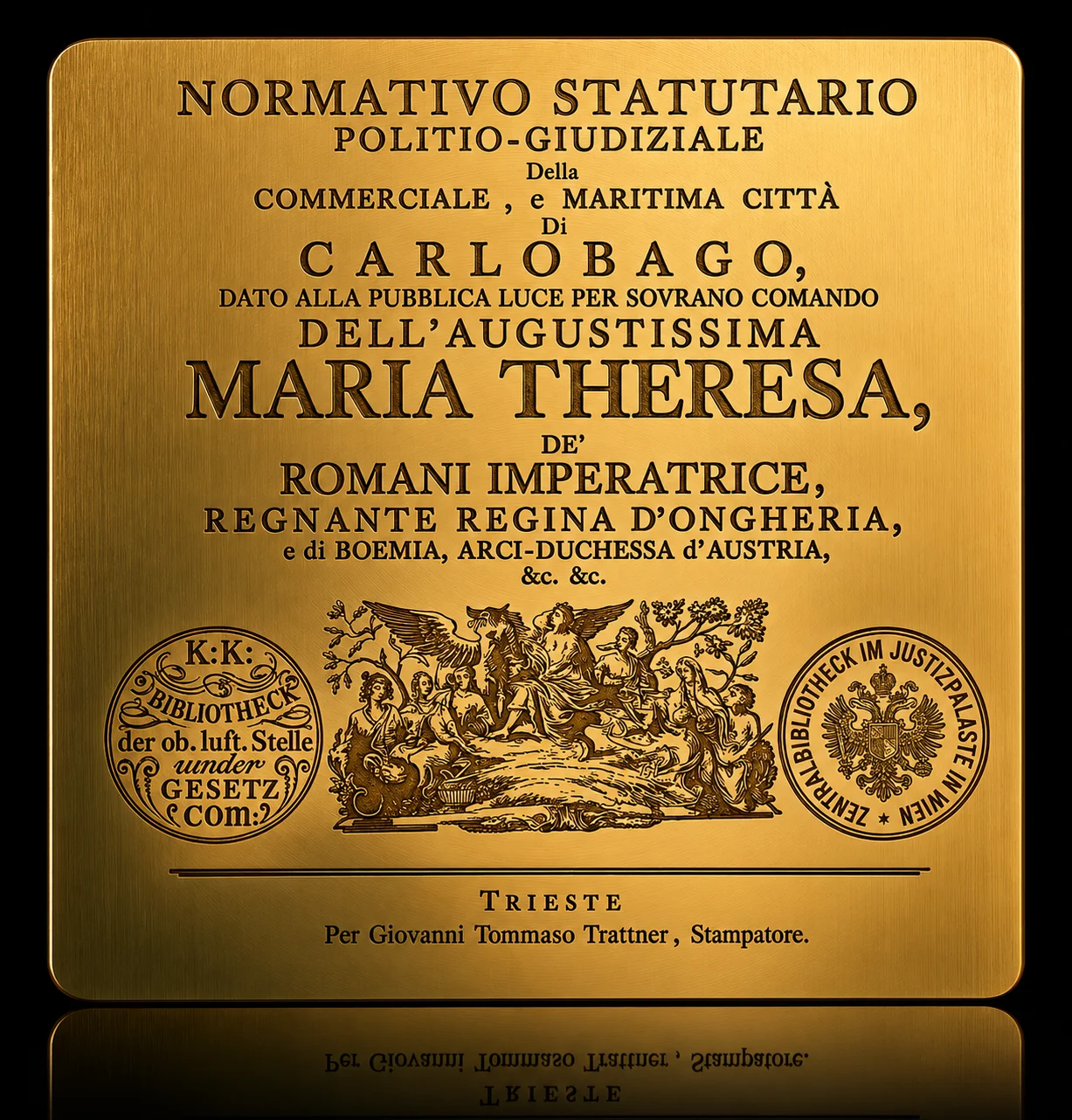
Normativo Statutario – Carlobago

Symbol of Municipal Autonomy
Source: Croatian State Archives (HDA), Zagreb, HR-HDA-1633, Collection of Statutes of the Croatian State Archives, 1608–1854, Statute of Karlobag.
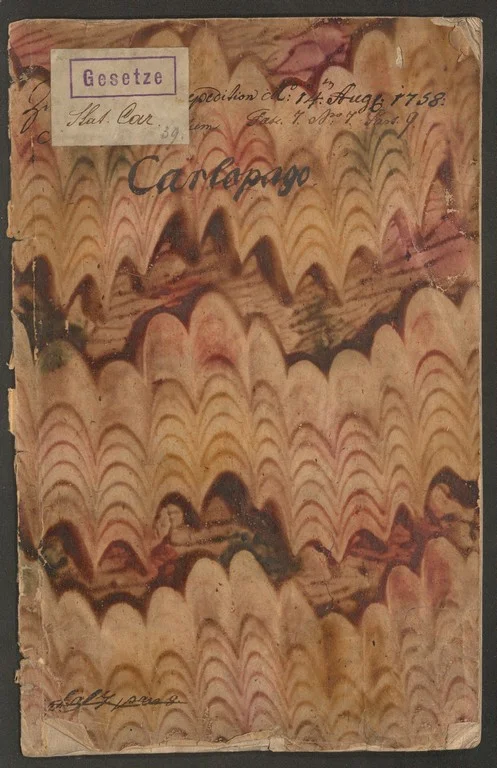
Cover
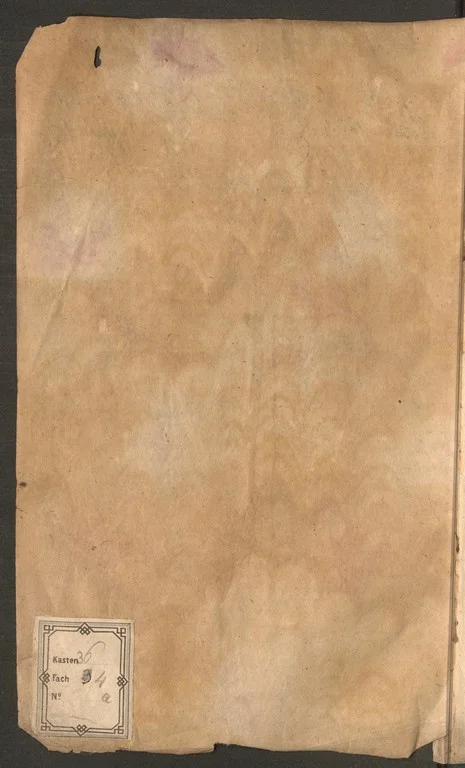
Page 1
Page 2
Page 3
Page 4
Page 5
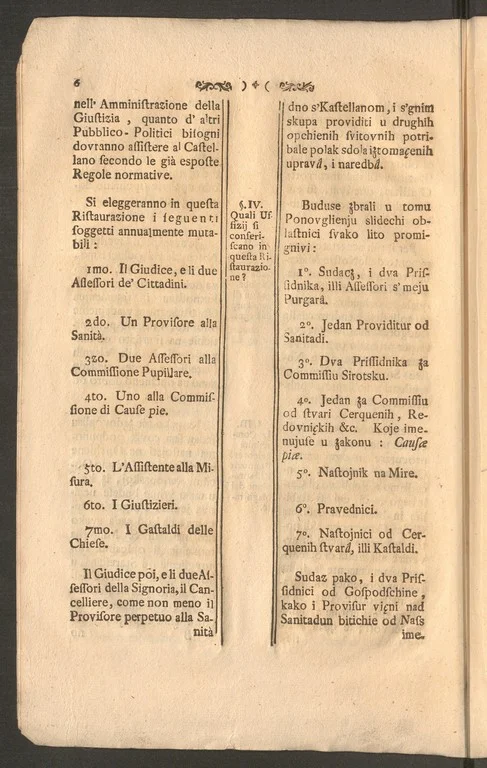
Page 6
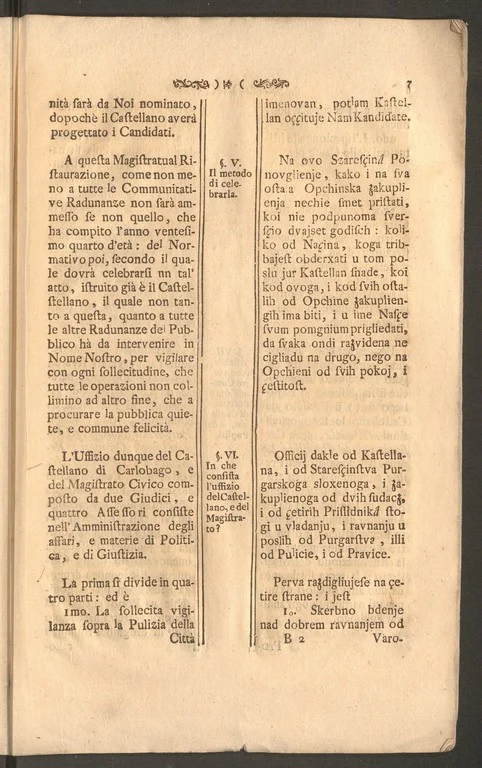
Page 7
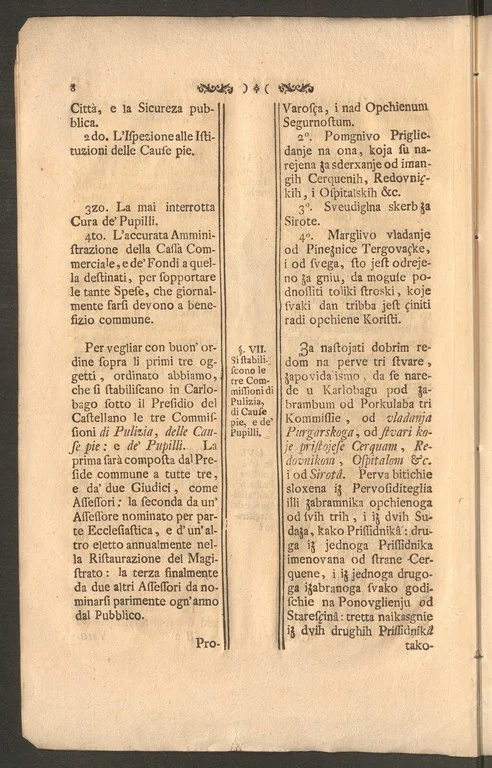
Page 8
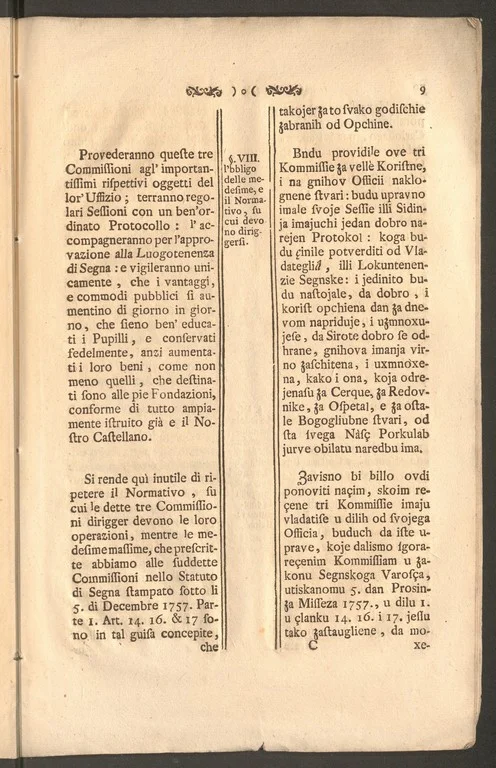
Page 9
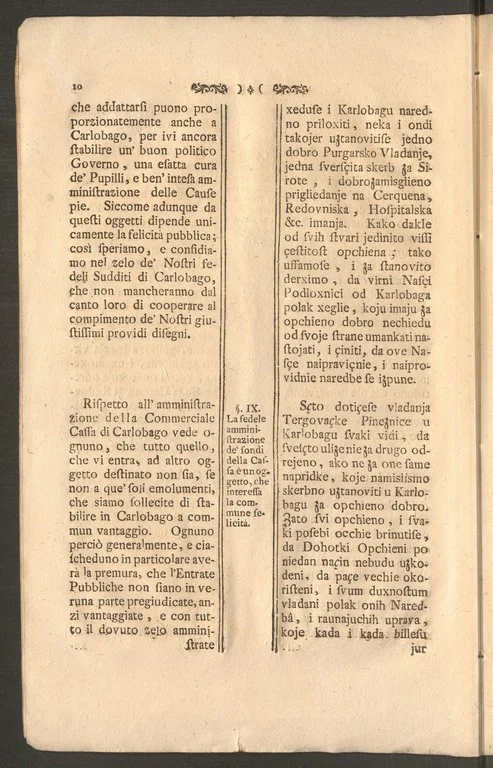
Page 10
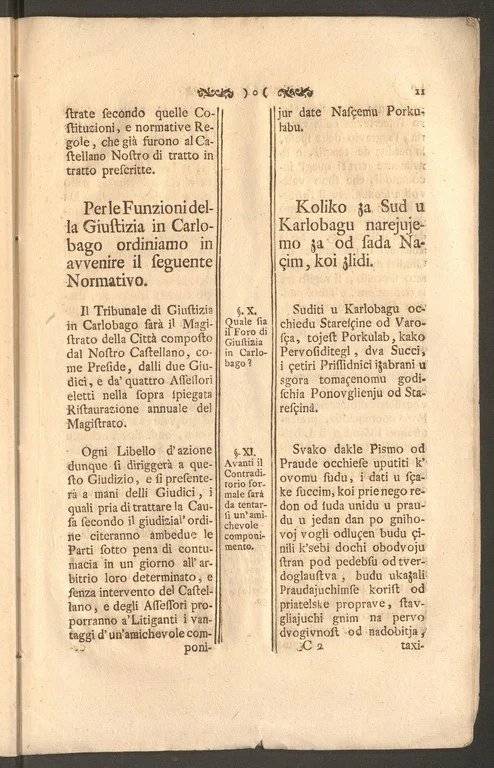
Page 11
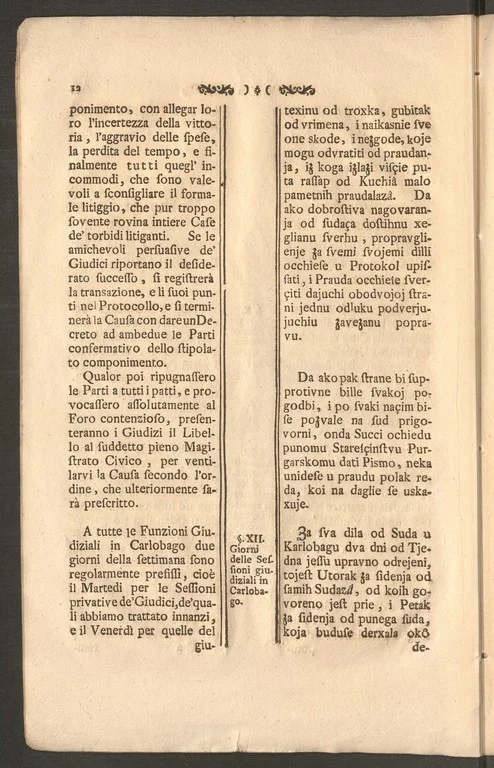
Page 12
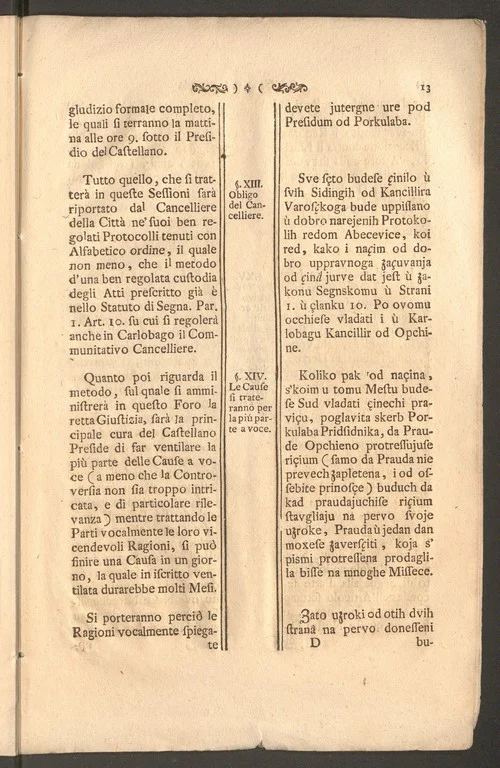
Page 13
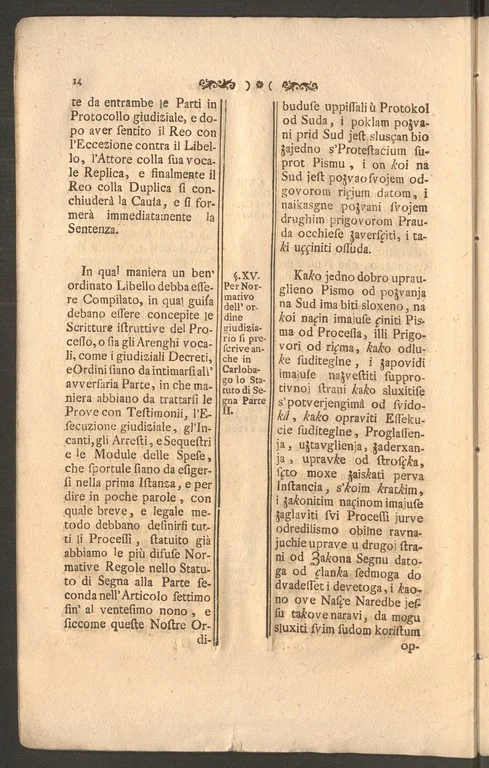
Page 14
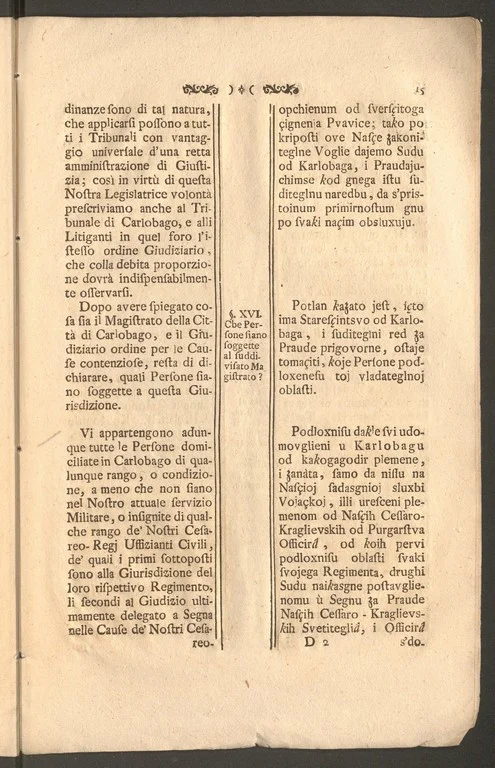
Page 15
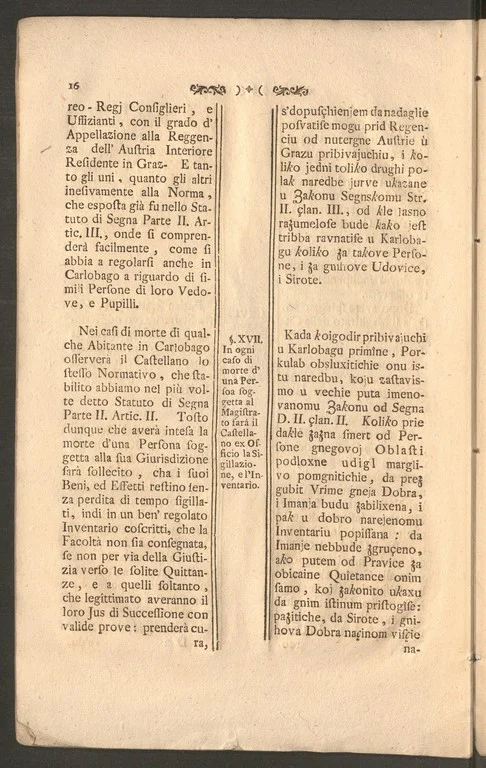
Page 16
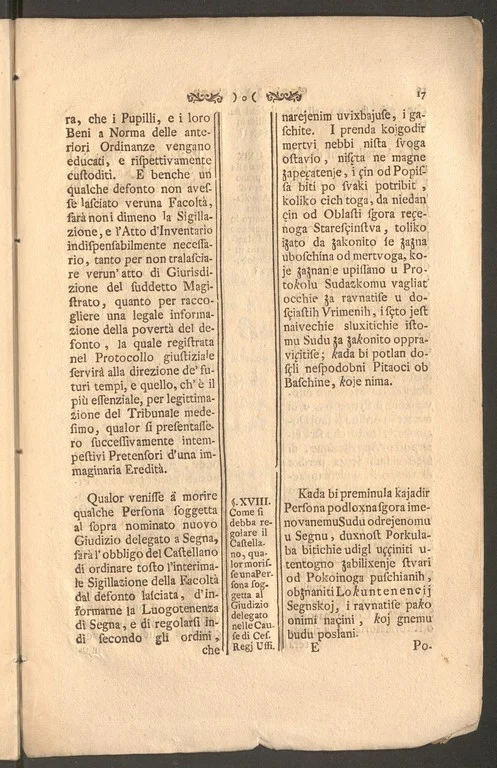
Page 17
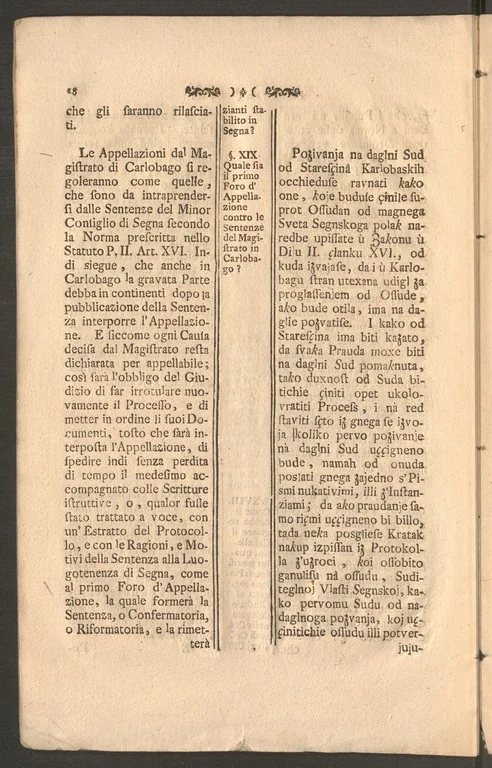
Page 18
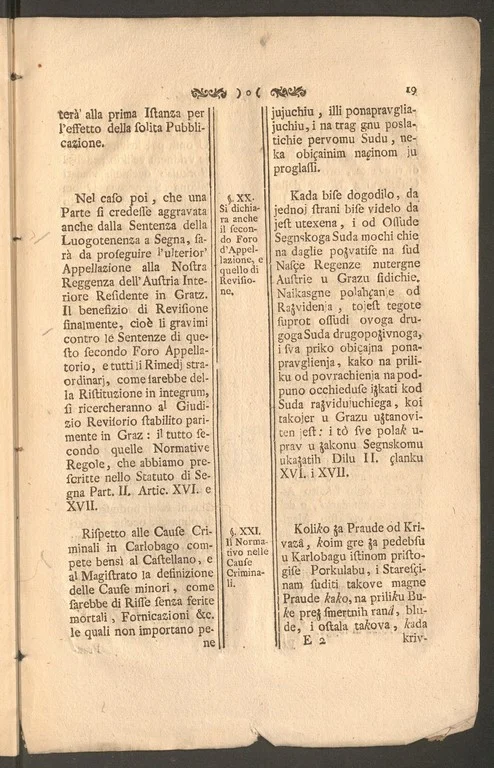
Page 19
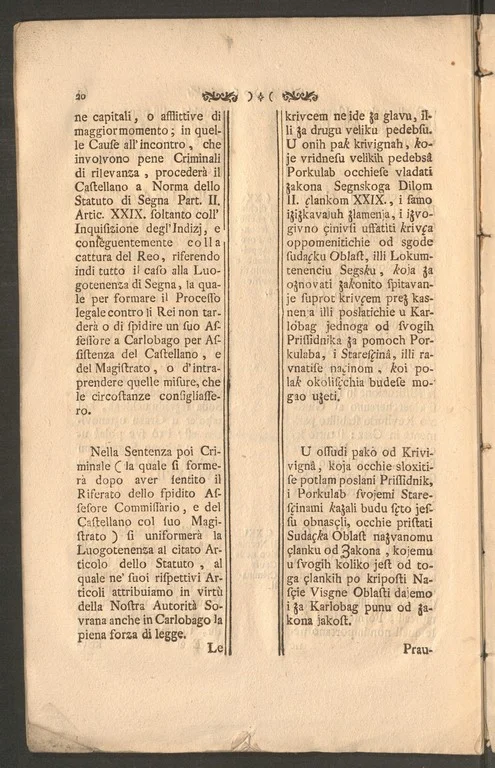
Page 20
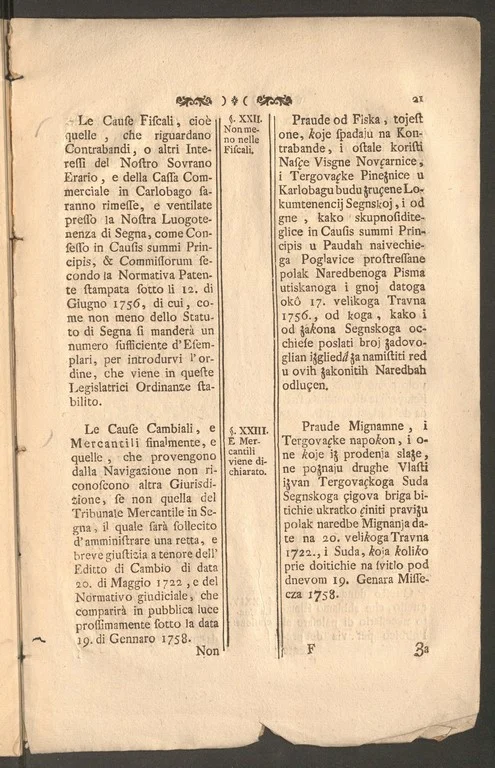
Page 21
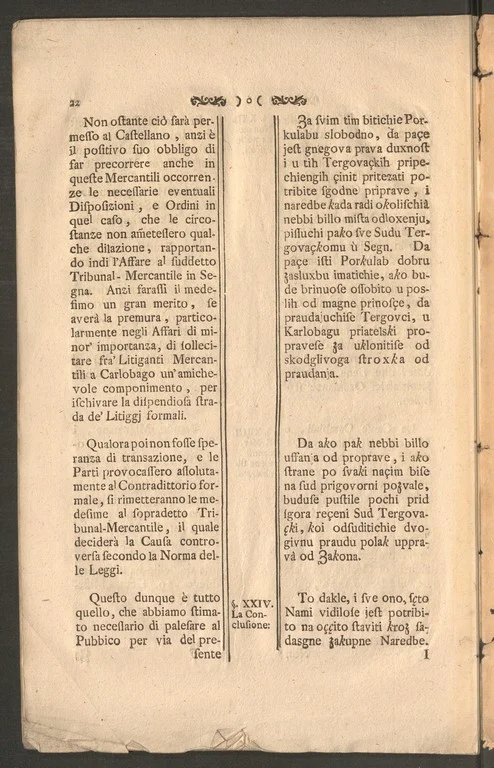
Page 22
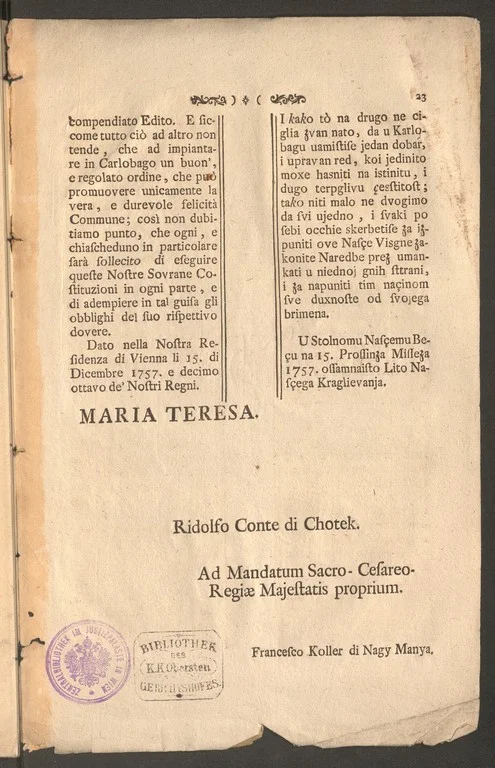
Page 23
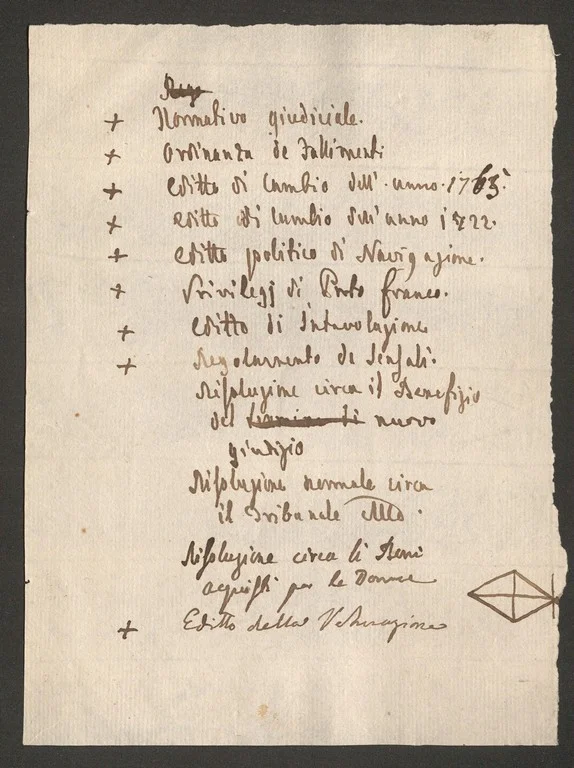
Page 24
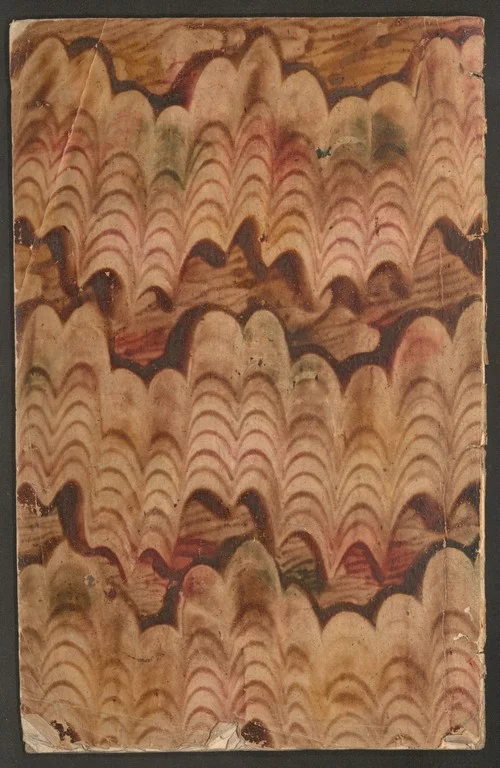
Cover
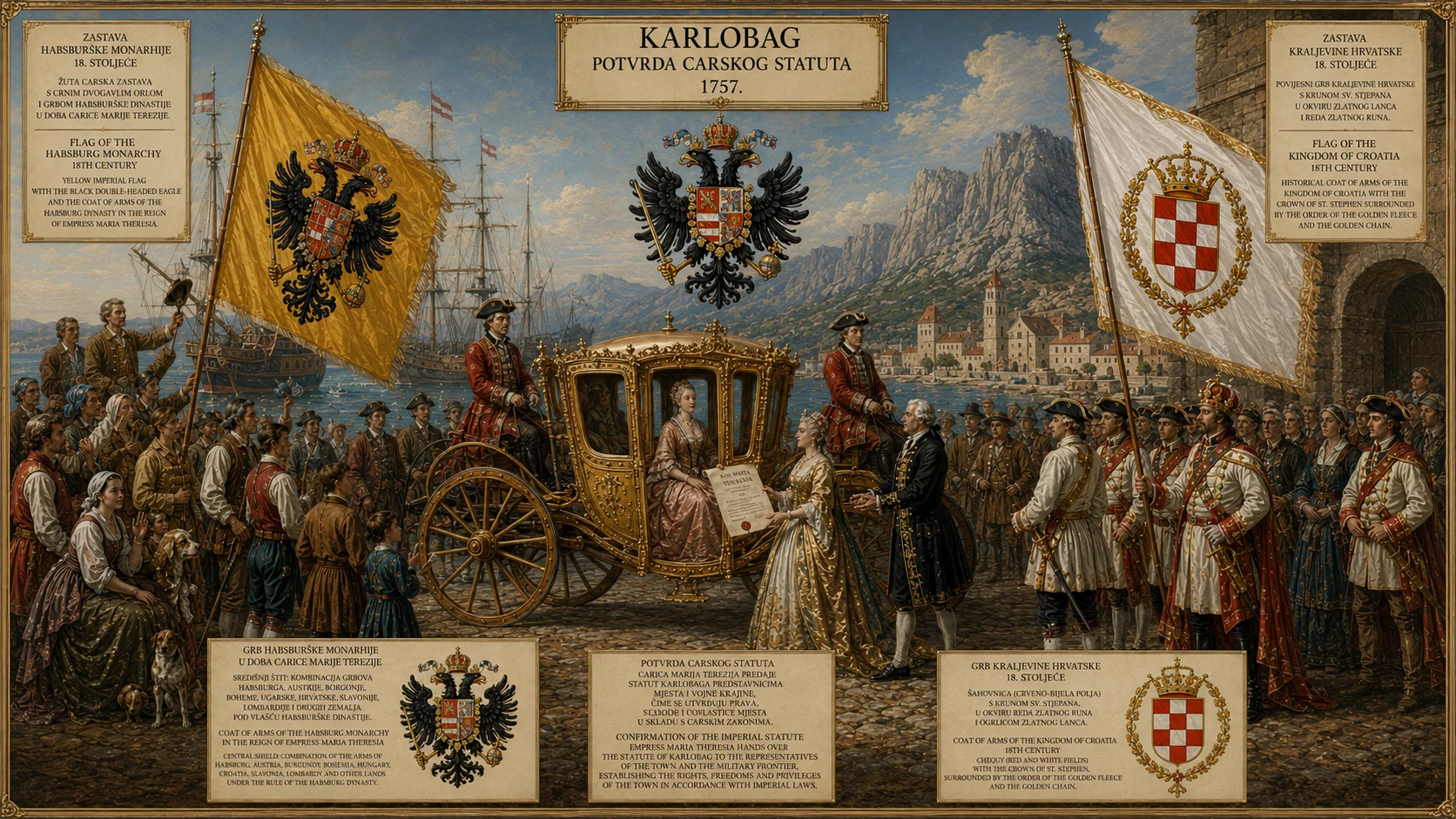
Historical and artistic reconstruction of the ceremonial confirmation of the Karlobag Statute in 1757, created in accordance with the heraldic and historical characteristics of the age of Empress Maria Theresa.
What makes this particular copy so exceptional, however, is the extraordinary two-century odyssey it endured. Its pages preserve authentic traces—true “scars of history”—of a remarkable journey in which the volume narrowly escaped destruction in Vienna, avoided becoming Nazi war booty in Germany, and ultimately returned to its homeland intact.
Soon after it was printed in 1757, this copy was sent to Vienna for the use of the Legislative Commission (Gesetz-Commission) and the Supreme Judicial Office (Oberste Justizstelle), institutions associated with Maria Theresa’s efforts to unify legislation throughout the monarchy. The earliest round black-and-white stamp, written in historical German orthography, records this provenance: “K. K. BIBLIOTHECK der ob. Just. Stelle und der GESETZ Com.”
During the administrative reorganisations that followed the Empress’s death, the book briefly entered private ownership. It became part of the distinguished legal library of Francesco Koller di Nagy Manya, whose printed ex libris remains visible. The document subsequently returned to state custody and entered the holdings of the Imperial-Royal Supreme Court (K.K. Oberster Gerichtshof), as shown by a black rectangular stamp. Croatian scholars recorded the Statute there in the nineteenth century, and Dr Ivan Strohal documented its location in his 1911 work “Statuti primorskih gradova i općina”.
After the monumental Vienna Palace of Justice (Justizpalast) was completed in 1881, the Statute was incorporated into the newly consolidated collection. Its final Viennese mark is a round purple stamp bearing the imperial double-headed eagle and the inscription “Zentralbibliothek im Justizpalaste in Wien”.
Although later Austrian records suggested that the Statute of Karlobag had been destroyed or lost during the Second World War, its actual fate was different and ultimately far more fortunate for Croatian heritage. Information from the Central Library of the Austrian Supreme Court (Zentralbibliothek des OGH) shows that the collections in the Vienna Palace of Justice faced two major historical threats.
The first major threat was the catastrophic fire at the Vienna Palace of Justice in 1927, which destroyed a substantial quantity of archival and library material. A further danger followed after the Anschluss, when Nazi authorities transferred valuable books from Vienna to Leipzig and the Reich Court (Reichsgericht). For many years, Austrian specialists had reason to suspect that the Karlobag Statute had disappeared during these wartime transfers.
An official response from the library of the Federal Administrative Court in Leipzig (Bundesverwaltungsgericht), however, confirms that the Statute was never accessioned there and is not held in its historical collections. This indicates that the document escaped the transfers to Germany. Its precise wartime location is not documented in the material presented here; it may have remained in an Austrian repository or another protected storage site.
After the war, the Statute was again held in Vienna. It was located in the late 1970s during efforts to return historical material and was transferred to Croatia in 1979 as part of an official restitution of cultural property from Austria.
Today, this surviving witness to history is preserved in the Croatian State Archives (HDA) in Zagreb as part of collection HR-HDA-1633. Its stamps and inscriptions are more than administrative marks of institutions that no longer exist: they document the long journey by which an important part of Karlobag’s heritage survived imperial administration, fire, wartime upheaval and decades of uncertainty before returning permanently to Croatia.
As we turn through these digitised pages, preserved from oblivion, we are looking at far more than an eighteenth-century legal document. Before us is a tangible witness to Karlobag’s resilience and historical significance. Every impression from Giovanni Tommaso Trattner’s press and every note in the margins speaks of a time when the town beneath Velebit occupied a significant place in the maritime and administrative life of the region.
Today, the Statute stands as far more than a monument to local law and maritime history. Its survival through transfers between imperial institutions, the fire at the Vienna Palace of Justice, wartime upheaval and the restitution of 1979 is remarkable.
The Viennese stamps and traces of ink visible on its pages are no longer merely administrative markings. They are authentic “scars of history” and lasting evidence that Karlobag’s heritage endured centuries, armies and political regimes before finally returning to the country in which its story began.