Karlobag Under French Rule: The Road from Vienna to Paris
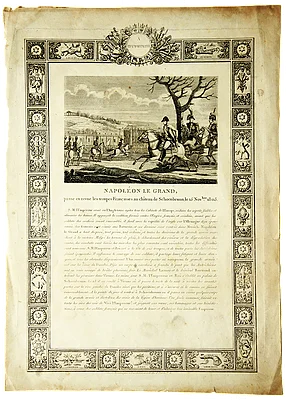
Everything began on October 14, 1809, at the Schönbrunn Palace near Vienna. Following Austria's defeat in the War of the Fifth Coalition and the Battle of Wagram, the Treaty of Schönbrunn was signed, by which the Austrian Empire ceded a significant portion of Croatian lands to Napoleon, including Istria, the Croatian Littoral, Gorski Kotar, Lika, and Dalmatia. Thus, without direct military conflict in the town itself, Karlobag became part of the newly established Illyrian Provinces, a French administrative entity on the eastern coast of the Adriatic.
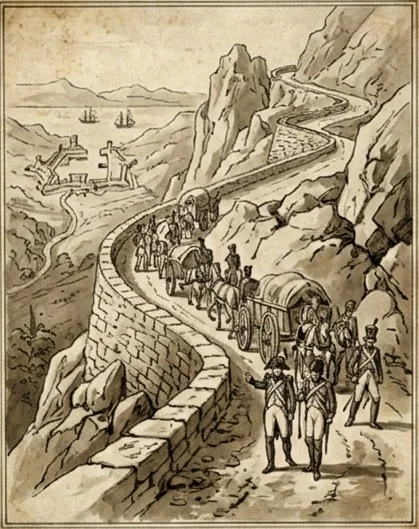
At the time of the negotiations in Schönbrunn, young Friedrich Staps attempted to assassinate Napoleon, which testifies to the tense political circumstances of that era. French authorities soon recognized the strategic position of Karlobag as an important transport and supply hub between Lika and Dalmatia. As the seat of a canton within the Civil Croatia province, the town played a significant role in the transport of goods, especially salt from the island of Pag, which represented an important economic resource. To connect the coast with the interior more efficiently, the French continued to maintain and improve the roads across Velebit.
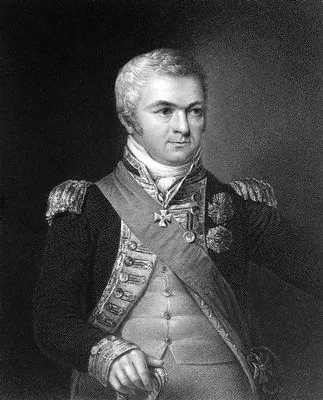
Among the Croatian officers who entered French service after 1809, (Marc Slivarich) stood out, a former officer of the Lika Regiment who achieved a notable career in Napoleon's army. His transfer to French service symbolized the changes that affected part of the border troops after the establishment of French rule in Croatian lands south of the Sava.
French rule also brought significant financial and military burdens. According to the terms of the peace treaty, Austria was obliged to pay high war reparations, while the inhabitants of the Illyrian Provinces were exposed to tax levies and military conscription as part of the Napoleonic Wars, including the campaign in Russia in 1812. In Karlobag, the military administration operated from the Fortica fortress, and British sources from 1813 cite officer Friedrich von Zergollern as the commander of the town.
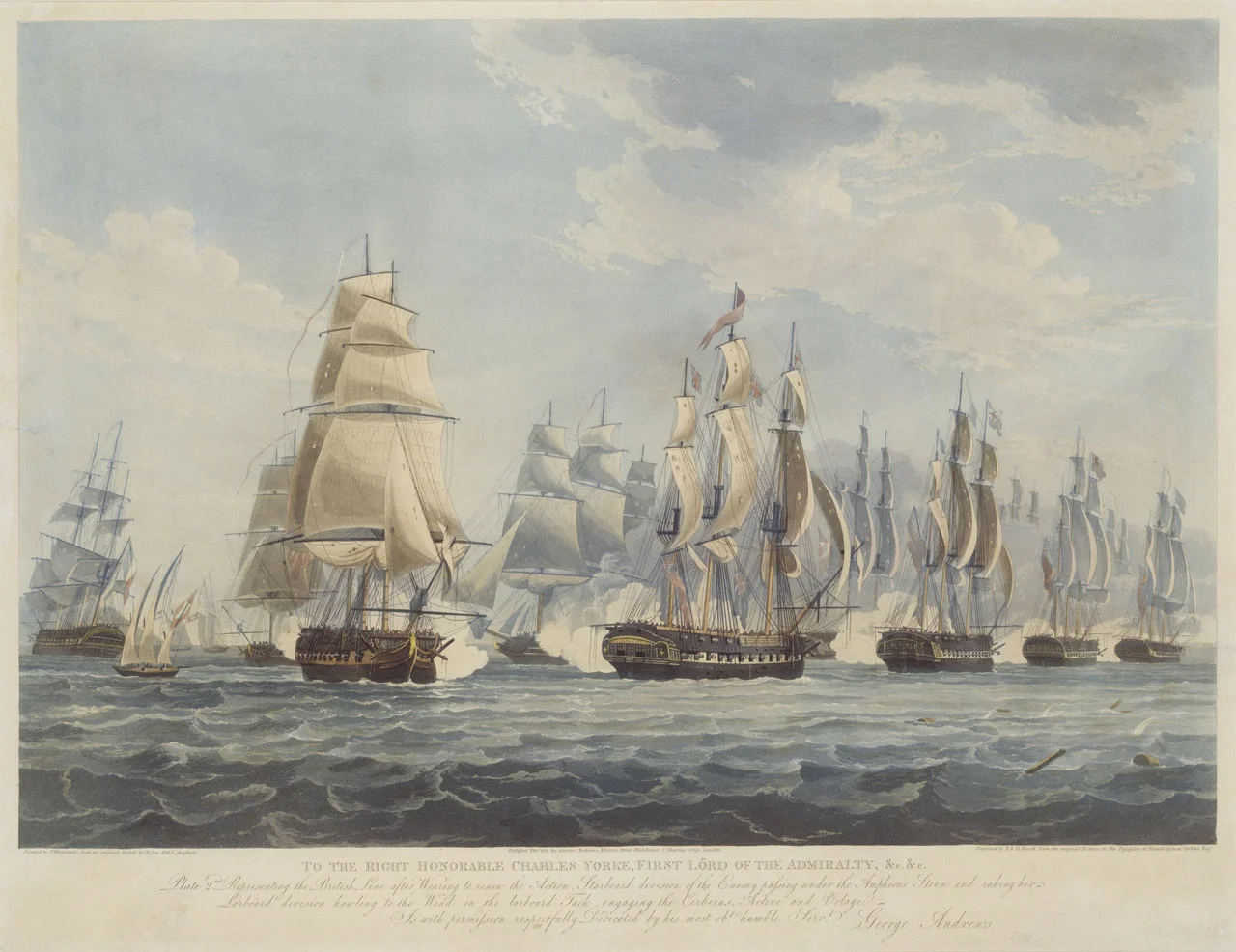
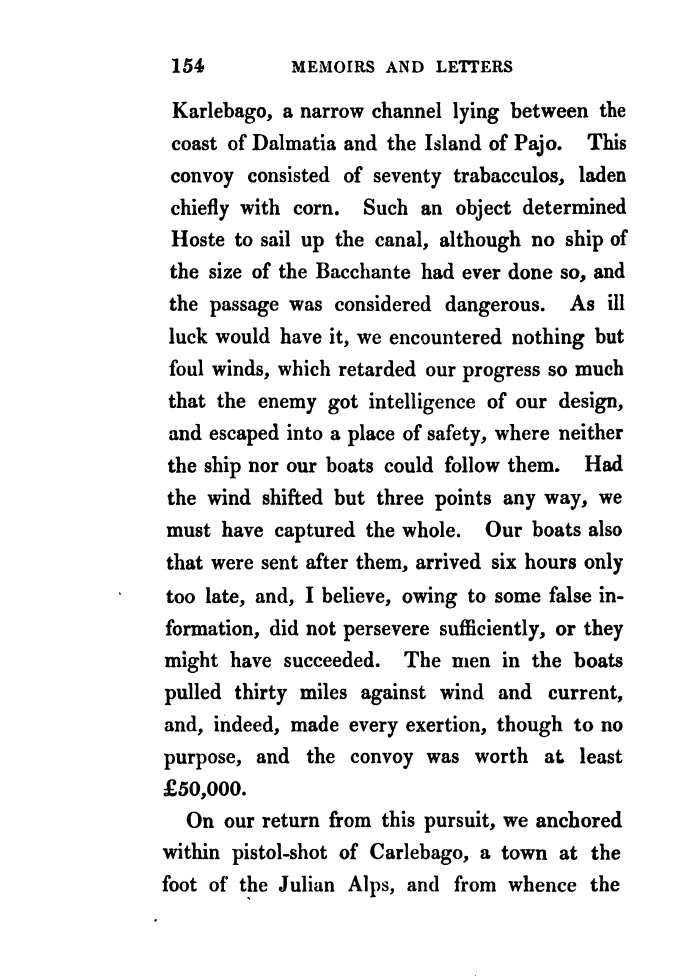
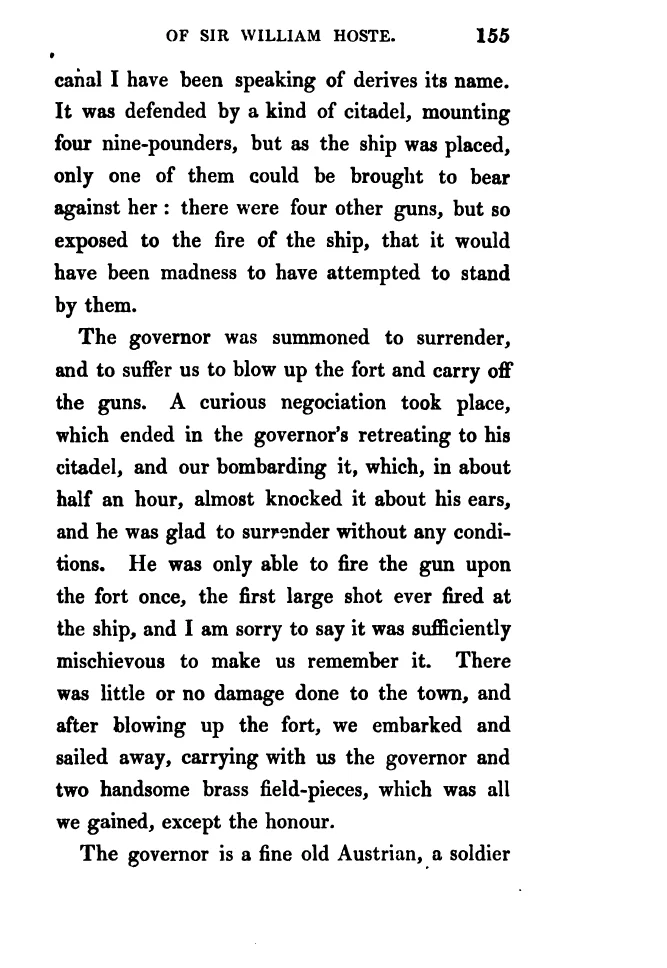
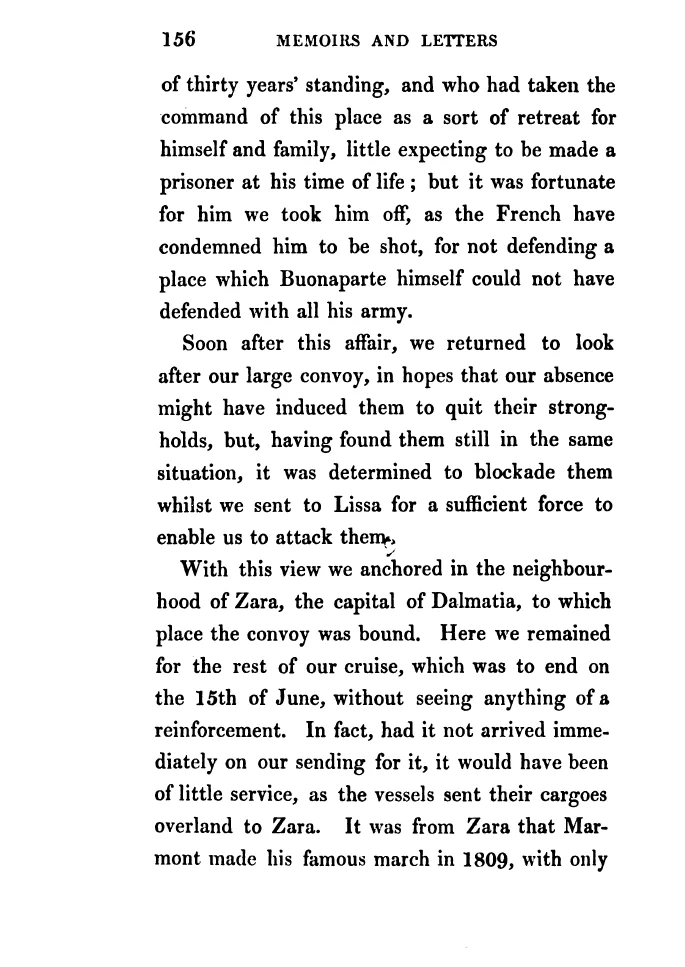
The end of French rule in Karlobag followed in May 1813 during British naval operations in the Adriatic. According to reports by Captain William Hoste and the work Naval History of Great Britain, the frigate HMS Bacchante sailed into the Velebit Channel with the aim of intercepting a French convoy. After a short bombardment and the surrender of the crew, British forces captured Karlobag, removed the artillery, and destroyed the fortification objects, thereby ending nearly four years of French rule in the town.
"Having received information on the 11th of May, that a convoy of enemy's vessels were in the channel of Karlobag, Captain Hoste proceeded thither; but, owing to contrary winds and a strong current, the Bacchante did not arrive there until the morning of the 15th. As the port of Karlobag offered an excellent shelter for enemy vessels, Captain Hoste determined to destroy the works which defended it.
The governor having refused to accede to the terms offered, the Bacchante anchored within pistol-shot of the battery, which mounted eight guns; and, after a good deal of firing, a flag of truce was hung out, and the place surrendered at discretion. The marines and a party of seamen, under the command of Lieutenant Hood, landed and took possession. The guns were embarked, the public establishments destroyed, and the castle blown up. The Bacchante retired with the loss of four men severely wounded, two of whom lost each an arm." — Translation and editorial preparation based on The Naval History of Great Britain, Vol. VI (1837).
"On May 15, 1813, the frigate 'Bacchante,' under the command of Captain William Hoste, arrived off Karlobag on the Croatian coast and immediately attacked the enemy batteries. The town soon surrendered, after which Captain Hoste landed a party of men. They blew up the fortress, destroyed the public buildings, and captured eight cannons. In this action, the 'Bacchante' sustained four severely wounded men." — Translation and editorial preparation based on Halton Stirling Lecky, The King's Ships, Vol. I (1913).
"The fortress in Karlobag has been completely destroyed, and the town is liberated from the French military presence after less than four years of their administration." — Translation and processing of Captain Hoste’s original letters to his mother, May 1813.
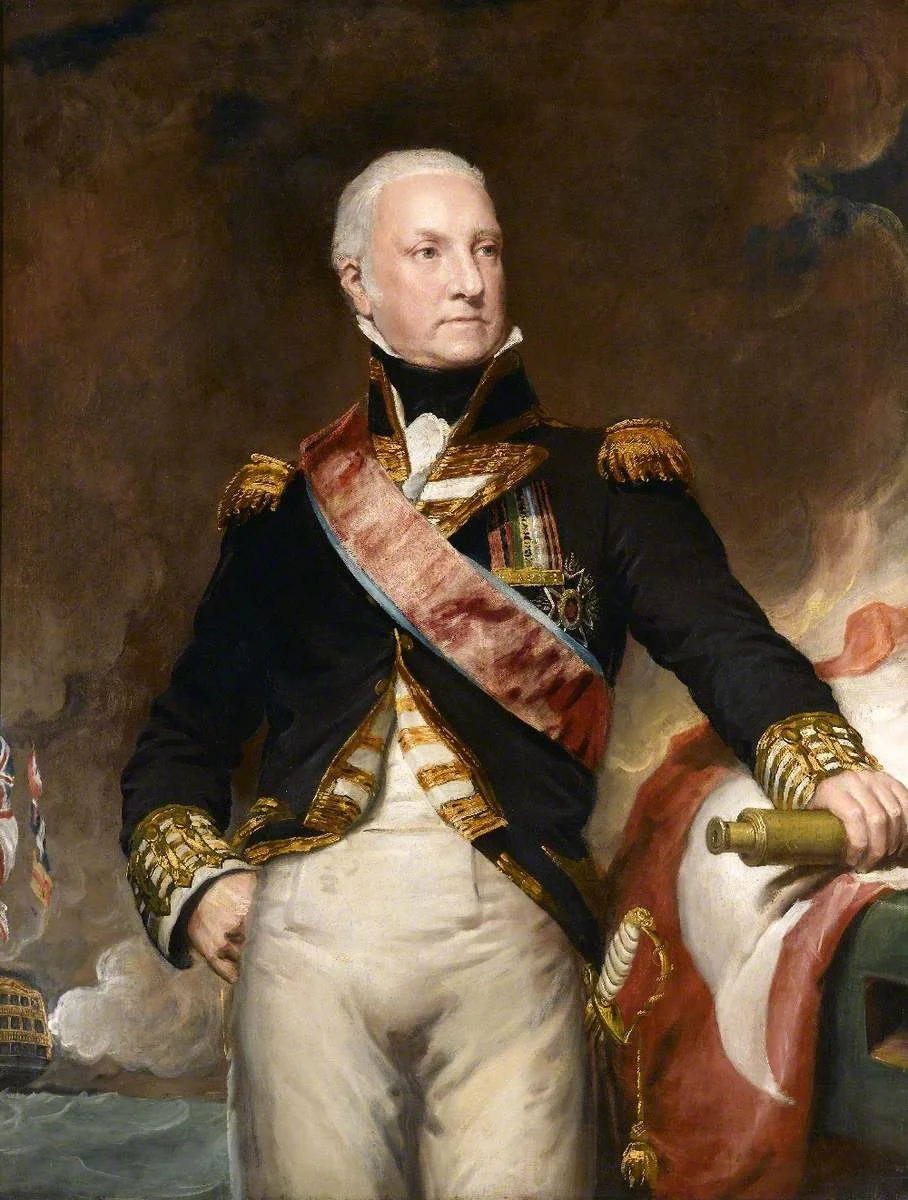
His Majesty's Ship Bacchante, Karlobag, May 15, 1813. SIR, Having received information on the 11th inst. that a convoy of enemy’s vessels were lying in the channel of Karlobago, I proceeded there without loss of time, but, from contrary winds and a strong current, did not arrive till this morning. The convoy having had notice of our approach, had sailed. The port of Karlobago offers such excellent shelter for the enemy’s convoys, that I thought it an object to destroy the works which defend it. The Governor refusing to accede to the terms I sent him, I anchored within pistol-shot of the batteries, and after a good deal of firing, a truce was hung out, and the place surrendered at discretion. The marines and a detachment of seamen were landed, under the command of Lieutenant Hood, and took possession. No time was lost in embarking the guns and destroying the public works; and having blown up the castle, the party were re-embarked. The place was commanded by Monsieur de Zergollen, who is a prisoner on board, with his aid-de-camp, and a French commissary of the marines. The castle mounted four nine-pounders, in the south east battery two twelve-pounders, and in the north battery two brass sixes. I am sorry to add we had four seamen severely wounded in this affair, two of them their left arms shot off. I have only now, Sir, to express my approbation of every one employed in the service. I have, &c. W. HOSTE, Captain. To Rear-Admiral Fremantle, &c. &c. &c.— Translation and processing of Captain Hoste’s original report to Rear-Admiral Fremantle (Sir Thomas Francis Fremantle, 1st Baron Fremantle (20 November 1765 – 19 December 1819)), May 1813. The letter was published in The London Gazette, issue 16772, page 1793.
His Majesty's Ship Bacchante, Karlobag, May 15, 1813. Report of Seamen, &c. wounded on board His Majesty's Ship the Bacchante, while in Action with the Battery of Karlebago, May 15, 1813. Michael Callaghan, seaman, severely, lost an arm. Joseph Eyers, seaman, severely, lost an arm. John M’Evoy, seaman, severely. John Thompson (3), seaman, slightly. (Signed) W. L. KIDD, Surgeon. W. HOSTE, Captain.— Translation and processing of Captain Hoste’s original report to Rear-Admiral Fremantle (Sir Thomas Francis Fremantle, 1st Baron Fremantle (20 November 1765 – 19 December 1819)), May 1813. The letter was published in The London Gazette, issue 16772, page 1793.
His Majesty's Ship Milford, off Trieste, 16th February 1814. Statement of the several places and ordnance taken by the squadron under the command of Rear-Admiral Fremantle, during the operations in the Adriatic. Zara (Zadar): 110 guns, 18 howitzers, and 100 guns dismounted; taken by HMS Havannah and HMS Weazle. Cattaro (Kotor): 130 guns; taken by HMS Bacchante and HMS Saracen. Agosta and Curzola (Lastovo and Korčula): 124 guns; taken by HMS Apollo, HMS Imogen, and a detachment from Lissa. Trieste: 80 guns; taken by HMS Milford, Eagle, Tremendous, Mermaid, Wizard, and Weazle. Fiume and Porto Ré (Rijeka and Kraljevica): 67 guns and 500 stand of arms; taken by HMS Milford, Elizabeth, Eagle, Bacchante, and Haughty. Pola (Pula): 50 guns; taken by HMS Wizard, a party of Milford's marines, and Austrian forces. Entrance of the Po (four forts): 24 guns and 43 brass guns dismounted; taken by HMS Eagle, Tremendous, and Wizard. Lesina and Brazza (Hvar and Brač): 24 guns; taken by the boats of HMS Bacchante. Stagno (Ston): 12 guns; taken by HMS Saracen and a party of Austrians. Ragosnizza (Rogoznica): 8 guns; taken by the boats of HMS Milford and HMS Weazle. Isle of Mezzo (Lopud): 6 guns; taken by HMS Saracen and HMS Weazle. Farazina: 5 guns; taken by HMS Eagle. Citta Nuova and Rovigno (Novigrad and Rovinj): 8 guns (4 at each place); taken by HMS Elizabeth, Bacchante, and Tremendous. Ragusa (Dubrovnik): 138 guns and 500 men; taken by Bacchante, Saracen, and 400 Austrians. Carlobago (Karlobag): 12 guns and 150 men; taken by HMS Bacchante. (Signed) THOS. F. FREMANTLE, Rear-Admiral.— Translation and processing of original report Rear-Admiral Thomas Francis Fremantle (1765–1819) to Commander-in-Chief Sir Edward Pellew (Admiral Edward Pellew, 19 April 1757 – 23 January 1833). This document records the final suppression of Napoleonic power on the eastern Adriatic coast, February 1814. Published in The London Gazette, Issue 16888, Page 858.
With this act, Karlobag ceased to be a French stronghold. By the autumn of 1813, Austria, with the assistance of the British Navy, regained control over the entire coast, but the memory of that brief period under Napoleon's eagle remained etched in the ruins of the Fortica.
Records from the Family Archive: The Letters of Captain William Hoste
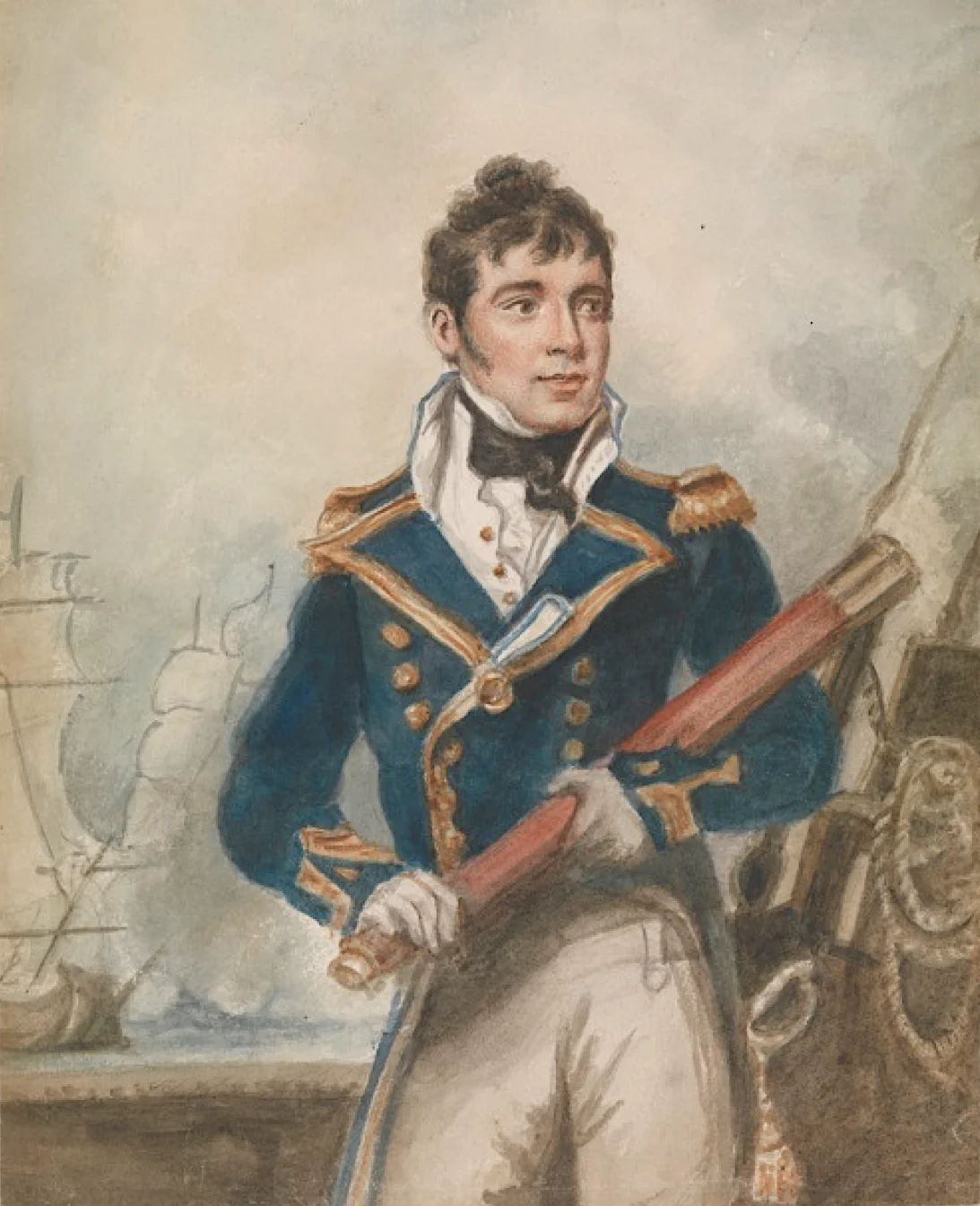
Captain William Hoste was a tireless and meticulous correspondent who maintained constant contact with his homeland throughout his entire service in the Adriatic. He wrote extensive daily letters, separating official reports for his superiors from personal ones sent individually to his mother and father. In these letters, he recorded not only military maneuvers but also his intimate views on politics, his fears, and the fates of the people he encountered in the whirlwind of war.
Following his untimely death, his wife, Lady Harriet Hoste, took upon herself the monumental task of preserving his legacy. She carefully collected and chronologically organised hundreds of his private letters and official notes into two extensive volumes titled "Memoirs and Letters of Capt. Sir William Hoste".
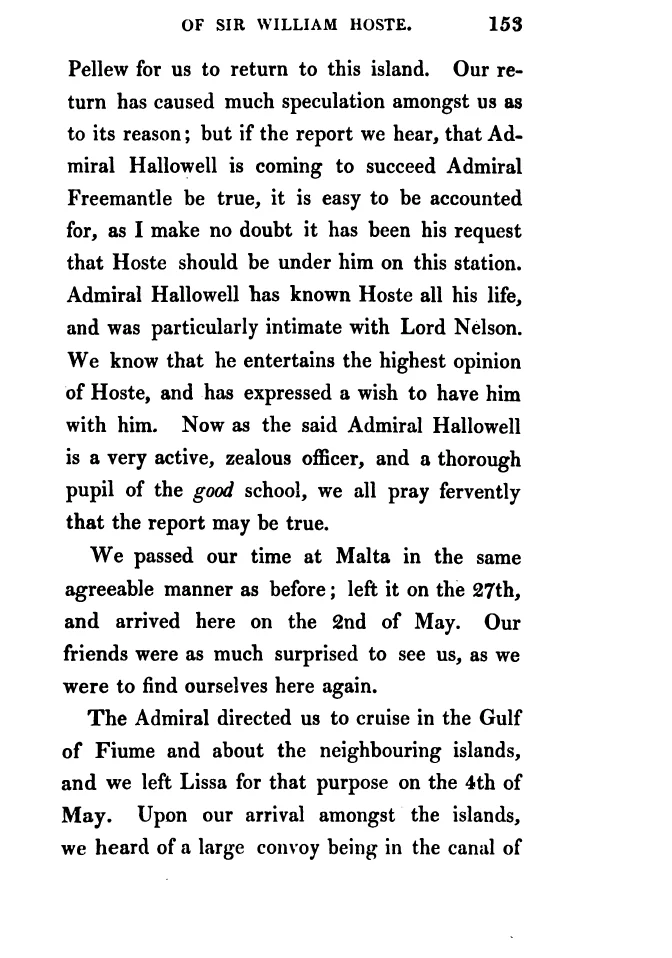
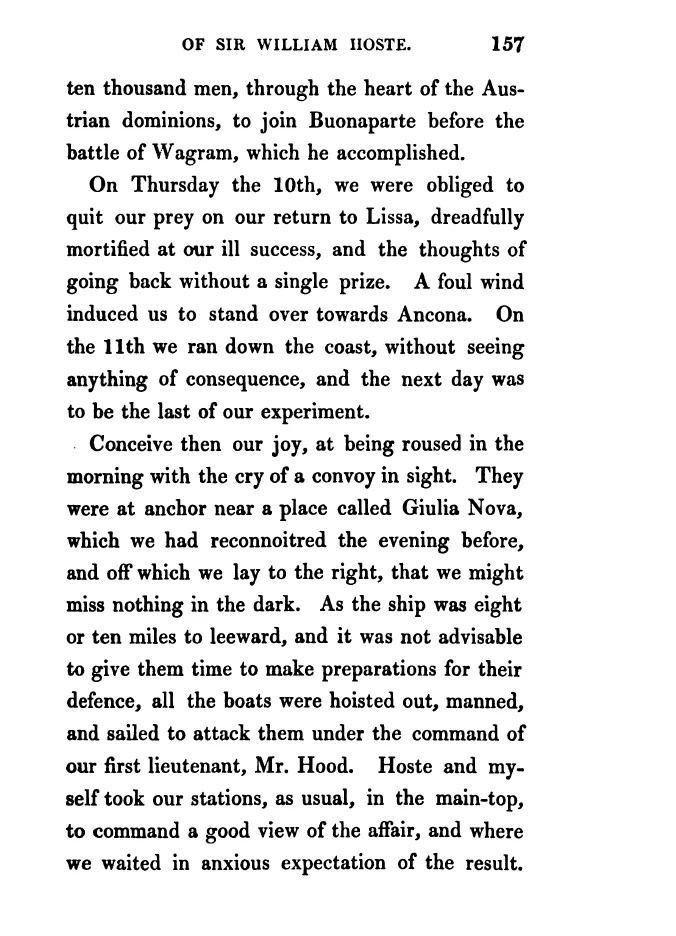
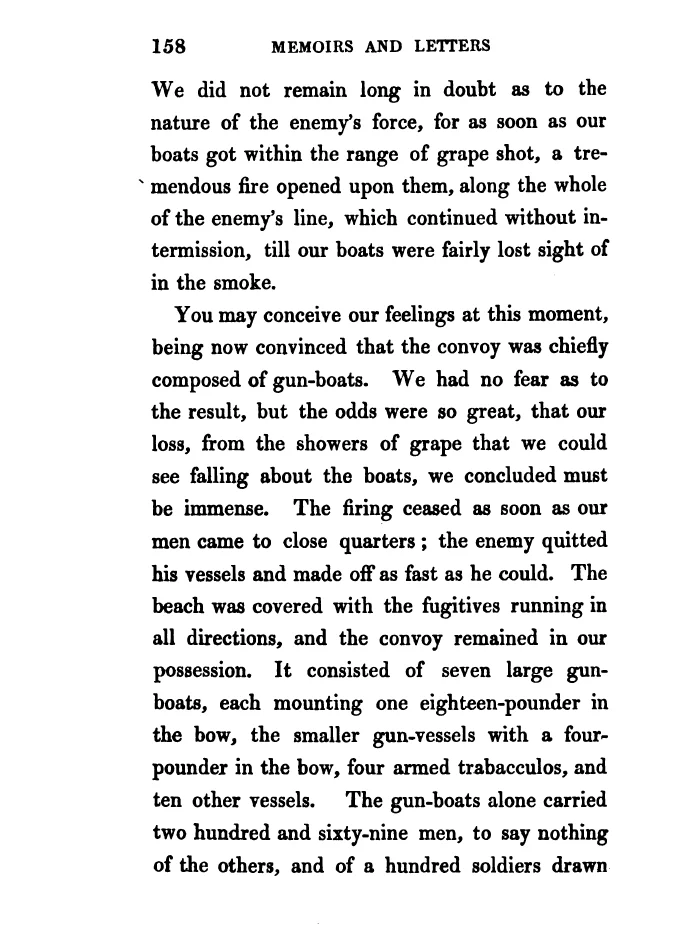
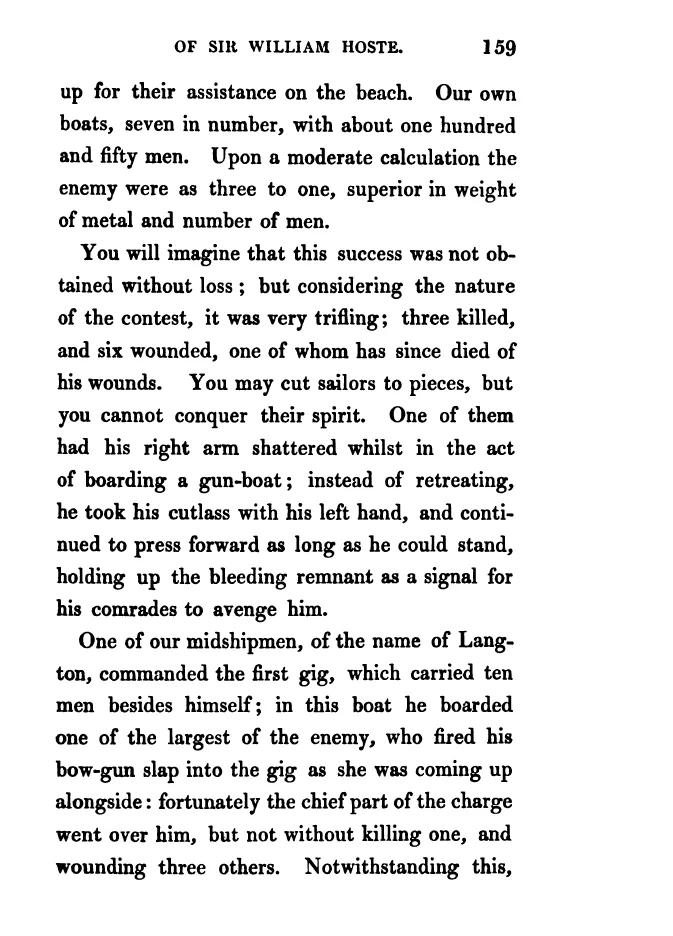
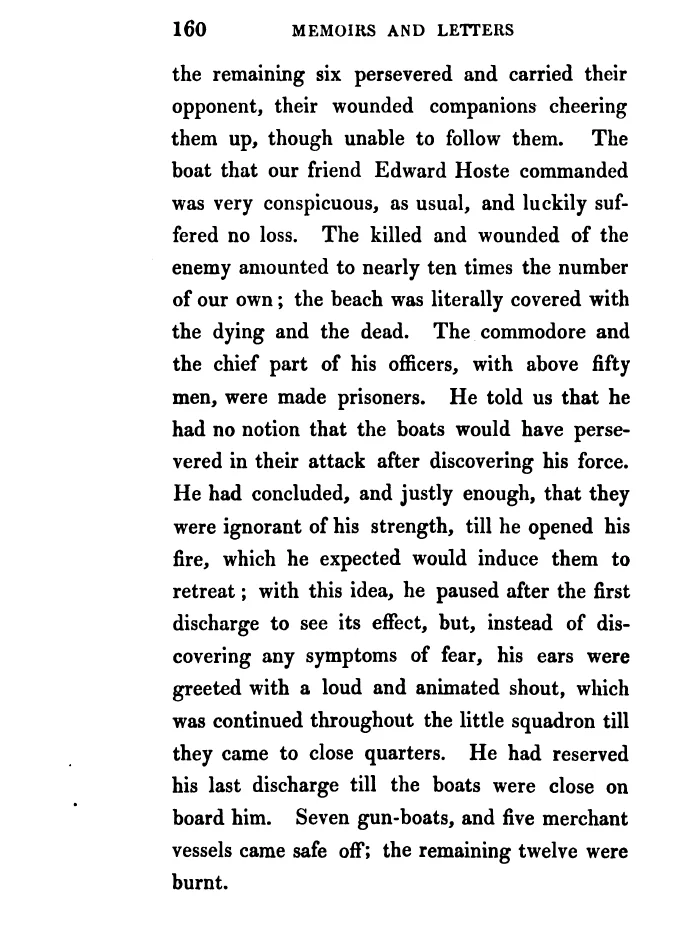
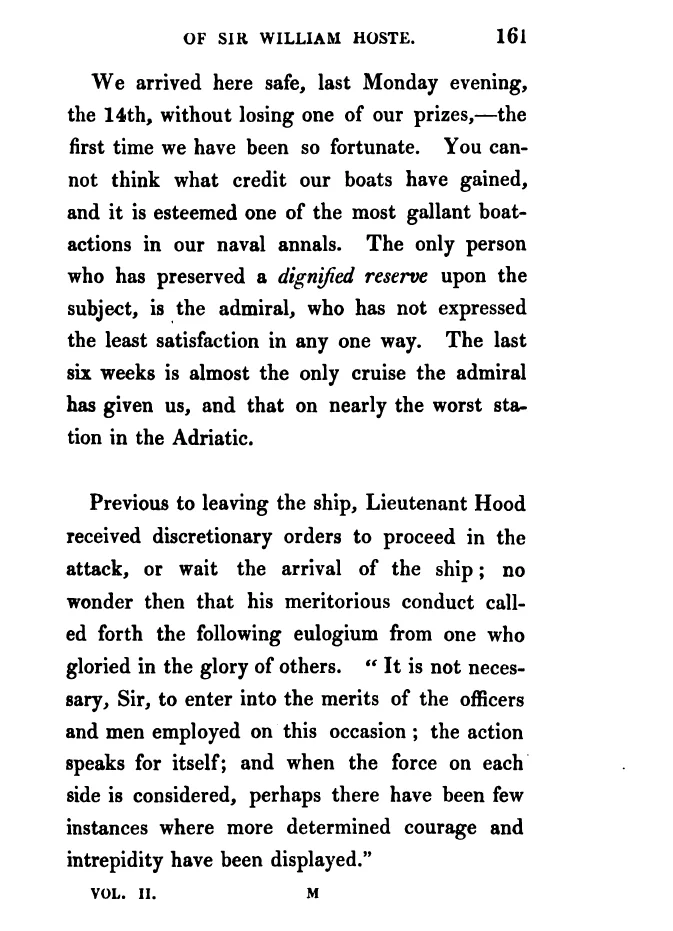
It is in the second volume that the most precious record for our local history is found—a letter sent immediately after the action in the Velebit Channel. In it, Hoste describes, without official restraint, the dramatic events of that fateful May 15, 1813. This letter remains the only authentic first-hand witness to how the British frigate HMS Bacchante, in just a few hours, forever ended French rule over Karlobag and razed its Fortica fortress to the ground.
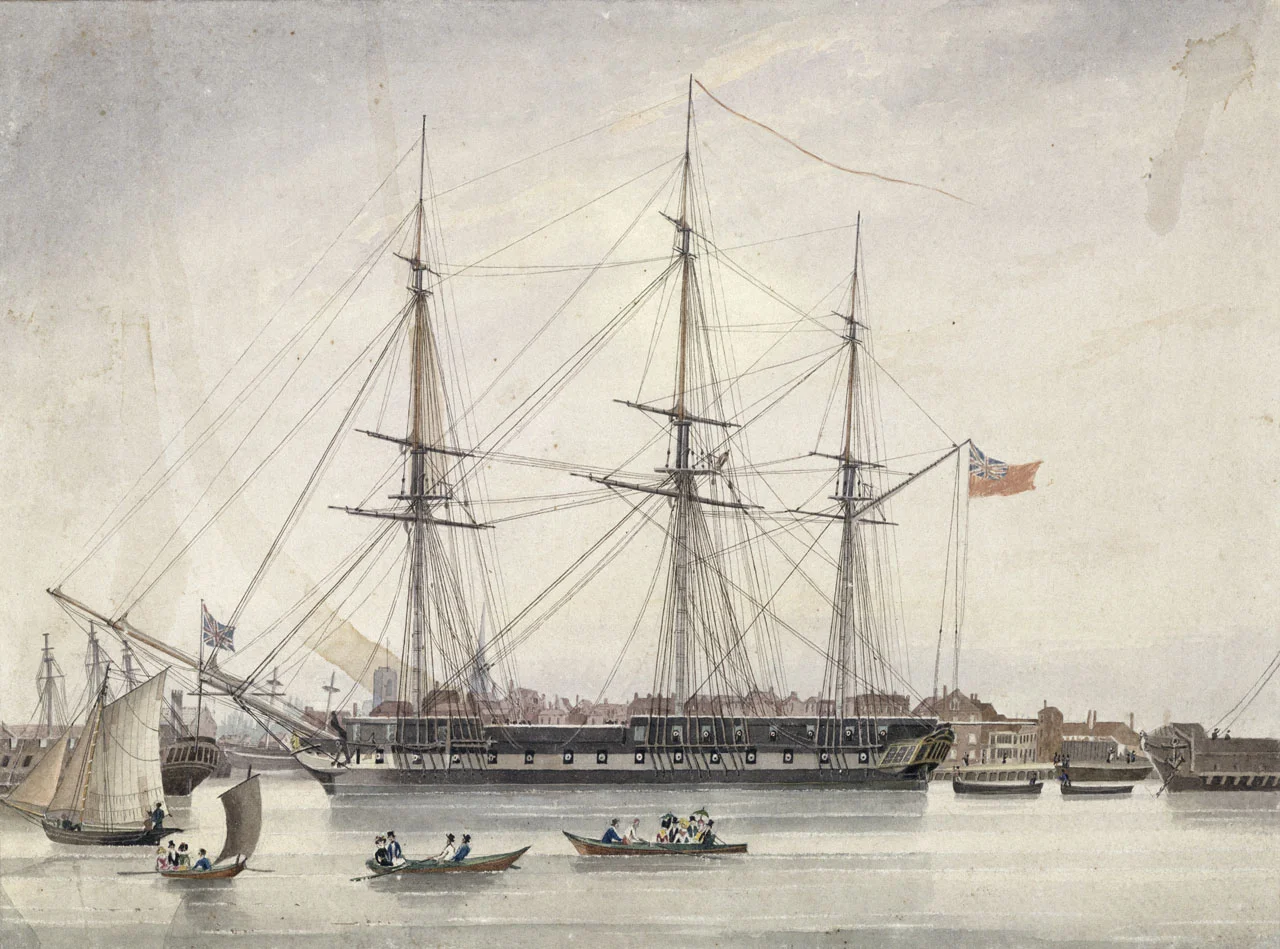
Bacchante off Deptford, 1811.
The frigate HMS 'Bacchante' off the Royal Dockyard in Deptford. During the French Revolutionary and Napoleonic Wars, the demand for new warships and repairs kept this shipyard exceptionally busy.
Source: National Maritime Museum, Greenwich, London.
Source: The National Archives (UK), Kew, London.
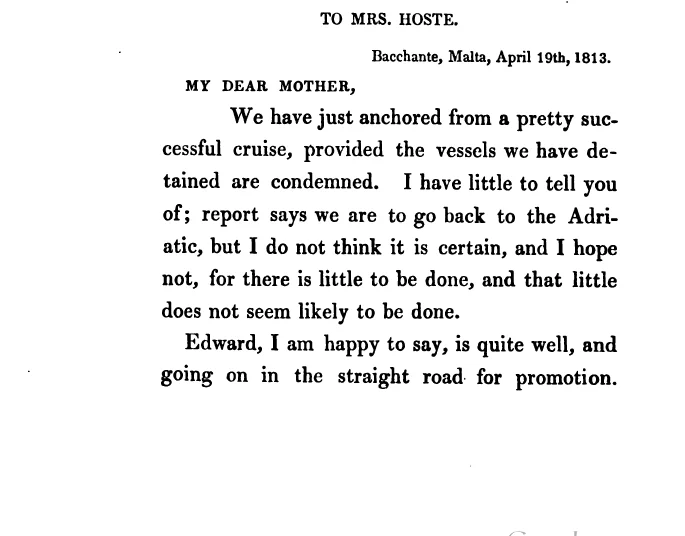
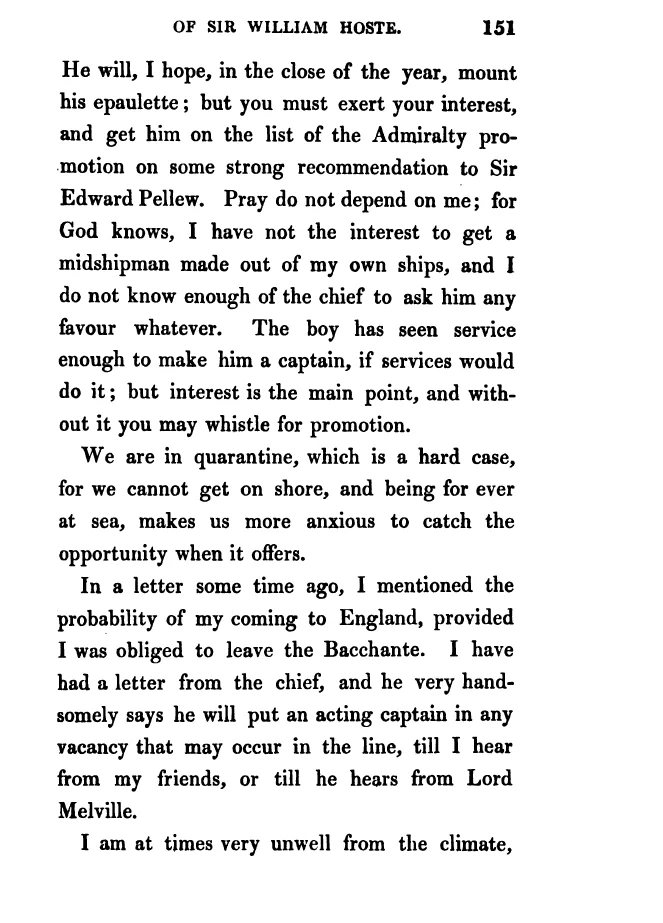
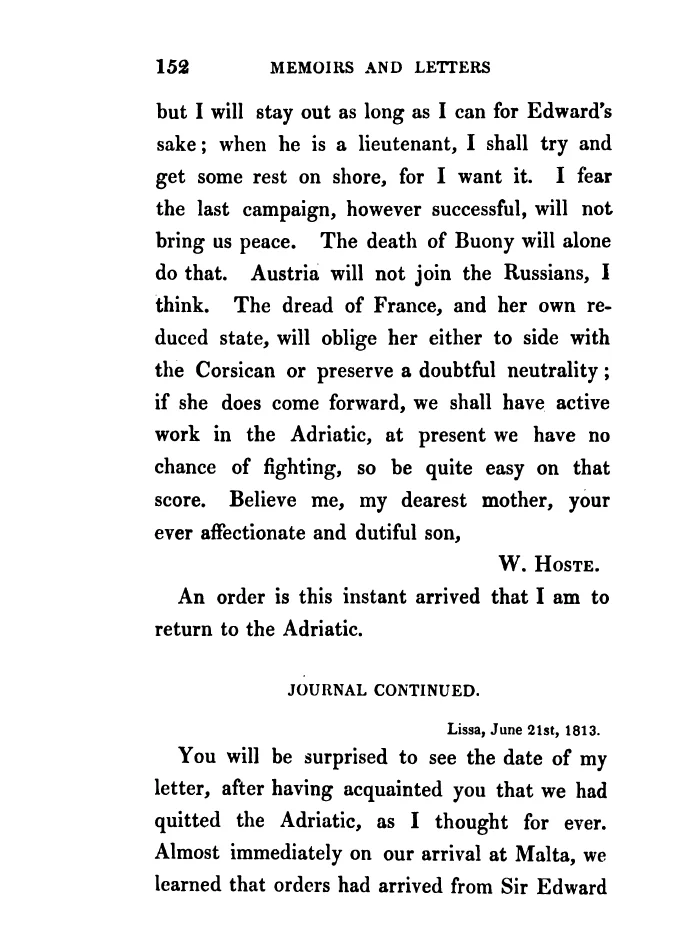
We have just anchored from a pretty successful cruise, provided the vessels we have detained are condemned. I have little to tell you of; report says we are to go back to the Adriatic, but I do not think it is certain, and I hope not, for there is little to be done, and that little does not seem likely to be done.
Edward, I am happy to say, is quite well, and going on in the straight road for promotion.
Honors, Titles, and the Adriatic Wealth of Captain Hoste
For his incredible successes in the Adriatic, William Hoste received the highest military and social honors of his era. As a favorite protégé and pupil of the famous Admiral Nelson (who famously said of him that he was "one of the best young men I ever met"), Hoste completely outsmarted superior French and Italian forces with a small fleet of British frigates, becoming a true naval legend.
1. Military Decorations and Medals
| Decoration / Medal | Merit and Historical Context |
|---|---|
|
Small Naval Gold Medal for Lissa (1811) 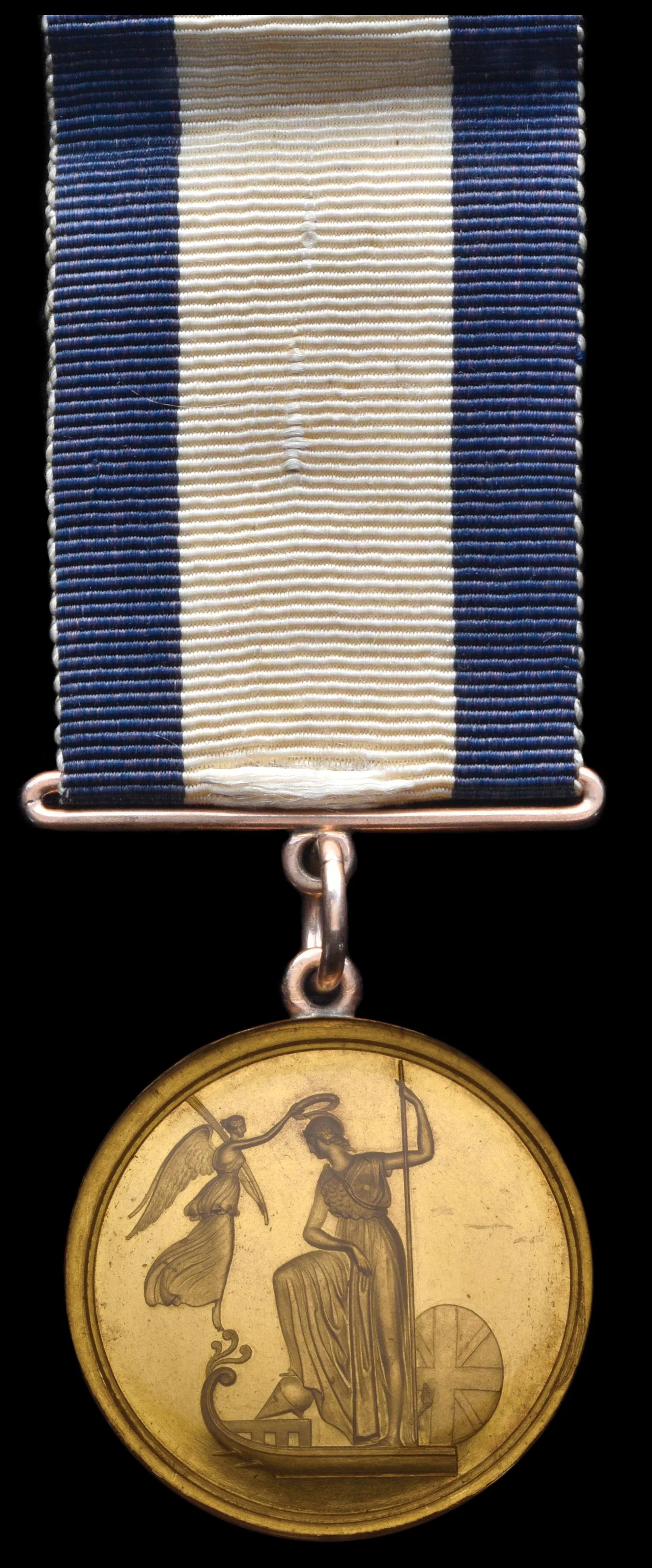
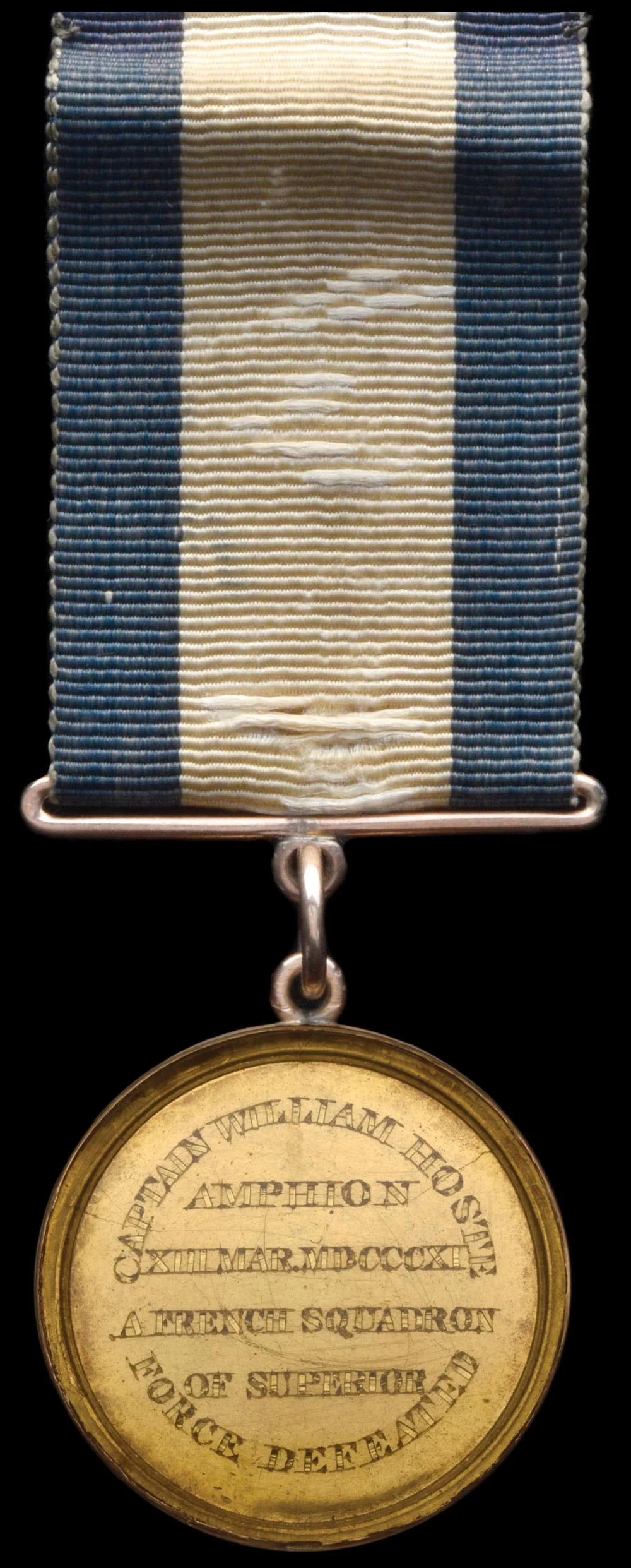
Source: Auction House Invaluable.com |
Awarded by the Admiralty following his legendary victory on March 13, 1811. With only 4 frigates, Hoste defeated a Franco-Italian squadron of 11 ships, famously signaling his crews with the iconic phrase "Remember Nelson". This exceptionally rare medal was recently sold at an auction in London to a private collector for an astronomical £120,000. |
|
Military Order of Maria Theresa (Militär-Maria-Theresien-Orden / KMT) 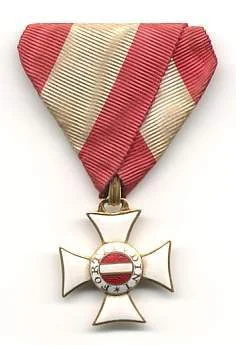
|
Presented to him personally by the Austrian Emperor in 1814 as a direct expression of gratitude for liberating the Adriatic coast from the French, with a particular emphasis on his brilliant capture of the heavily fortified strongholds in Cattaro (Kotor) and Ragusa (Dubrovnik) between late 1813 and early 1814.
This highest Austrian military decoration was awarded strictly for outstanding acts of personal bravery and successful military exploits conducted on the officer's own initiative. |
|
Knight Commander of the Order of the Bath (KCB) 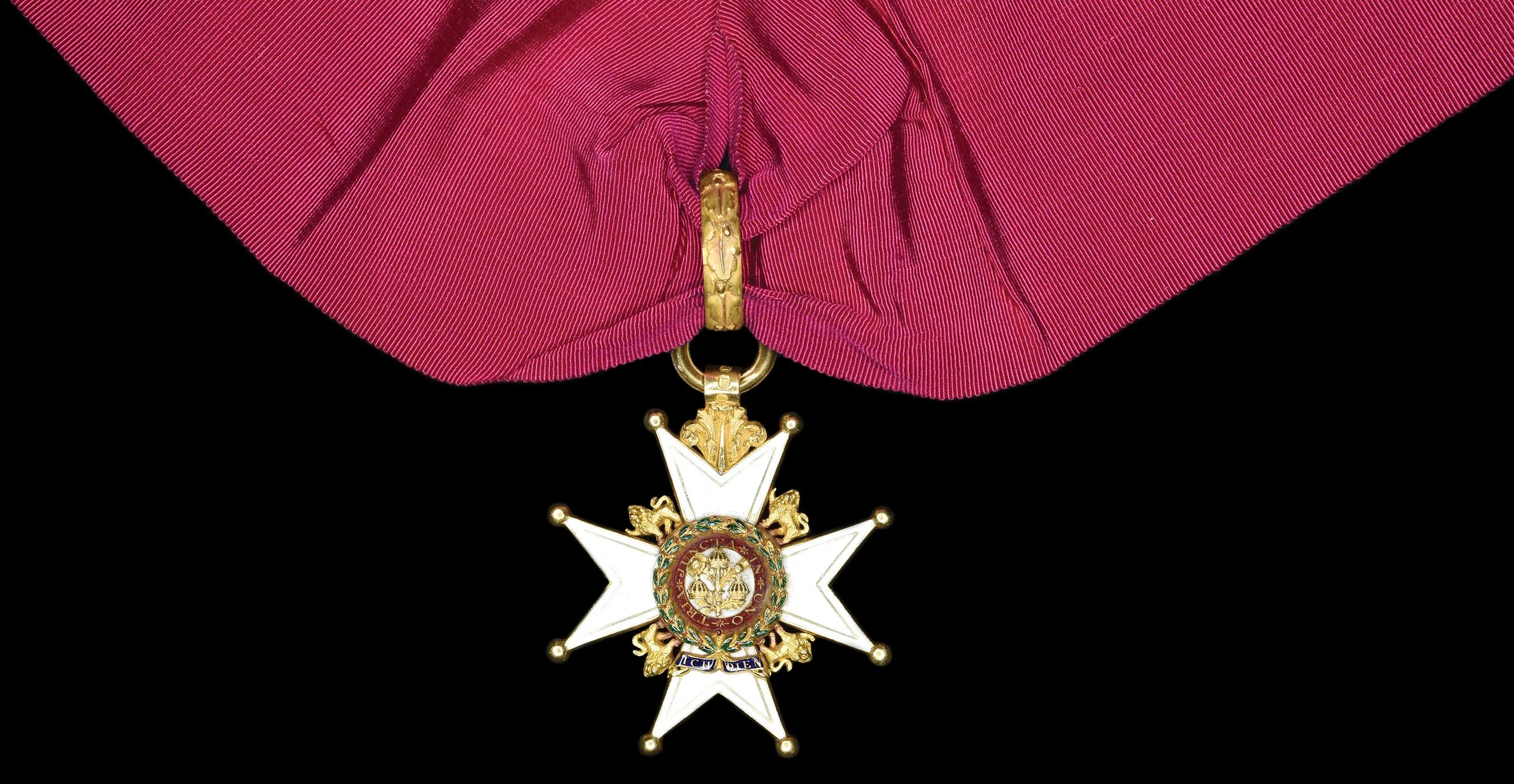
|
The highest British honor bestowed upon him by the Crown upon his return to the homeland in 1815, officially elevating him into the ranks of the most honorable military knighthood.
This title granted him the right to use the prefix "Sir" before his name, and was reserved exclusively for high-ranking officers who demonstrated exceptional merit and commanding brilliance during the Napoleonic Wars. |
2. Nobility and Changes to the Family Coat of Arms
Due to his Adriatic exploits, Hoste was elevated to the baronetage in 1814 and created the 1st Baronet of Hoste, from which time he officially held the title of Sir.
As a special token of royal favour, he was granted an "honourable augmentation" to his family coat of arms. By royal decree, the place-names of his greatest Adriatic victories were permanently integrated into his crest: "Lissa" (Vis) and "Cattaro" (Kotor).
3. Spoils of War and Adriatic Fortune
At that time, successful commanders were legally entitled to a share of captured enemy vessels and cargo (known as prize money). Since Hoste was exceptionally aggressive and relentless, he and his crew captured or destroyed over 200 ships along the Dalmatian and Italian coasts by the end of 1809.
Unfortunately, years of continuous and exhausting warfare at sea, combined with the Adriatic climate, took a heavy toll. Hoste contracted tuberculosis, which forced him to permanently withdraw from active service in the Adriatic in late 1814. He passed away relatively young in London in 1828, in his 48th year of life.
As an enduring memorial to his achievements, the uninhabited islet at the entrance to Vis harbour still proudly bears his name today — Host Island.