Vegium: Chronicle of a Lost City beneath Velebit
The history of ancient Vegium, on the site of present-day Karlobag, is not merely a sequence of archaeological facts, but a layered story of a settlement that never disappeared completely despite centuries of destruction and rebuilding. Our picture of this Roman municipium on the eastern Adriatic coast is reconstructed primarily from the notes and discoveries of nineteenth-century researchers. Their work laid the foundations for understanding Vegium as an important station on the coastal route linking the northern Adriatic with Lika and Dalmatia.
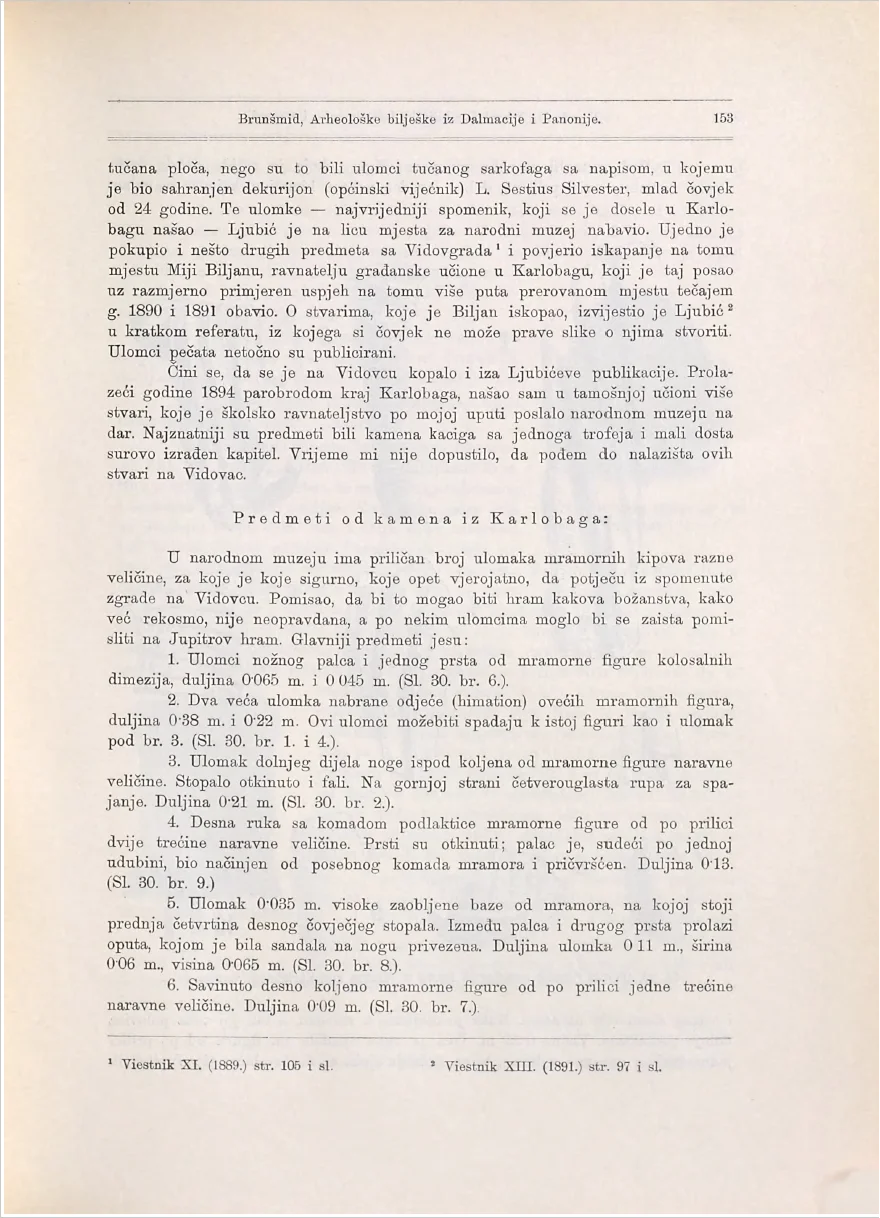
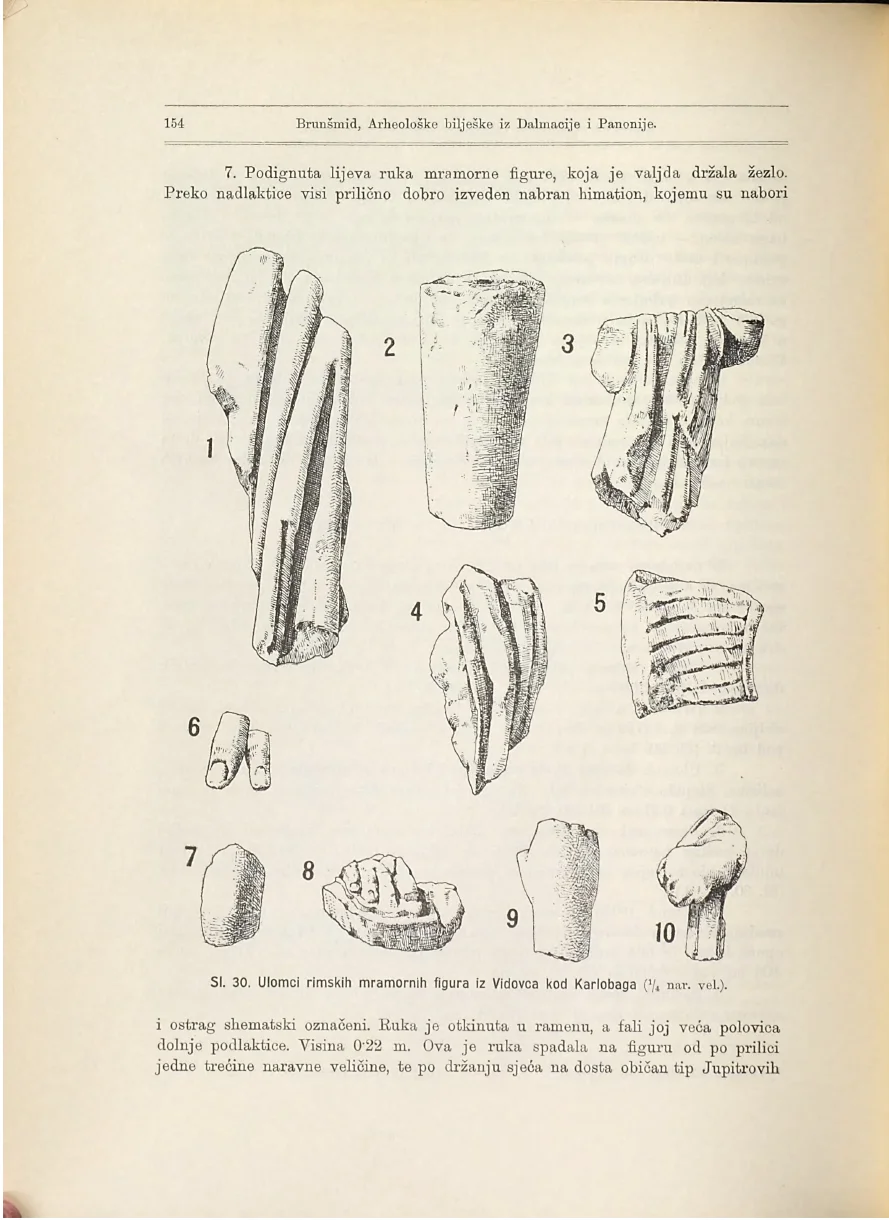
One of the most important sites lies at Vidovac, on a rise above the Velebit Channel. In 1851, Ljudevit Slamnik recorded the foundations of an ancient building with mosaics and fragments of large marble sculptures. The surviving pieces of an arm and a sandalled foot indicate a figure considerably larger than life-size. Because of the building's monumentality and the character of the finds, older scholarship proposed that a temple may once have stood at Vidovac, perhaps dedicated to Jupiter. This interpretation should nevertheless be regarded as an archaeological hypothesis rather than a conclusively proven fact.
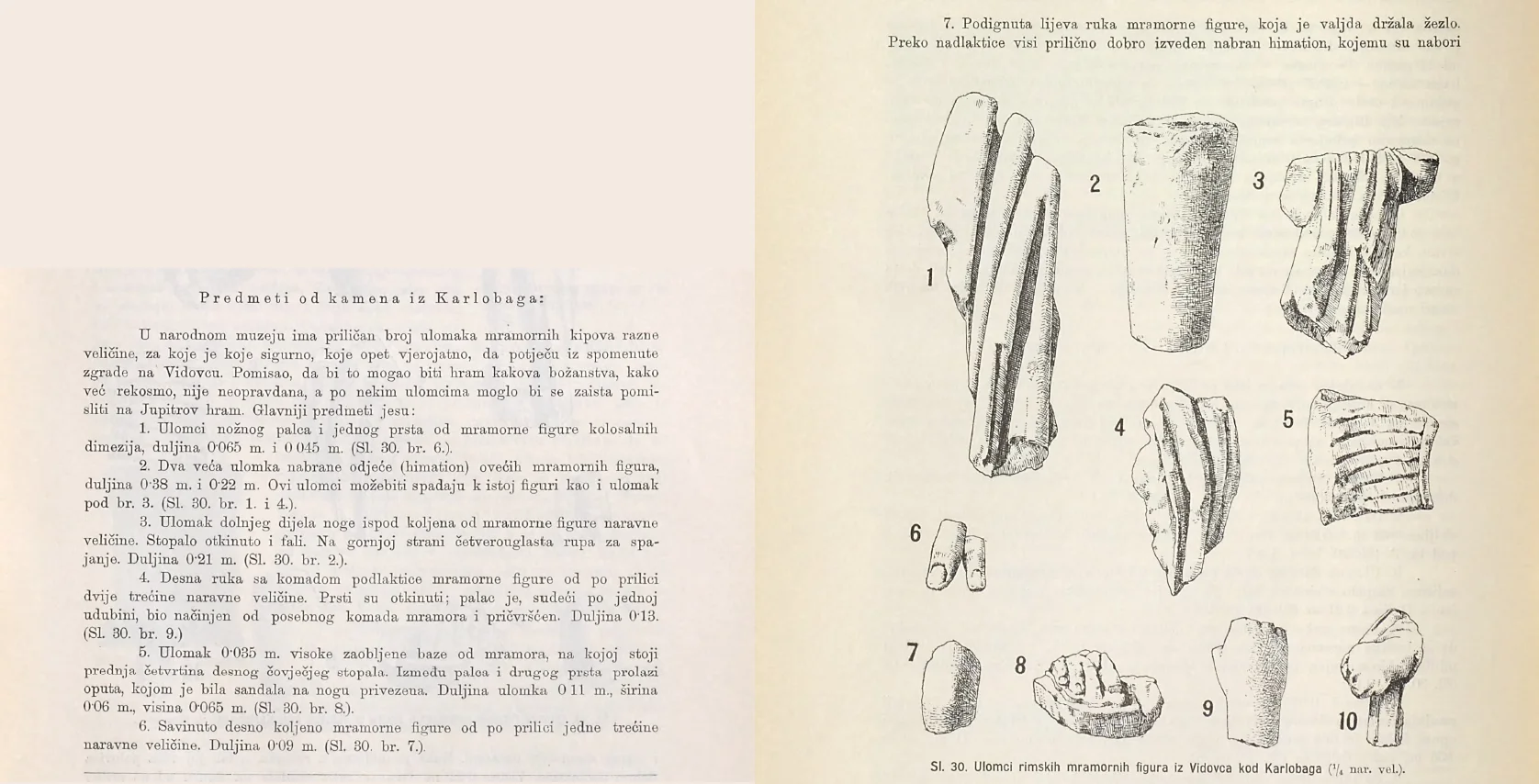
Fig. 30. Fragments of Roman marble figures from Vidovac near Karlobag.
The image shows fragments kept in the National Museum at the end of the nineteenth century, now the Archaeological Museum in Zagreb. Older scholarship suggested that they belonged to an ancient temple at Vidovac, perhaps one dedicated to Jupiter.
Source: Münchener Digitalisierungszentrum (MDZ), Munich.
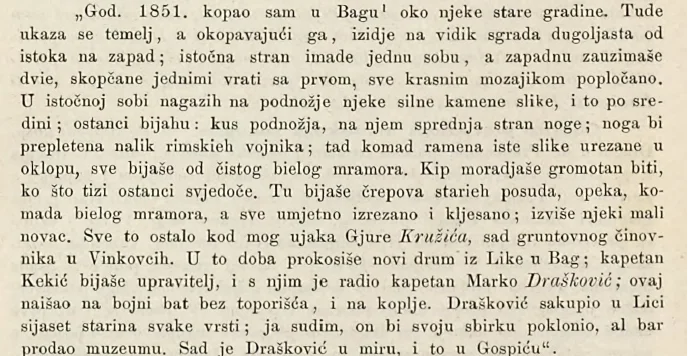
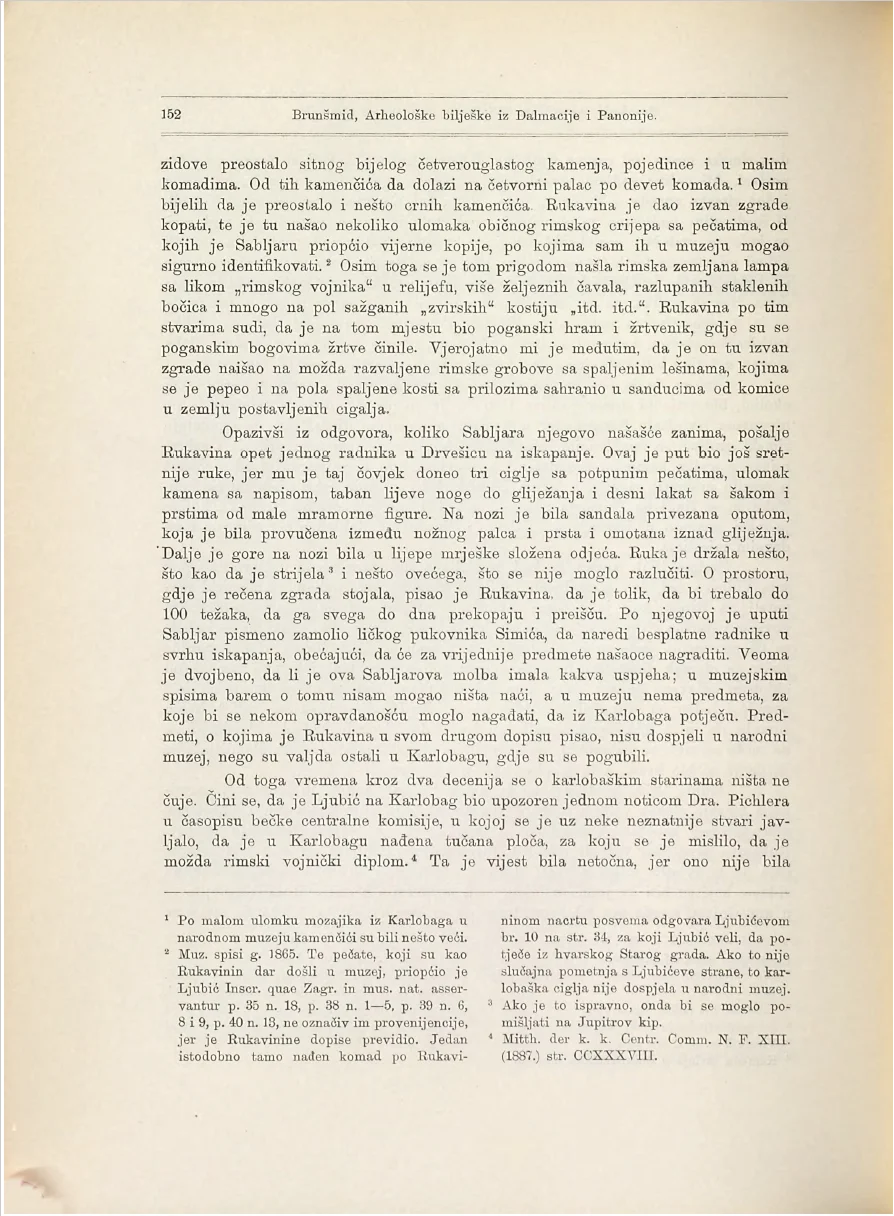
Ljudevit Slamnik's account of the discovery of a marble sculpture.
Slamnik described how, in 1851, he uncovered the foundations of an ancient building with mosaics and parts of a large marble statue at Bag, present-day Karlobag. His account directly refers to the fragments shown in the preceding image.
Source: Münchener Digitalisierungszentrum (MDZ), Munich.
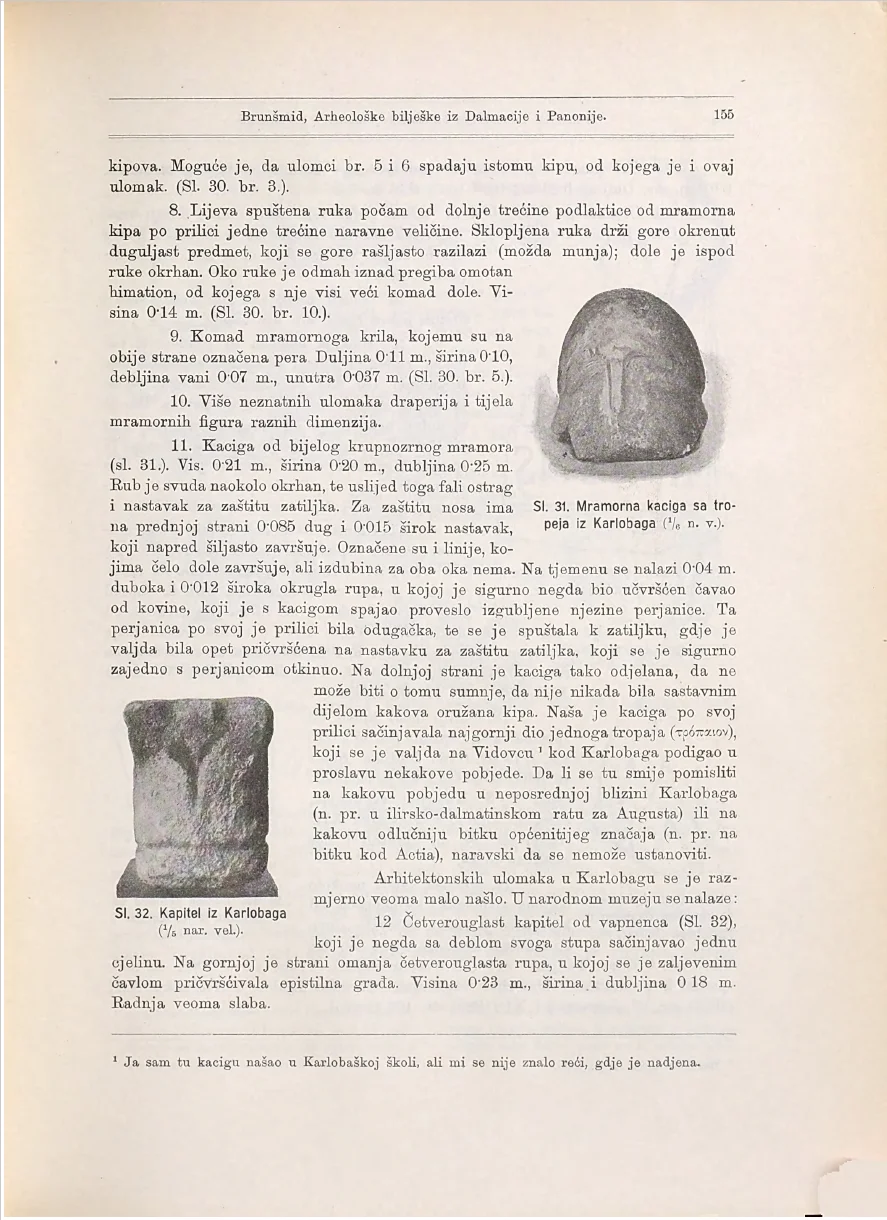
Whereas the finds from Vidovac testify to monumental architecture and public cults, the sites of Baški Dolac and Drvišica offer an insight into the burial customs of Vegium's inhabitants. Stone urns, glass vessels, ceramic oil lamps and jewellery were recovered from the graves. Among the most notable finds is a gold ring set with carnelian and engraved with a stag pierced by three arrows. A fragment of a marble helmet with a plume is equally important; older scholarship interpreted it as part of a monumental Roman tropaeum.
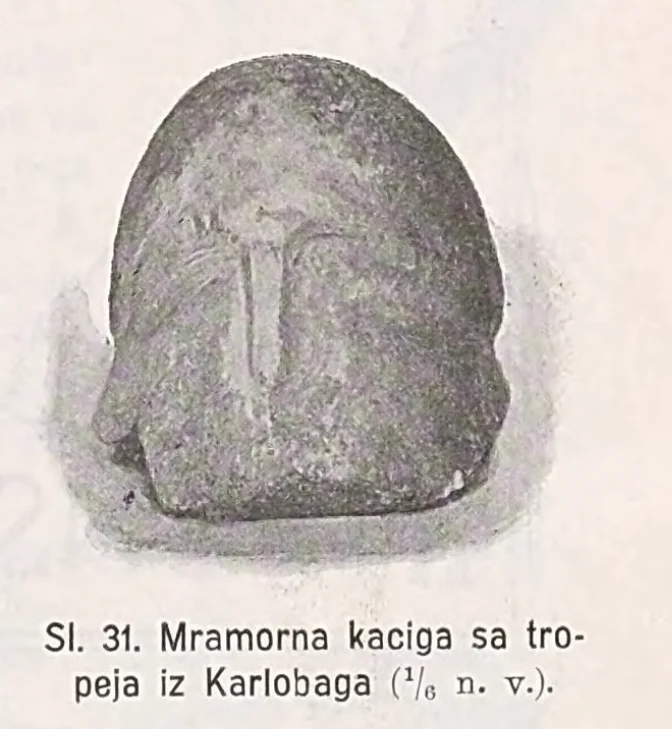
Fig. 31. Marble helmet from Karlobag.
This fragment of a marble sculpture depicts an ancient helmet. According to a text published in the Journal of the Croatian Archaeological Society in 1898, it belonged to a so-called tropaeum, a monumental display of arms erected to commemorate a Roman victory. The drawing is reproduced at a scale of 1:6.
Source: Münchener Digitalisierungszentrum (MDZ), Munich.
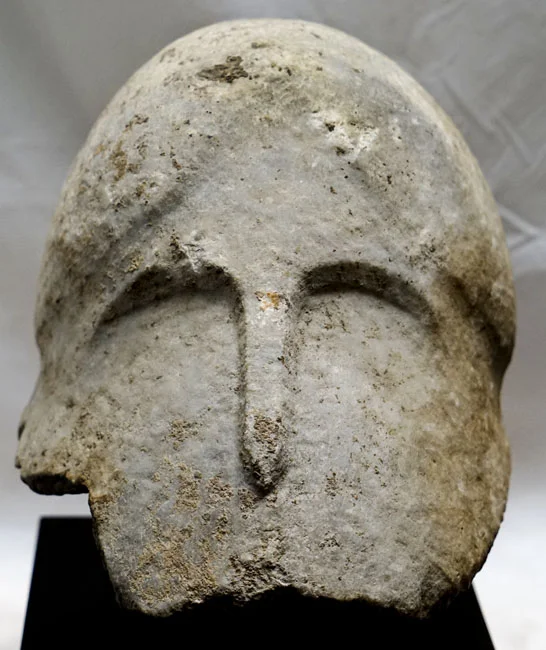
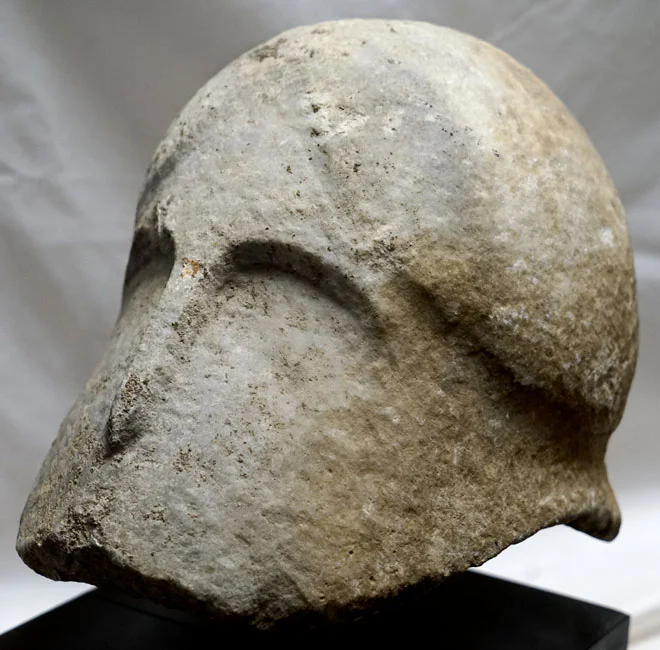
Source: Archaeological Museum in Zagreb.
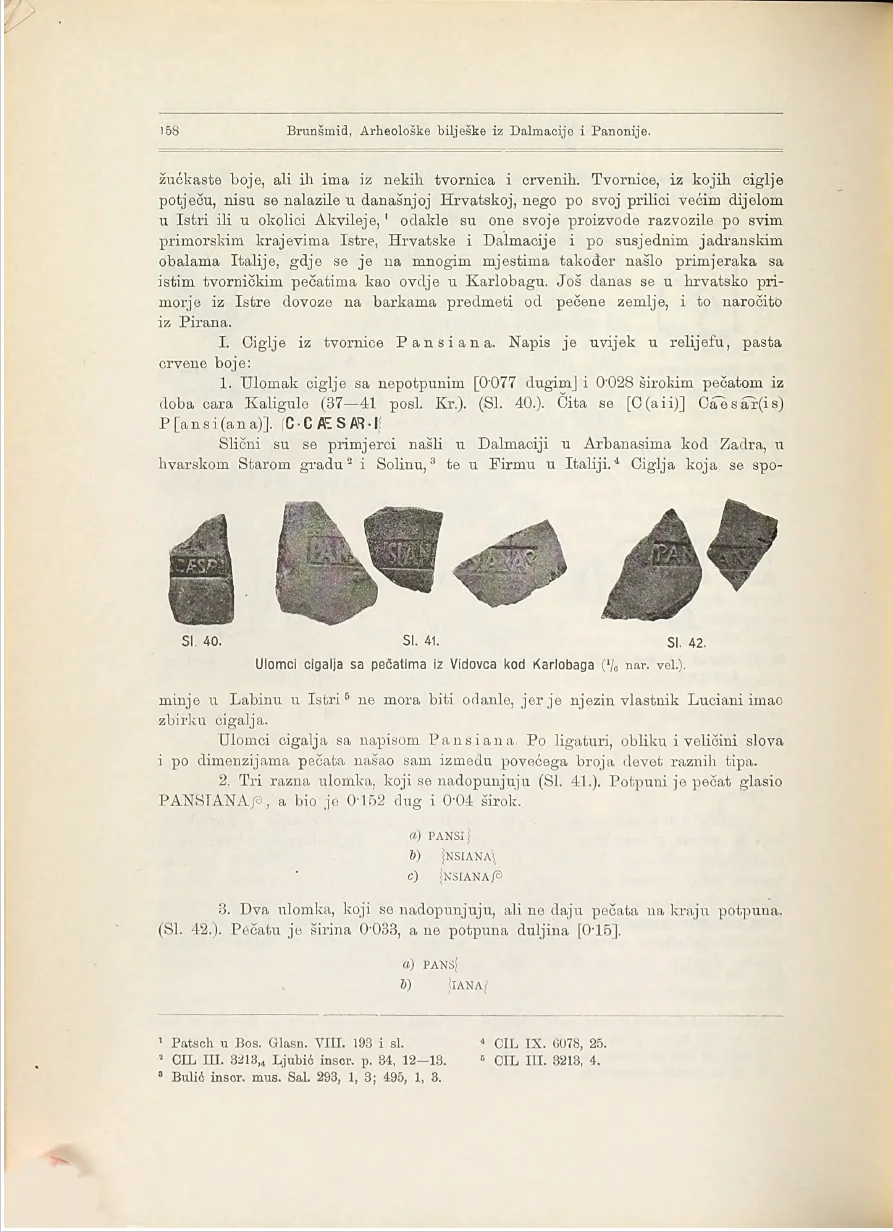
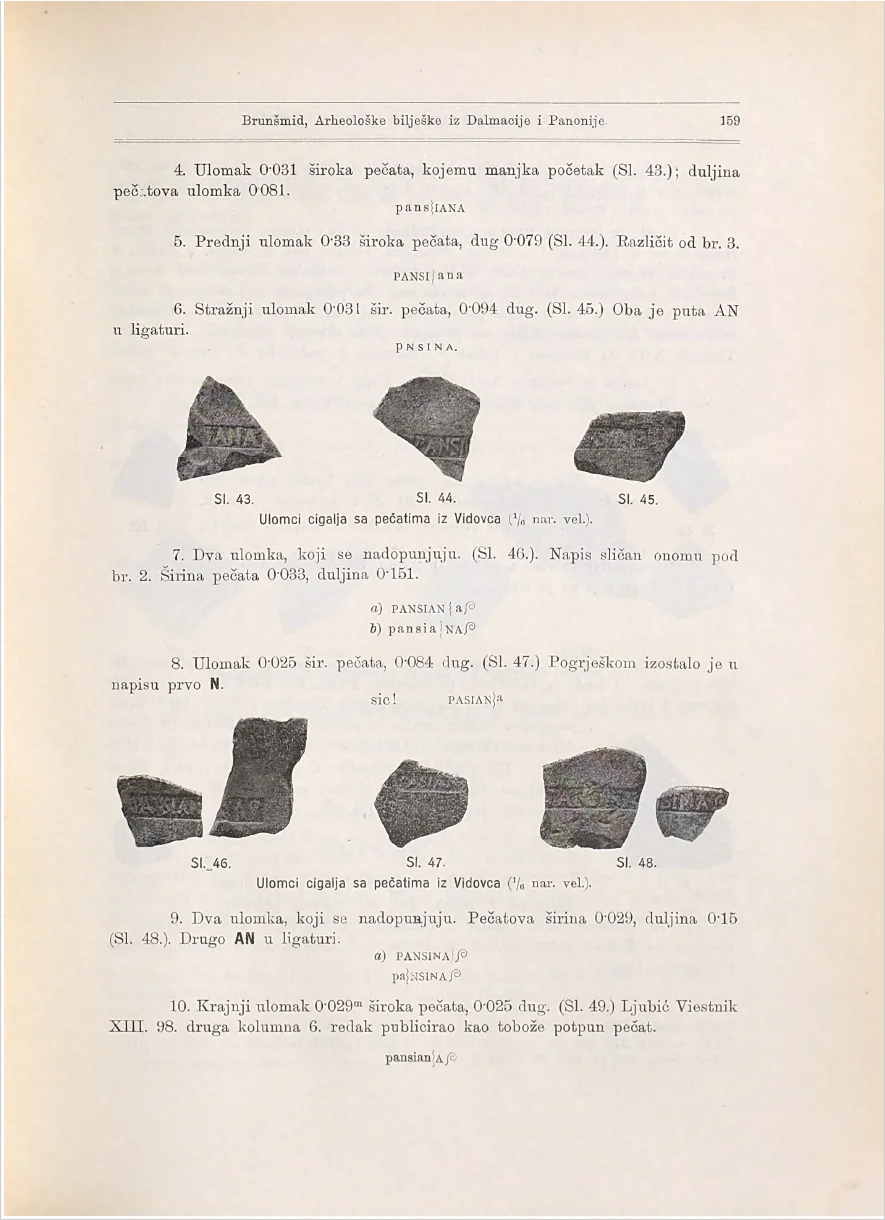
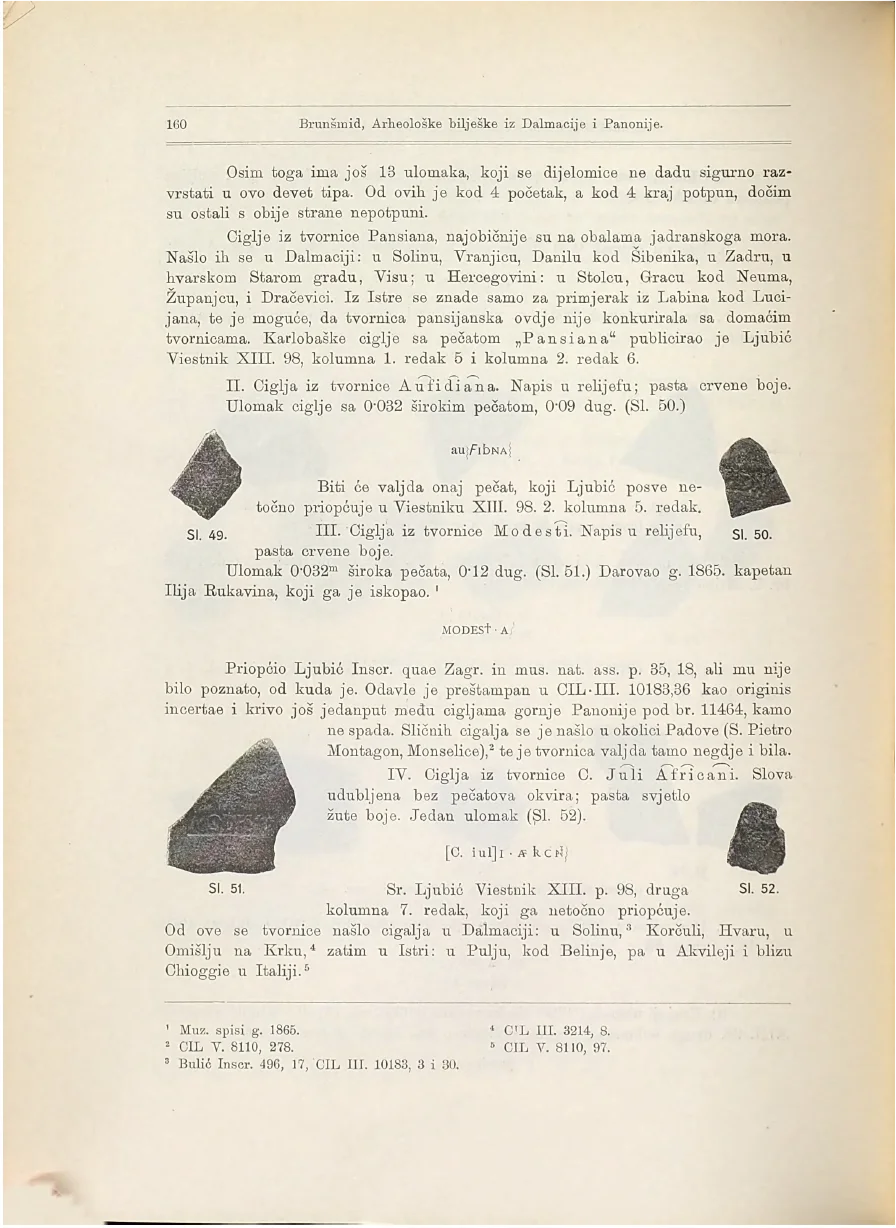
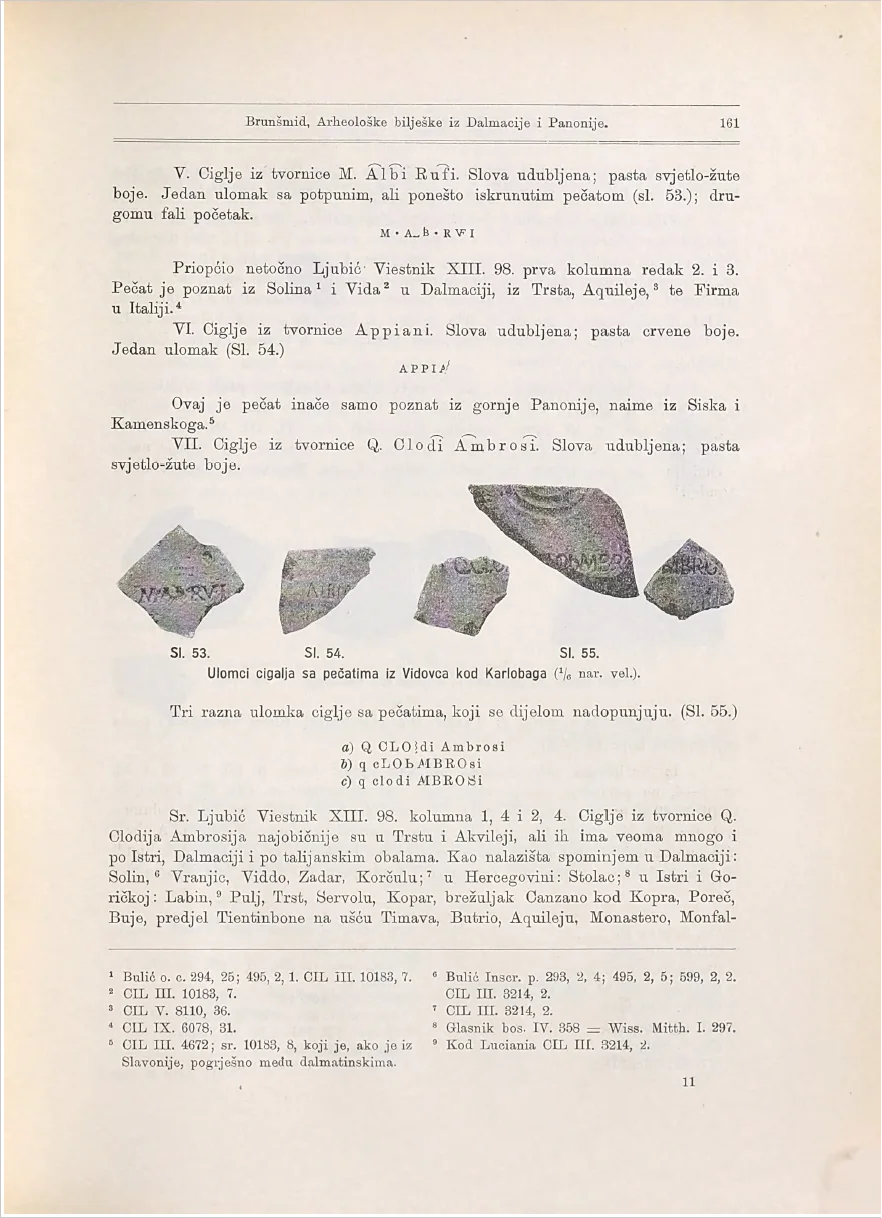
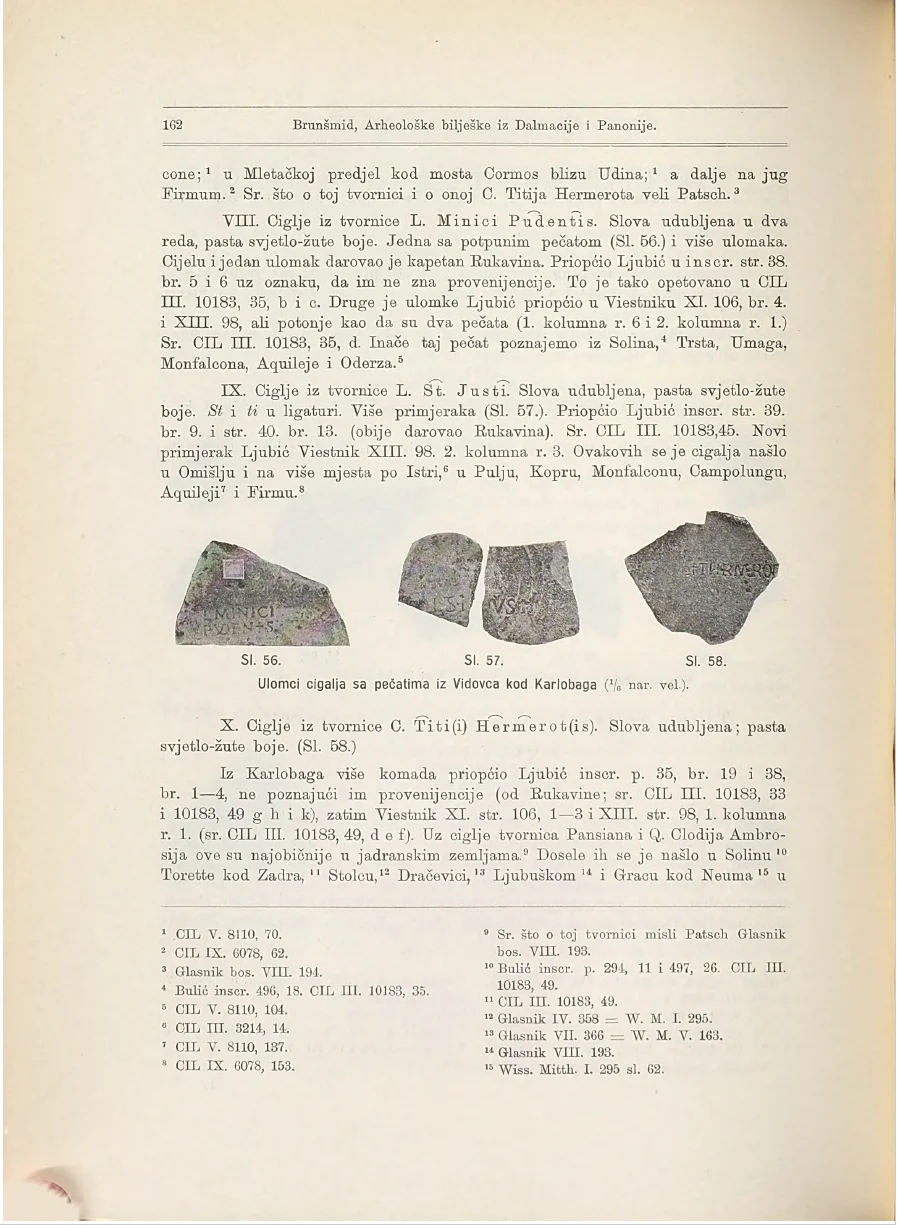
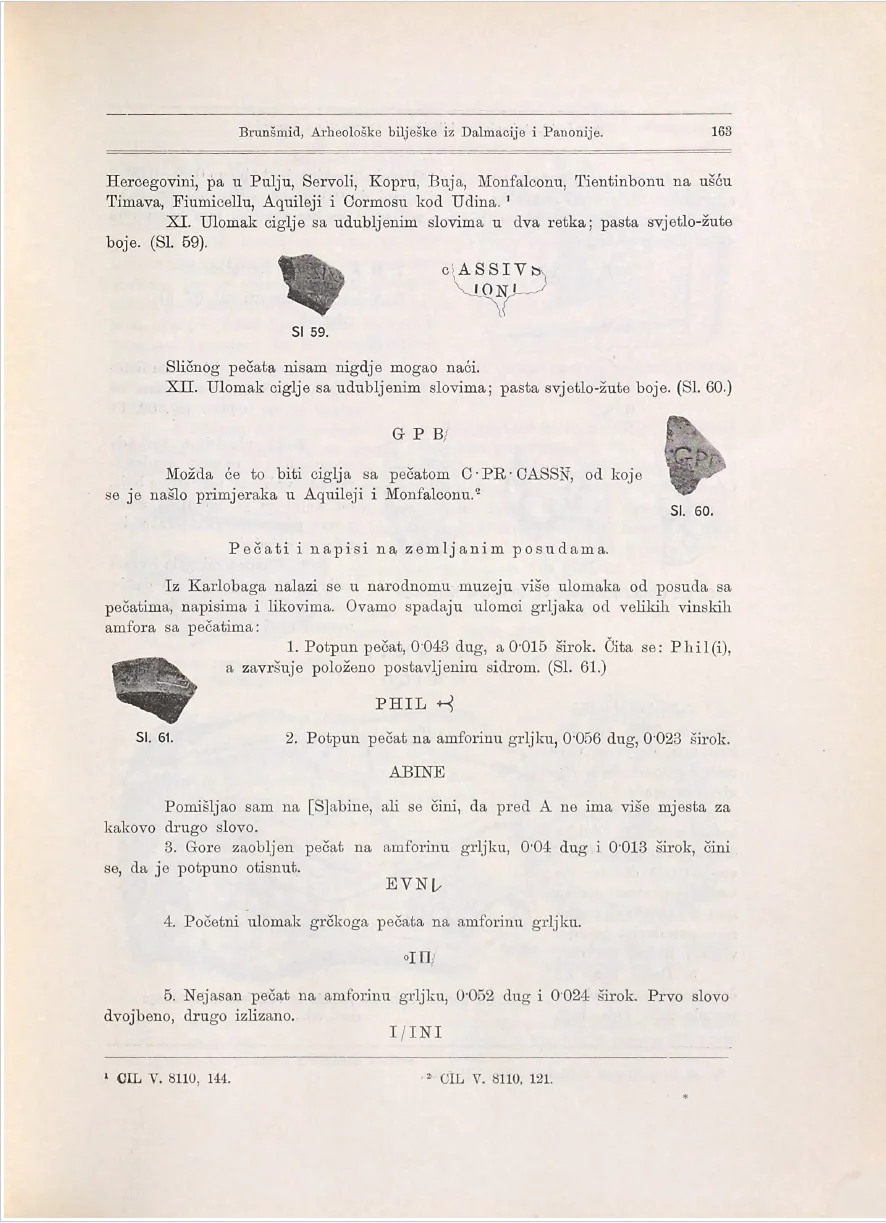
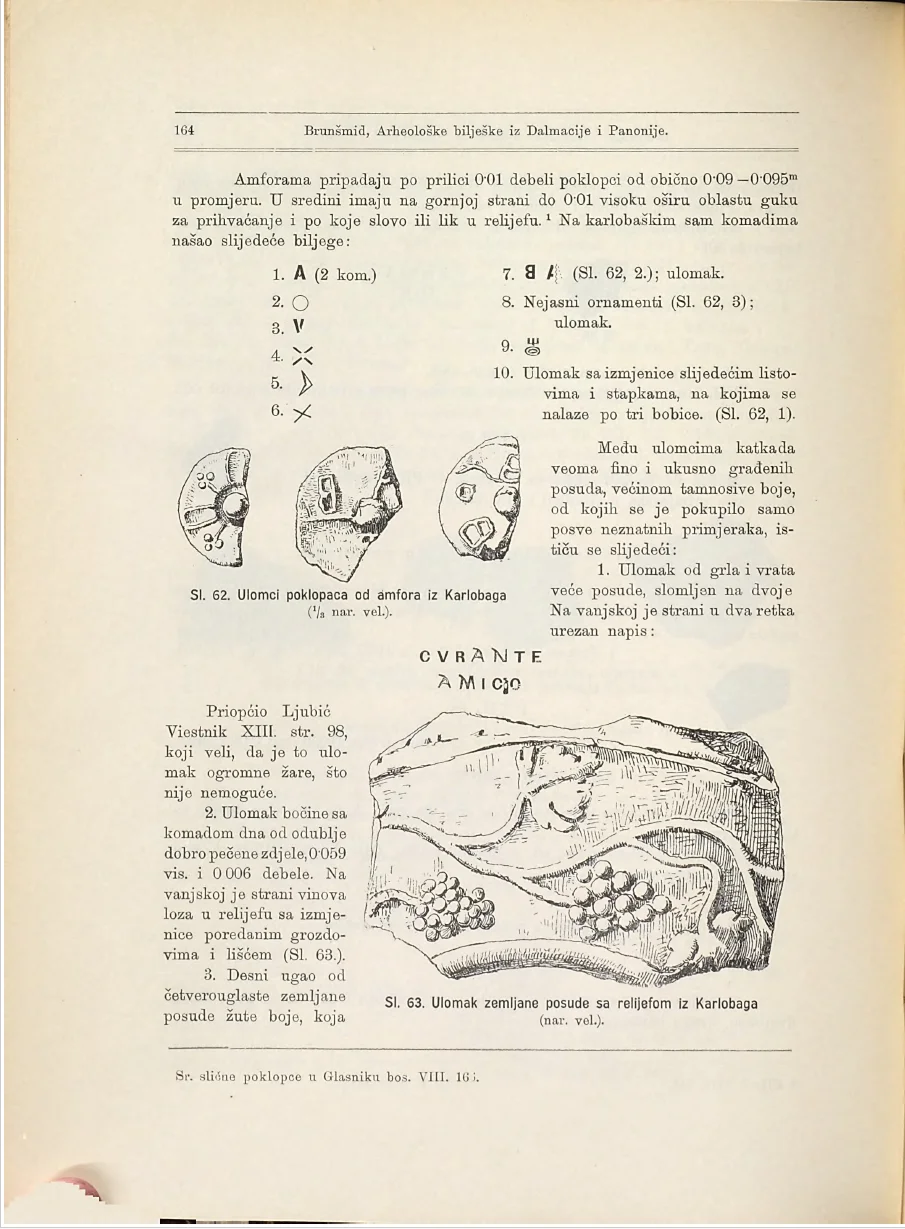
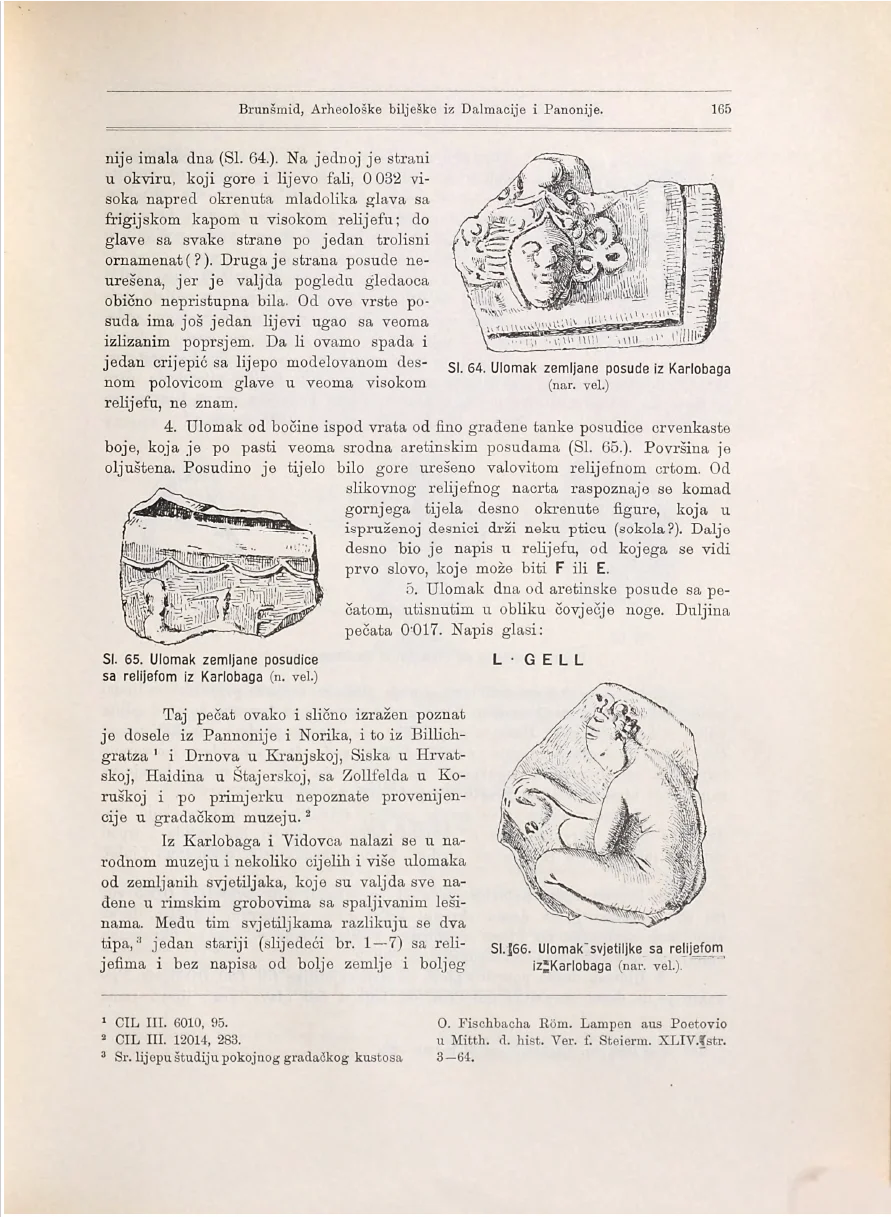
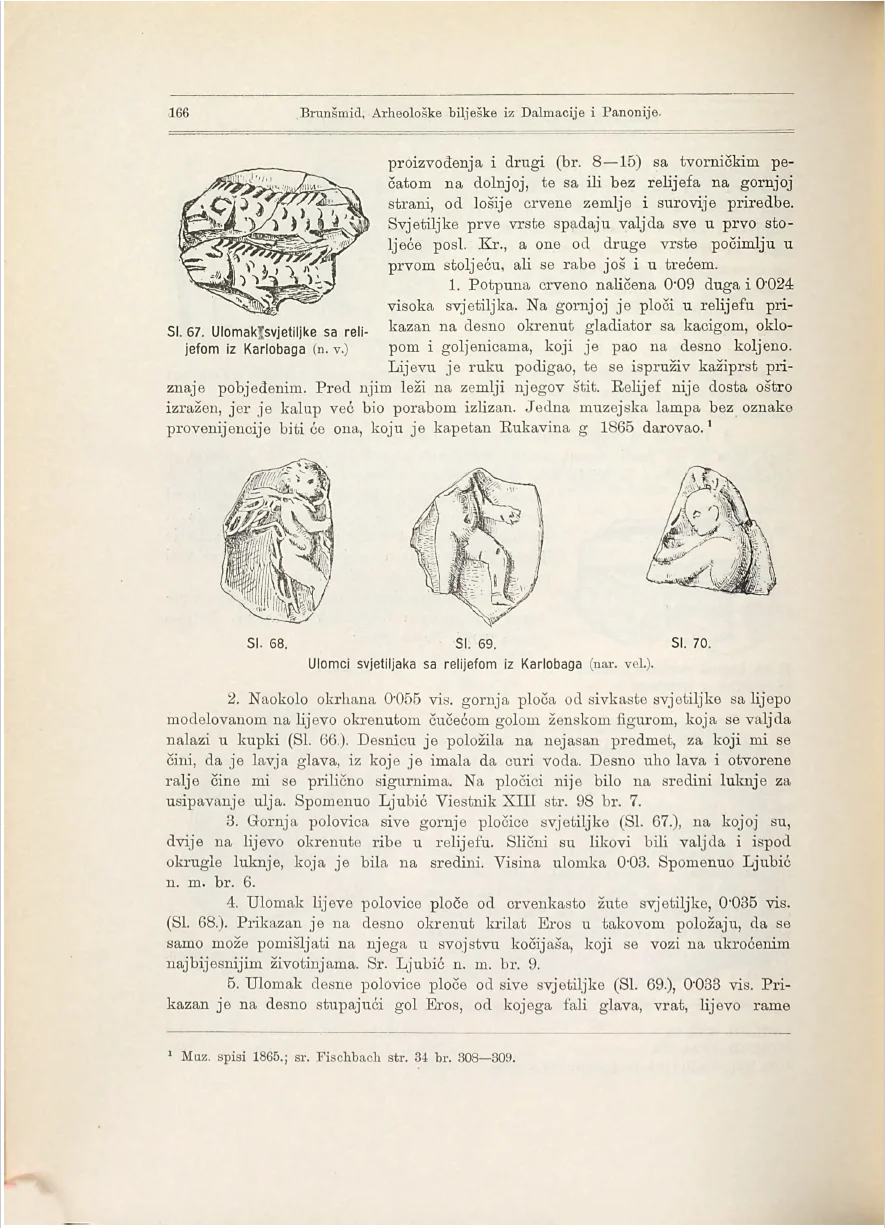
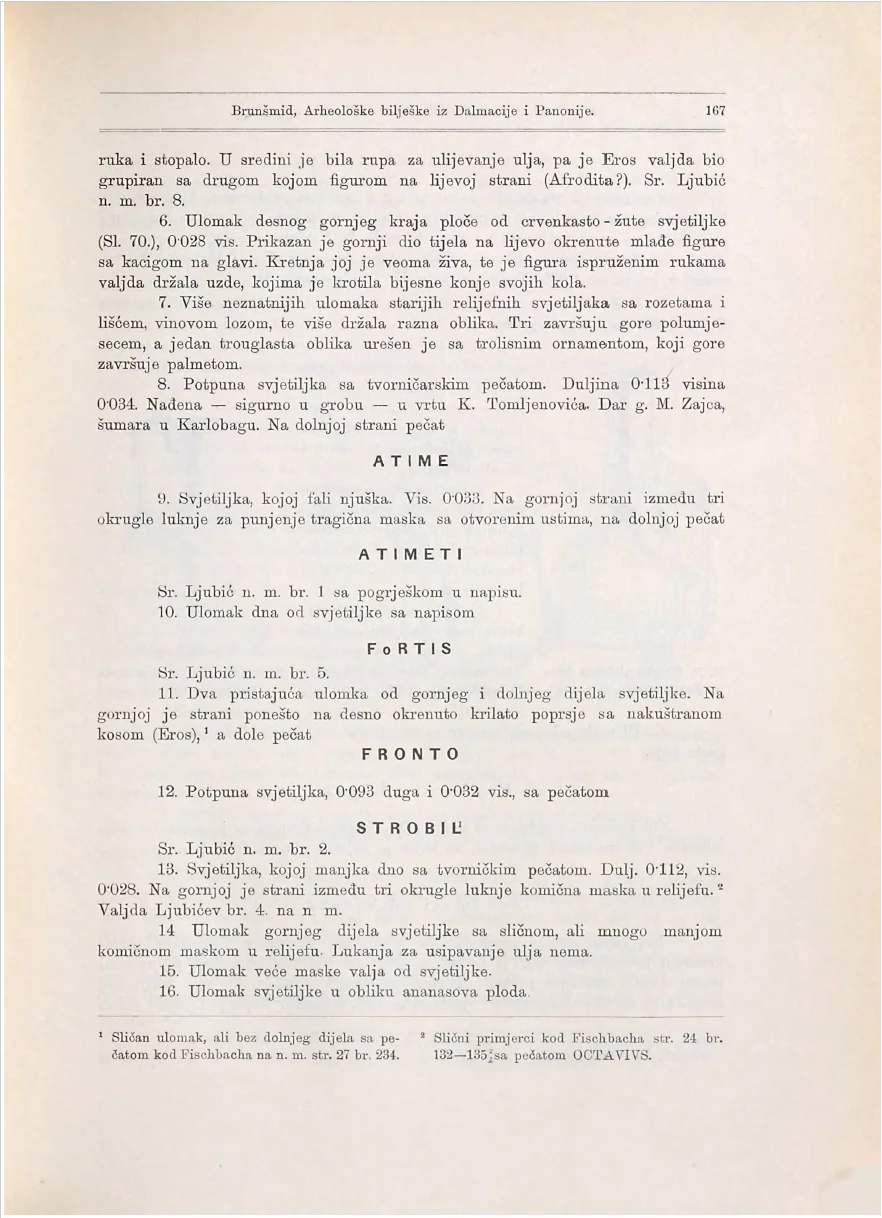
Vegium was not only a place of temples and necropolises, but also an economic centre. Its coastal position connected maritime routes with the Lika hinterland, while finds of amphorae, Roman coins, pottery and stamped bricks provide evidence of trade, construction and everyday life. The harbour probably enabled the import of goods and materials unavailable locally, including fine marble and luxury objects.
The fate of the ancient heritage was inseparable from the later history of Karlobag. Wars, demolition and repeated rebuilding turned the remains of Vegium into an accessible source of building stone. Ancient monuments were incorporated into fortifications, houses and outbuildings, while other stone fragments were burned in lime kilns. Over the centuries, the ancient settlement was gradually dismantled and absorbed into the newer urban fabric.
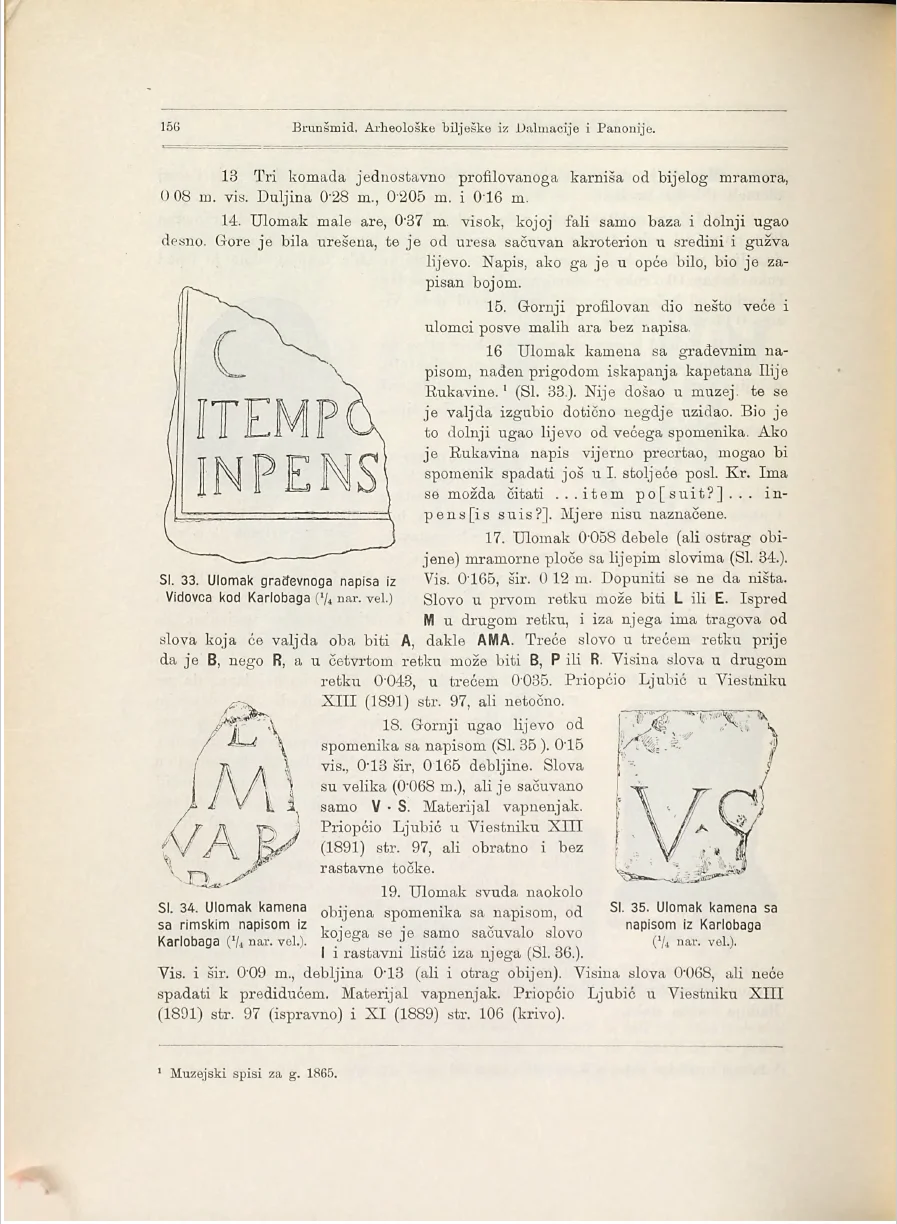
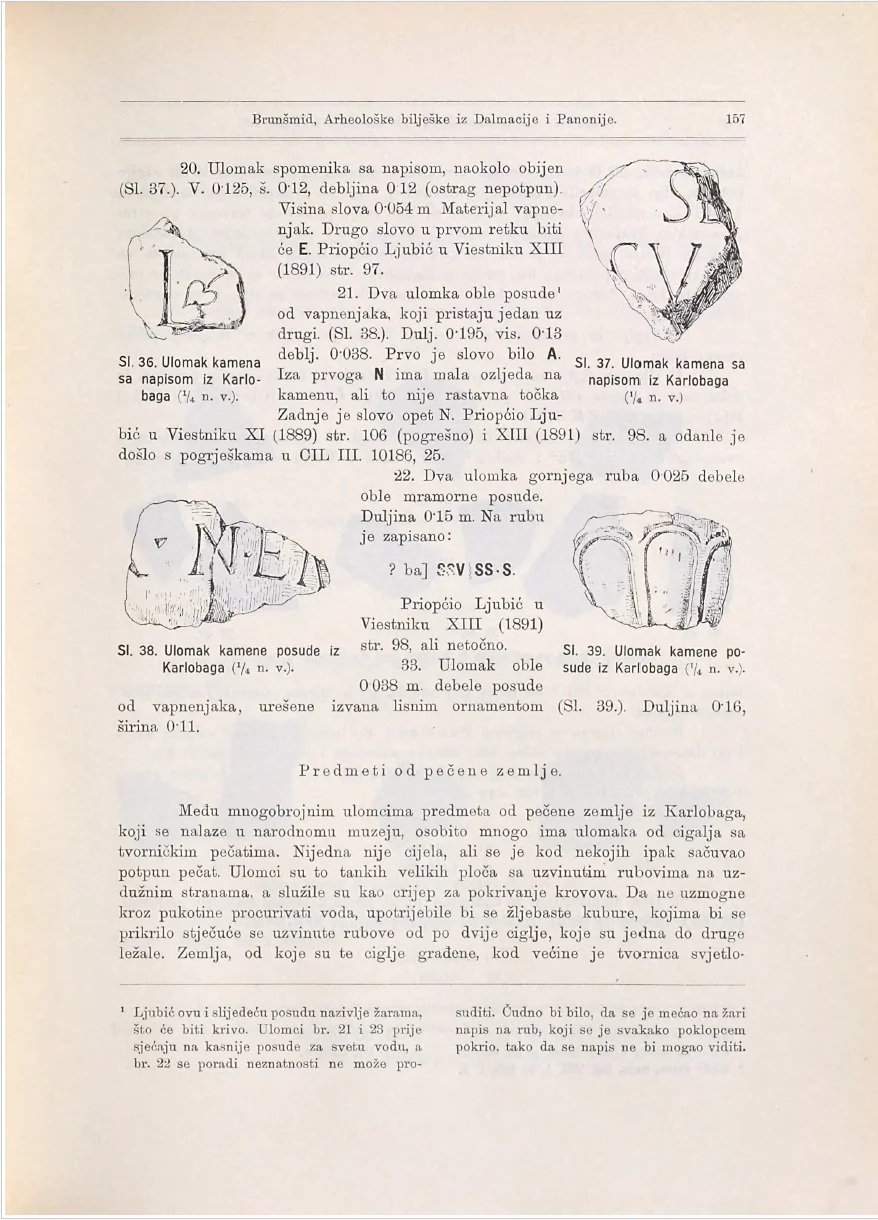
Šime Ljubić bitterly recorded the destruction of stone inscriptions, altars and slabs bearing the names of decurions, members of the municipal council. Some monuments became spolia, reused as architectural elements in later buildings. Inscriptions were occasionally built into walls with their texts facing inward, while other fragments served as thresholds, covers or garden ornaments. In this way, much of Vegium's epigraphic heritage was either lost or concealed.
The surviving copies, drawings and descriptions of inscriptions are now vital evidence for Vegium's social organisation. References to decurions and to the municipal council, the ordo decurionum, point to an organised civic administration. The documentation compiled by early researchers therefore makes it possible to reconstruct, at least in part, monuments that no longer survive.
The most valuable surviving finds gradually entered museum collections. Fragments of marble sculptures, jewellery, coins and epigraphic monuments are now preserved in Croatian museums, including the Archaeological Museum in Zagreb and archaeological collections in Zadar. Although the remains of Vegium have been dispersed, lost or built into the foundations of modern Karlobag, the surviving objects and written sources continue to bear witness to the ancient settlement beneath Velebit.
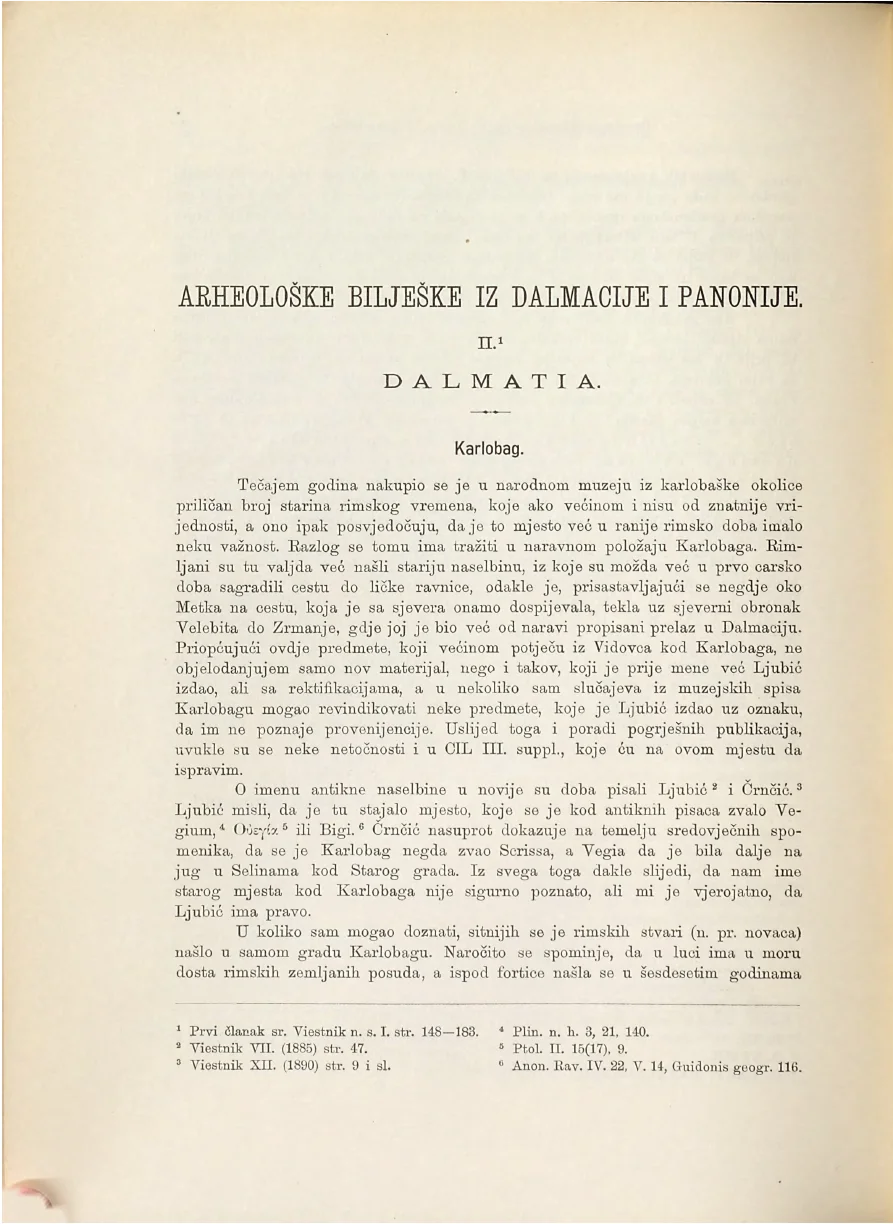
Page 1
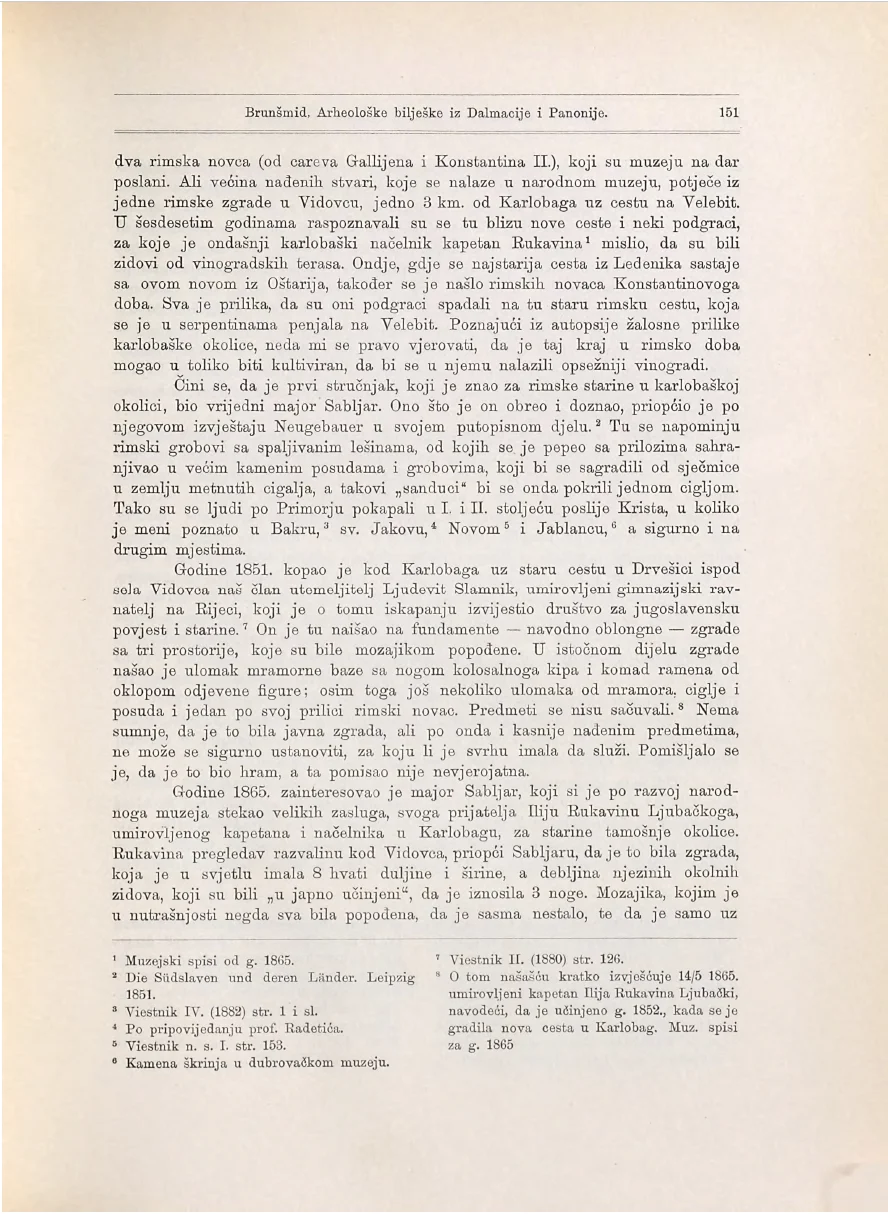
Page 2
Page 3
Page 4
Page 5
Page 6
Page 7
Page 8
Page 9
Page 10
Page 11
Page 12
Page 13
Page 14
Page 15
Page 16
Page 17
Page 18
Page 19
Page 20
Page 21
Page 22
Source: Münchener Digitalisierungszentrum (MDZ), Munich.