The Uskoks of Karlobag and the Struggle for the Velebit Channel
In the second half of the sixteenth century, the Velebit Channel and its coastal region became one of the most volatile frontier zones on the eastern Adriatic. The interests of three great powers—the Habsburg Monarchy, the Ottoman Empire and the Republic of Venice—intersected there, and their conflicts shaped the daily lives of the local population. Karlobag, then known by its historical name Bag, stood at the centre of these events. Owing to its favourable geographical position, Bag became an important Habsburg coastal outpost in the second half of the sixteenth century and a place associated with Uskok activity in the Velebit Channel. The Uskoks were warriors who operated across the broad frontier between the Habsburg Monarchy, the Ottoman Empire and the Republic of Venice. They defended Habsburg interests, while their maritime raids simultaneously threatened Venetian trade and navigation in the Adriatic.
1. The Arrival of the Uskoks and the Rise of Bag as a Maritime Base
The growing Uskok presence in the Karlobag (Bag) area was connected with broader developments in the Habsburg–Ottoman conflicts and with the escalation of the Venetian–Uskok struggle during the sixteenth century. After the fall of Klis in 1537, Senj became the principal centre of the Uskok movement, from which their activities gradually spread along the Velebit Channel.
In the second half of the sixteenth century, Karlobag gained increasing military and maritime importance within the Habsburg defensive system on the eastern Adriatic coast. Its position opposite the island of Pag, its proximity to important sea routes and the naturally sheltered coves beneath Mount Velebit made it a suitable place for monitoring shipping and for the operations of smaller military and naval groups.
The Uskoks used fast and manoeuvrable vessels, including fustas and smaller rowing craft such as ormanicas. These vessels allowed rapid movement, surprise attacks and withdrawal into sheltered coves. The natural features of the Velebit Channel—strong bura winds, an indented coastline and numerous natural shelters—gave them an important tactical advantage. At the same time, Uskok bands carried out raids on land in areas affected by the conflict with the Ottomans.
Uskok Vessels
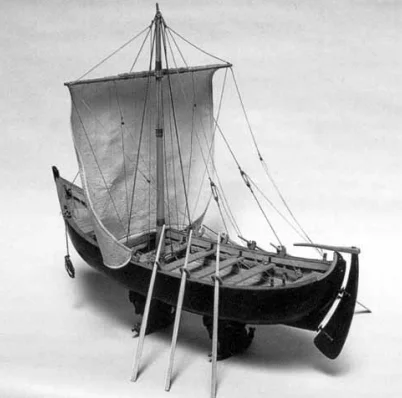
A smaller Uskok rowing vessel, known as a brzoplovka or ormanica, was among the most important boats used by the Uskoks. It had a low hull and a strong keel, which enabled rapid movement and made it easier to conceal from an enemy. It was approximately 10 metres long and 1.45 metres wide; the side height was about 0.8 metres and the draught 0.3–0.4 metres. It could carry a crew of up to fifteen. Built from high-quality timber, it was strong enough to be hauled overland. Its low sides made it difficult to detect at sea, an important advantage in surprise attacks.
Source: Senj City Museum.
2. Venetian Retaliation – Almoro Tiepolo's Military Expedition (1592)
Increasingly frequent Uskok attacks inflicted heavy losses on Venetian trade and shipping in the eastern Adriatic. Seeking to restrict their activities, the Republic of Venice decided to use military force against selected Uskok and Habsburg strongholds on the Croatian coast. Command of the expedition was entrusted to the Venetian provveditore and naval commander Almoro (Ermolao) Tiepolo.
In 1592, Tiepolo led a naval expedition against targets beneath Mount Velebit. Bag (present-day Karlobag), an important Habsburg coastal fortification and a place associated with Uskok operations in the Velebit Channel, came under attack. Its naturally sheltered coves provided cover for smaller vessels and enabled control of important shipping routes between the northern Adriatic and Dalmatia.
Although the fortress at Bag had limited defensive capabilities, it resisted a far superior Venetian force. After the bombardment, the defenders were forced to surrender, after which the town was subjected to reprisals, looting and destruction. The attack had profound consequences for its later development.
The destruction of Bag caused a strong reaction at the Habsburg court. Because the Republic of Venice had attacked a settlement under Habsburg rule, the event further worsened relations between Vienna and Venice.
3. A Return to the Ruins and the Continuation of Uskok Activity
By destroying Bag in 1592, the Republic of Venice did not permanently eliminate the Uskok threat in the Velebit Channel. Although the town suffered severe damage, its strategic position remained unchanged. The sheltered coves beneath Velebit and the proximity of important maritime routes continued to make the area valuable for monitoring shipping between the northern Adriatic and Dalmatia.
Uskok activity did not disappear from the Velebit Channel after the Venetian expedition. Although Senj remained their principal centre, nearby ports and coves beneath Velebit continued to serve as routes of passage, shelters for vessels and sites of military activity. Venetian shipping routes towards Dalmatia, as well as the waters around the island of Pag, remained particularly vulnerable.
The inability to suppress Uskok activity completely further intensified tensions between the Republic of Venice and the Habsburg Monarchy. During the following decades, these conflicts culminated in the open confrontation known as the Uskok War (1615–1617).
During this period, Karlobag retained its role as an important Habsburg frontier outpost. Its position at the meeting point of the sea, Mount Velebit and the Lika hinterland secured its lasting military and transport importance.
4. The End of the Uskok Era (1617)
At the beginning of the seventeenth century, conflict between the Republic of Venice and the Habsburg Monarchy reached its peak. Years of Uskok raids against Venetian merchant ships and coastal territories led to the open conflict known as the Uskok War (1615–1617). Although the main military operations took place in Istria, Kvarner and the northern Adriatic, the background to the war was a decades-long dispute over the activities of the Senj Uskoks.
The war ended with the signing of the Treaty of Madrid in 1617. One of the principal terms of the peace was the cessation of organised Uskok maritime raids. The Habsburg Monarchy undertook to remove the Uskok threat, restrict Uskok naval activity and prevent further attacks on Venetian vessels. Some of the Uskoks were relocated from Senj and the Croatian coast to other parts of the Military Frontier, where they continued to serve as soldiers.
This marked the end of the organised Uskok activity that had characterised the preceding decades. Karlobag was no longer associated with organised Uskok warfare, but it retained its strategic importance as a Habsburg frontier settlement on the shore of the Velebit Channel. During the seventeenth century, it continued to serve as a link between the Lika hinterland and the Adriatic coast.
Although the Uskok period was relatively brief, it left a deep mark on the history of Karlobag. Conflicts with the Republic of Venice, the destruction of Bag in 1592 and the turbulent events of the late sixteenth and early seventeenth centuries made this town beneath Velebit an important place in the history of the eastern Adriatic.
5. Martin Stier and the Plans to Rebuild Karlobag (1660)
After the end of the Uskok War and the conclusion of the Treaty of Madrid in 1617, Karlobag lost its former role connected with Uskok activity, but it remained an important Habsburg frontier settlement on the Croatian coast. Wars with the Ottomans and the Republic of Venice left deep marks on the town's defensive structures, making it necessary to assess their condition and the possibilities for reconstruction.
In the mid-seventeenth century, the Habsburg authorities organised inspections of the frontier regions to examine fortifications, military positions and strategic sites. The aim was to assess the state of the defences and propose improvements to the existing fortifications.
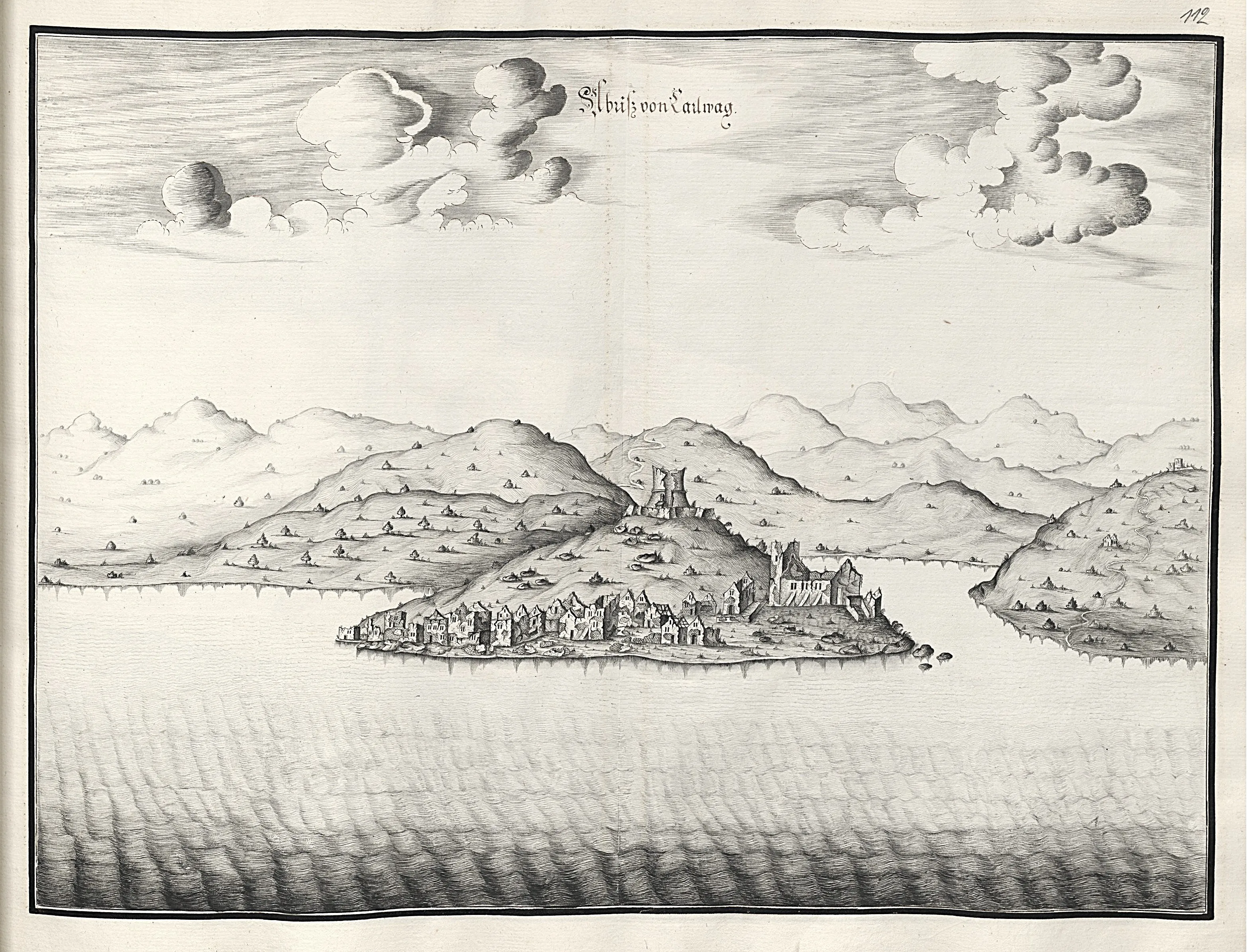
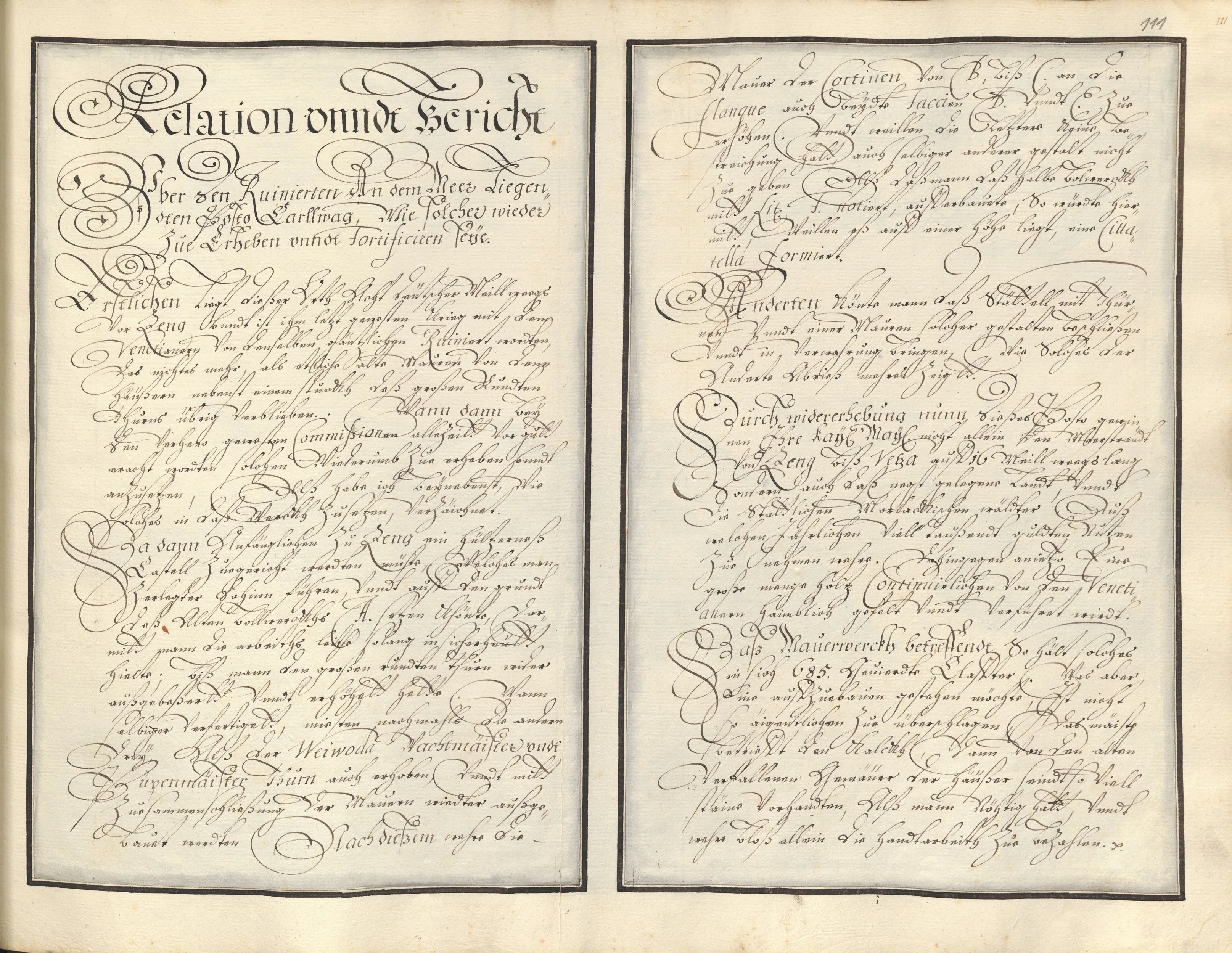
As part of this military and cartographic undertaking, the imperial engineer and cartographer Martin Stier visited Karlobag in 1660. During the inspection, he recorded the condition of the town and its defensive structures. The effects of earlier wartime destruction and the prolonged decay of the fortifications were still visible, and Karlobag continued to bear the marks of an insecure frontier period.
Stier produced detailed drawings of Karlobag as it then appeared, showing the remains of the town walls, the main tower and other defensive structures. His views are among the most valuable surviving records of the town's seventeenth-century appearance, between wartime destruction and later attempts at reconstruction.
In addition to documenting the existing condition, Stier's plans included proposals for improving the defensive system in accordance with contemporary principles of military architecture. His work shows that Karlobag retained its strategic importance for the Habsburg Monarchy even after the wartime devastation.
Stier's report and drawings are now valuable historical sources for studying the appearance of Karlobag in the seventeenth century. They bear witness both to the effects of war and to the town's lasting importance because of its position between the sea, Mount Velebit and the Lika hinterland.
Source: Austrian National Library (ÖNB), Vienna.